January 24, 2026

Capitalizations Index – B ∞/21M

Profiles in Crypto-Awesome: Brock Pierce

Profiles in crypto-awesome: brock pierce

Profiles in Crypto-Awesome: Brock Pierce

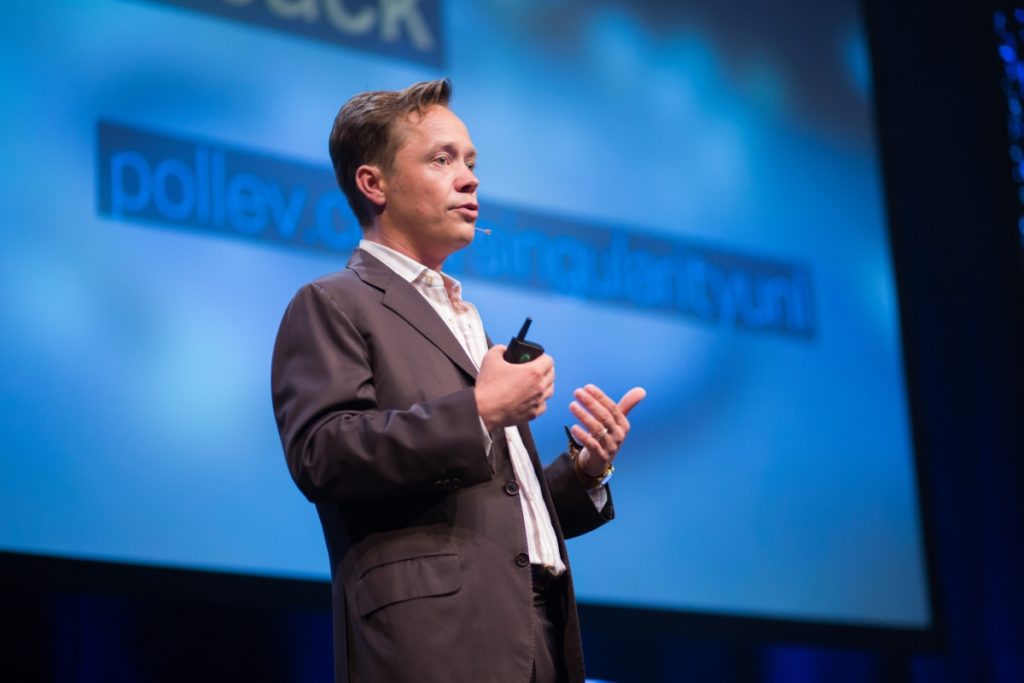
Child-actor, serial-entrepreneur, pre-YouTube content creator, MMORPG milker, early bitcoin adopter, and co-creator of two of the top ten cryptocurrencies — number-9 on Forbes’ Richest People in Crypto is donating his entire $1 billion fortune to rebuild Puerto Rico into Cryptopia. Welcome to the weird world of Brock Pierce.


Character Profile

It’s fair to say that cryptocurrency has its share of colorful characters — from the seemingly ever-present crypto-jester John McAfee to the almost never-present anarchist hacker Amir Taaki.

It also isn’t rare to hear of former child actors falling from grace in the pursuit of one demon or another. Brock Pierce may be the result when that pursuit ends up leading to a budding cryptocurrency called bitcoin.

All of 5′ 4″ in a cowboy hat, carrying a satchel full of botanical ‘remedies,’ he might not be what you’d expect from the chairman of the bitcoin Foundation. But he has also been on the founding teams of Blockchain Capital, DNA, the first ever ICO, and cryptocurrencies EOS and Tether.
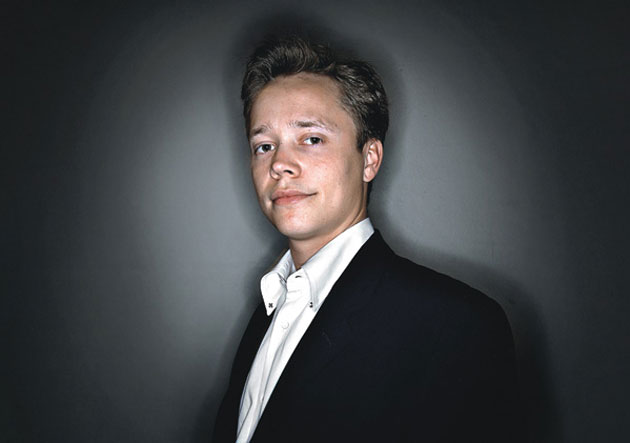
Neucoin brock pierce

An Origin Story

Pierce’s first memory is of being on set at age three and a half. He was raised in Minnesota and got his big break at age 12 when he played a younger version of Emilio Estevez’ character in Mighty Ducks. Four years later, he had his first starring role in First Kid — but then quit the business before the movie was released in 1996.

Finding normal childhood impossible, he was introduced to an internet entrepreneur named Marc Collins-Rector. Twenty years his senior, Collins-Rector made a 16-year-olf Pierce executive vice president of his entertainment company.

His next business venture was trading in-game items from online games for real money. This led to an alleged 400,000 people playing video-games professionally for him, and a seven-year stint with Steve Bannon as his ‘right-hand man’.

And that’s when he discovered bitcoin.

Character Assassination

It will probably come as no great surprise to find out that Marc Collins-Rector was a sexual predator. Surrounding himself with teenaged boys and giving them vast fortunes and chunks of his company wasn’t entirely kosher.

Pierce was himself entangled in the litigation surrounding this, although all cases against him were either dropped or settled. Last Week Tonight‘s John Oliver alluded to this scandal in a recent piece on cryptocurrency.

Brock pierce

Lights, Camera, Action

Pierce’s path from crypto-convert to evangelist to guru has elements similar to those of other early adopters. There is the obligatory ‘50,000 bitcoin on a thrown out hard drive’ anecdote. He would give away bitcoins to everyone he could until he realized that “no one appreciated it, then they lost it, and it was a waste of my [****ing] time.”

Where it may differ is in that he claims to not actually do very much. He is clearly a facilitator and a bringer together of people, but as he says:

I don’t really have to do much other than show up, and then tell a few of these stories that are inspiring

By all accounts, he is a force of nature. A whirl of endless energy, putting as much into his partying as his business ventures. A laid-back hippy who oversees the creation of these enterprises and then steps back and lets them fly.
Puerto rico, la-la-land

Sol/Crypto Rico/Puertopia

Pierce is not the first crypto-billionaire attracted to Puerto Rico by its reputation as a tax haven — but his motivation is perhaps slightly different from most.

Realizing the potential colonialist nature of rich white men buying up a tax haven, he has rallied against it. Pierce’s vision is to use the money saved from the IRS, Robin Hood-style, to rebuild a Puerto Rico still recovering from a debt crisis and recent hurricane. He wants to develop the west of the island, rather than risk the gentrification of the capital and the pricing out of locals who have spent their entire lives there.

His plan is to start a charity crypto-currency and invest his entire $1 billion fortune into it, hopefully encouraging others to follow suit. Certainly, his approach seems to be a more acceptable outcome of the current influx of billionaires — having won over local NGOs who were previously concerned that their island would be portioned off and sold for profit. Whether he succeeds in this venture or not, it is certainly worth keeping an eye on what he does next.

It should come as no surprise to discover that Brock Pierce’s marriage to Sensay CEO Crystal Rose is by smart-contract, which can be dissolved, changed, or renewed annually. Brock Pierce is a true crypto-pioneer.

What do you think of Brock Pierce and his plans for Cryptopia? Let us know in the comments below!


Images courtesy of Shutterstock, Bitcoinist archives.

[Disclaimer: The contents of this article and any opinions contained within are solely that of the author, and do not necessarily reflect those of Bitcoinist.]

Published at Sat, 28 Jul 2018 17:00:08 +0000

Altcoins

Previous Article

Large Bitcoin Car Sticker Cryptocurrency Blockchain Freedom Sticker Vinyl Car Window Decal

Next Article

Crypto Market Rebounds, Bithumb Drives Kimchi Premium Up 50%

You might be interested in …

_mg_1466

_MG_1466

_MG_1466By Philip McMaster PeacePlusOne_!/ on 2014-04-13 22:36:36

Bitcoin Praxis-Workshop Köln – ready to invest

bitcoin Praxis-Workshop Köln – ready to invest Sie wollen Krypto-Währungen (z.B. bitcoin, Etherum, Dash, Ripple) und die Blockchain-Technologie verstehen, haben wenig Zeit für mehrtägige Seminare oder monatelange Eigenrecherche und möchten schnellstmöglich in die digitale Zukunft […]

Bitcoin Gold Is About to Trial an ASIC-Resistant Bitcoin Fork

Bitcoin Gold Is About to Trial an ASIC-Resistant Bitcoin Fork

It’s forking season.

After bitcoin Cash (Bcash) forked from the bitcoin blockchain to create a new cryptocurrency (BCH), and ahead of the SegWit2X fork that may do the same thing, a third bitcoin fork is in the making: bitcoin Gold (Bgold; BTG). But where Bcash and SegWit2X are scaling-related forks — both mainly increase bitcoin’s block size limit — Bgold wants to re-decentralize mining by implementing a new proof-of-work algorithm.

“What was born as decentralized is now centralized,” bitcoin Gold contributor J. Alejandro Regojo told bitcoin Magazine, referring to the current state of bitcoin mining. “With this fork, we want to show how bitcoin can be as ‘Satoshi’ as possible, as social as possible, and as decentralized as possible.”

Mining Centralization

bitcoin Gold was initiated by Jack Liao, CEO of Hong Kong–based mining hardware producer LightningASIC, and was first announced in late August. The open project has been gaining traction and support in the wider cryptocurrency space since, with a dedicated Slack as a main hub for discussion and organization. Bgold is currently being developed by the pseudonymous developer “h4x3rotab” along with a small group of volunteers contributing to the project in other ways.

The attention Bgold has attracted is probably in part because anyone who owns bitcoin (BTC) on October 25th will receive the equivalent amount of BTG. While this model has been criticized, particularly because it presents a burden on service providers and users, it has also proven successful. With the launch of bitcoin Cash in particular, users eagerly accepted their batch of “free money,” while exchanges, wallets and other service providers proved relatively willing to integrate the new coin.

Further, the Bgold team believes that this distribution method should also benefit bitcoin over altcoins as it provides an extra incentive to hold BTC on particular dates.

“But the key goal that we are trying to achieve with this fork is to build a perpetually ASIC-resistant version of bitcoin,” said Robert Kuhne, another bitcoin Gold contributor, in explaining the purpose of the project to bitcoin Magazine.

Bgold contributors like Regojo and Kuhne think that bitcoin’s proof-of-work hashing algorithm was essentially broken by the introduction of specialized ASIC (application-specific integrated circuit) mining hardware. In the early years of bitcoin’s existence, individual users were often also miners; this has since become concentrated into relatively centralized data centers operated by professionals.

“And we’re now in a situation where 65 percent of hash power comes from a country that doesn’t like bitcoin,” Regojo noted, referring to China’s recent clamp down on cryptocurrencies.

An Uneven Playing Field

And while mining is centralized, ASIC production is even more centralized, the Bgold contributors pointed out. Only a handful of companies currently produce such specialized chips.

This means that anyone who wants to be a miner in any meaningful way is beholden to these companies, Kuhne argued.

“The way the monopoly manufacturer currently operates is abusive to its customers — individual miners — and the industry at large,” he said, referring to major Chinese ASIC producer Bitmain. “Manufacturers can produce ASICs at a tiny cost, but miners have to buy at a high price. This violates the one-CPU-one-vote ethos as described in the bitcoin white paper, because while everyone can buy CPU at the same price, the same is not true for ASIC hardware.”

Regojo and Kuhne see this as a fundamental problem — not something that free market dynamics can realistically resolve. They suggest that the barrier of entry to the ASIC market to compete with existing manufacturers is fundamentally too high to allow for open competition.

“You can’t build a factory without approval from the government and banking system. So there are really only a handful of entities in the world that have total authority over who can and can’t manufacture ASIC machines. And all this could potentially get much worse if and when those institution really start feeling the disruption from bitcoin, which hasn’t begun in earnest yet,” Kuhne said.

bitcoin Gold

As opposed to the bitcoin Cash and (especially) the upcoming SegWit2X forks, bitcoin Gold very specifically does not make a claim to be the “real” bitcoin. Instead, the Bgold project hopes it can prove a valuable exercise for bitcoin; a sort of test case for a hard fork that bitcoin itself may one day require.

Concretely, bitcoin Gold is now implementing the Equihash proof-of-work algorithm. This is already used by Zcash and is relatively ASIC-resistant.

Full ASIC-resistance, however, is thought to be impossible: Any mining algorithm could be subject to specialized chips. Like Vertcoin, the Bgold community therefore plans to re-deploy a new proof-of-work algorithm hard fork if it is found out that ASIC-chips for Equihash are being produced. (This plan alone, of course, could be a deterrent for any potential ASIC-producer.)

For security, the project plans to implement strong replay protection to avoid loss of funds for unsuspecting or non-technical users. It will also adopt a new difficulty re-target algorithm to prevent the blockchain from stalling: Difficulty is re-adjusted at every block instead of once every two weeks.

While the coin is set to launch two weeks from now, the Bgold codebase is not yet fully developed and ready to be deployed. Implementation of the new proof-of-work algorithm and replay protection, as well as the new difficulty re-adjustment scheme, are yet to be finished.

Nor are all the details for the project even ironed out.

Early announcements indicated that bitcoin Gold would have a closed launch and a presale of coins. A new batch of BTG was to be mined in the first week after the fork and subsequently distributed to designated investors, not unlike an ICO. Proceeds of this “ICO” were then to be used for development and other Bgold-related purposes.

However, as interest in the project grew, this idea became more controversial. Not everyone involved with bitcoin Gold likes the idea of an additional founders reward — something Bcash, for example, did not have.

Kuhne addressed the issue by stating: “We have heard a lot of feedback from the community, so this proposal will be replaced with an updated and improved plan. But we will not completely rule out the possibility of a modest pre-mine to provide a basic level of funding for the project.”

Disclaimer: The author of this article holds BTC and will therefore also own BTG at launch.


The post Bitcoin Gold Is About to Trial an ASIC-Resistant Bitcoin Fork appeared first on Bitcoin Magazine.