Often overlooked in any discussion about cryptocurrencies, is the critical importance of consensus algorithms and how fundamental they are to the application and potential of any blockchain coin or token.While nobody disagrees with the general concept of consensus agreement being fundamental to the legitimacy of a blockchain, debate continues, however, around what is the best process by which to achieve that consensus.
| Copper (Cu), Silver (Ag), and Gold (Au) sit on top of each other on the periodic table, sharing many electrical, chemical, and material properties that enhance their durability and divisibility. Gold, the heaviest, required the most extreme conditions and energy to form, as all elements were generated, from lighter elements. Copper required easier conditions to form and is thus much more common, with silver in between. |
|
The “protocol stack”, or distinct layers of cultural understanding, for objects made out of precious metals: the natural, rare, and durable substance itself, versus the particular forms given to it as artwork, jewelry, coins, etc. |
| p.p1 {margin: 0.0px 0.0px 0.0px 0.0px; font: 15.0px Menlo}
Viking hoard unearted in Watlington, Scotland: silver coins, small ingots, and jewelry. Why were were coins (“money”) so often stashed with jewelry (“ornament”)? And what is up with those lumps? []
|
Spheres of transfer and local distinctions
| The transition from shell to metal: beads fashioned from copper (dark) and from Spondylus (spiny oyster) shells (light). The shells, transported by foot (probably by many feet and many hands) hundreds of miles from the Aegean Sea, had for thousands of years been popular in the Danube river basin when the world’s earliest metal artifacts were invented there. The first copper and gold artifacts were beads fashioned to substitute for the Spondylus beads in Danubian jewelry. [ |
p.p1 {margin: 0.0px 0.0px 0.0px 0.0px; font: 15.0px Menlo} p.p2 {margin: 0.0px 0.0px 0.0px 0.0px; font: 15.0px Menlo; min-height: 18.0px}
|
The world’s oldest gold artifact – a small bead from the lower Danube river basin (4,600-4,500 BC). []
|
In the modern West, we consider the realm of jewelry and the realm of money to be very separate spheres of transfer. It is considered either a shameful betrayal or a grim necessity if the winner of an Olympic or Nobel Prize medal or a Super Bowl ring sells it to raise money. The finger-ring is a central feature of modern weddings, but few things would offend a typical modern bride more than being paid a bride price, she or her kin being indemnified by money as if she, as we would see it, were a prostitute on long-term contract. Meanwhile, our economists obsess over money while touching on the subject of jewelry hardly at all, and certainly not as any sort of form or variant of money. We moderns can hardly imagine confusing such seemingly very different things, and indeed the very idea offends our sensibilities. But in many non-Western and earlier Western cultures this was far from the case. For them the fundamental protocol layer, the substance itself, is cherished for its own sake, and forms the great majority of the value of the item, while its protocol layer two, the “outer layer”, the particular form it has been fashioned into, while often of considerable interest, is usually quite secondary in determining its value for purposes of the display and transfer of wealth.
| Recycling of gold jewelry in the United States: usually to be recast as bullion bars for central bank and gold exchange-traded-fund (ETF) reserves, or for export to Asia for making jewelry for which the gold content is far more important than in the West. Occasionally cast into gold coins for “gold bugs” and collectors. |
p.p1 {margin: 0.0px 0.0px 0.0px 0.0px; font: 15.0px Menlo} p.p2 {margin: 0.0px 0.0px 0.0px 0.0px; font: 15.0px Menlo; min-height: 18.0px}
|
In cultures without a strong distinction between decorative jewelry and money, they often didn’t even bother melting it down to switch from coins to lower velocity but more displayable forms of wealth. Roman gold coin minted c. 400 AD, converted in the 7th century into an Anglo- Saxon pendant: [ []
|
| The Stollhoff hoard – copper spirals and axe blades as well as gold discs from the upper Danube river watershed (modern Austria), c. 4000 BC. Spiral armbands were among the earliest large items worked from native copper, in the middle Danubian basin (modern Hungary) c. 5000-4500 BC. |
|
Boringly standard, divisible, and fungible, in its particular form as well as in the underlying metal, but boasting neither the kings and dates on coins desired by historians nor the fine craftsmanship of unique work beloved of museums, and categorizable by the dominant academic ideologies as neither money nor art nor ornament, so it sits packed in boxes in the cellar of the Danish National Museum, like many other such mundane but important artifacts underneath museums around the world. About 2,000 small gold spirals were buried in a fur-lined wooden box in Denmark between 900-700 B.C. []
|
Law and “money”
p.p1 {margin: 0.0px 0.0px 0.0px 0.0px; font: 15.0px Menlo} p.p2 {margin: 0.0px 0.0px 0.0px 0.0px; font: 15.0px Menlo; min-height: 18.0px}
…the rules governing when tax officials could seize gold: Nothing would happen “if the holding is limited to 500 grams per married woman, 250 grams per unmarried woman and 100 grams per male.” It also said that there would be no limits on jewelry “provided it is acquired… from inheritance.” []
Bullion bits and odd shiny things
throughout countries extending from Syria, Arabia, Egypt, Socotra, the Persian Gulf to Ceylon, China, Japan, Siam, and the whole East, to the south-west coast of Africa, to the north of Europe, to England and to Ireland. That the people of so many places, and in so various ages, should have formed their bullion and other metals into this particular form solely for the purpose of barter, without attaching to it any monetary character, seems a conclusion very difficult to arrive at…these forms were to all intents and purposes the money of the respective lands.[4]
Silver stamped sycee ingot. []
The collectible continuum – more like money as we go towards the top left, more like treasure as we go towards the bottom right.
|
Frithof breaks his ring in pieces and distributes it to his followers, so that they shall not be impecunious in the underworld. Rings were used in marriage payments and wergeld, the latter being estimated by haugatal or ring tale. A silver ring weighing 12 ounces was the compensation for the loss of a thrall, 100 rings or 100 head of cattle for a freeman. ([2] p284)
| Larins, or silver wires bent double, and often stamped by maker; current in the very extensive Indian Ocean trade before and during the Age of Exploration. “If any suspect the goodness of the Plate it is the Custom to burn the Money in a fire red hot, and so put it in water; and if it be not then purely white it is not Currant Money.” ([2] p196) Such a technique would have worked for assaying a wide variety of wire-, coil-, or ring-like silver objects. |
Among the early coins – defined as standardized metal objects stamped with a standard value — were the Chinese bronze spade money, c. 475-221 BC []
The moment we arrived in this immense market, we were perfectly astonished at the vast numbers of people, the profusion of merchandise which was exposed for sale, and at the good police and order that reigned throughout…instruments of brass, copper, and tin [and] gold dust as it is dug out of the mines, which was exposed to sale in tubes made of the bones of large geese…The value of these tubes of gold was estimated according to their length and thickness, and were taken for exchange, for instance, for so many mantles [of] cacao nuts, slaves or other merchandise.[5]
Coins
| Touchstone and needles used by traditional European goldsmiths for assaying gold, silver, and copper, whether as coins or as jewelry. Each needle presents the visual difference made by different percentage compositions of the three metals. |
Non-Internet References
Jurors examining gold coins in a recent . This assay and audit of the British Royal Mint has been conducted periodically s. Isaac Newton and many other luminaries have been involved. It is structured much like an actual court trial, with a presiding judge, a jury of laymen, and a second jury of expert goldsmiths. It also includes the most advanced assay techniques available (today including detailed spectroscopy). The purpose of this is to ensure and to communicate to outsiders that the mere local cultural form is “pure”, i.e. that the coins accurately label and embody the actual amount of the actually desired natural substance. The British love their traditions and the Trial of the Pyx continues to this day.
p.p1 {margin: 0.0px 0.0px 0.0px 0.0px; font: 15.0px Menlo} p.p1 {margin: 0.0px 0.0px 0.0px 0.0px; font: 15.0px Menlo} p.p2 {margin: 0.0px 0.0px 0.0px 0.0px; font: 15.0px Menlo; min-height: 18.0px} p.p1 {margin: 0.0px 0.0px 0.0px 0.0px; font: 15.0px Menlo} p.p1 {margin: 0.0px 0.0px 0.0px 0.0px; font: 15.0px Menlo} p.p2 {margin: 0.0px 0.0px 0.0px 0.0px; font: 15.0px Menlo; min-height: 18.0px} p.p1 {margin: 0.0px 0.0px 0.0px 0.0px; font: 15.0px Menlo} p.p1 {margin: 0.0px 0.0px 0.0px 0.0px; font: 15.0px Menlo; min-height: 18.0px} p.p2 {margin: 0.0px 0.0px 0.0px 0.0px; font: 15.0px Menlo} p.p1 {margin: 0.0px 0.0px 0.0px 0.0px; font: 15.0px Menlo} p.p1 {margin: 0.0px 0.0px 0.0px 0.0px; font: 15.0px Menlo} p.p2 {margin: 0.0px 0.0px 0.0px 0.0px; font: 15.0px Menlo; min-height: 18.0px} p.p1 {margin: 0.0px 0.0px 0.0px 0.0px; font: 15.0px Menlo} p.p1 {margin: 0.0px 0.0px 0.0px 0.0px; font: 15.0px Menlo} p.p1 {margin: 0.0px 0.0px 0.0px 0.0px; font: 15.0px Menlo} p.p2 {margin: 0.0px 0.0px 0.0px 0.0px; font: 15.0px Menlo; min-height: 18.0px} p.p1 {margin: 0.0px 0.0px 0.0px 0.0px; font: 15.0px Menlo}

1 bitcoin = $11,591
Market Cap = $196 billion
Banning bitcoin
2032: bitcoin is illegal in 307 of 40,000 countries. –
bitcoin in China
Next time people tell you bitcoin is banned in China, show them this pic.
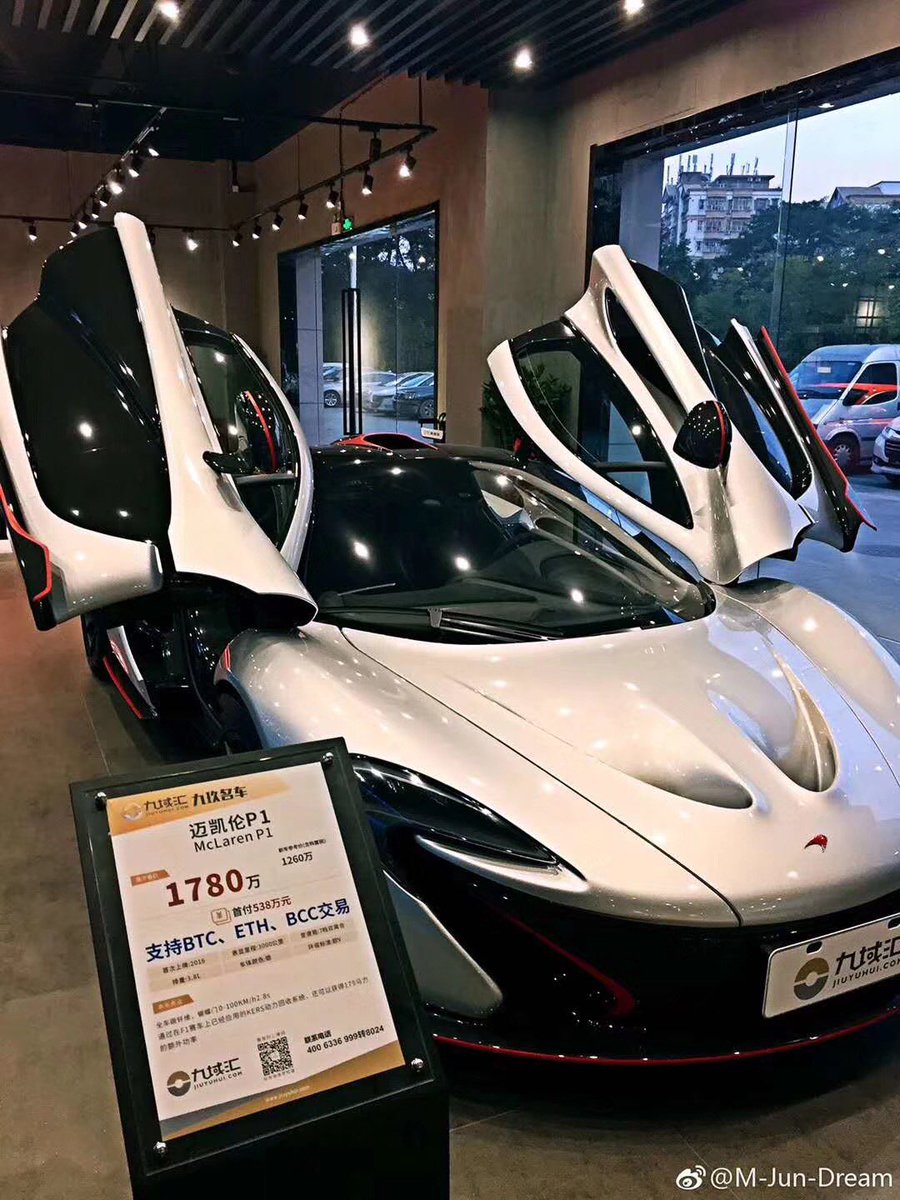
Photo taken in Shenzhen, China.
BTC, ETH, and BCC (actually BCH) are accepted as payment.
–
Real Estate
bitcoin is being adopted at a rapid rate by the real estate sector. This week, Japanese realtor revealed that it is selling a $6 million commercial building and apartments in Tokyo for bitcoin. Last year, Dubai realtor announced the sale of $200 million+ property in bitcoin. –
Cryptocurrency trader Michael Komaransky sells his Miami mansion for 455 Bitcoins ($6 million), making it the most expensive cryptocurrency real estate deal to date. –
First Freight Deal Settled in bitcoin on a Vessel Carrying Wheat From Russia to Turkey

Wow… This is an example of direct way to circumvent US sanctions imposed on Russia. –
The consignment was part of pilot testing of Prime Shipping Foundation’s blockchain payment system for bulk commodities, said Chief Executive Officer Ivan Vikulov.
The announcement comes soon after Louis Dreyfus Co., one of the world’s largest foodstuffs traders, it struck the first agricultural commodity trade to use blockchain. The 166-year-old trading house used the technology to sell a cargo of U.S. soybeans to China’s Shandong Bohi Industry Co.
The vessel used in Prime Shipping’s transaction carried 3,000 metric tons of wheat from Rostov-on-Don to Samsun. While the cargo is small, it highlights the potential cryptocurrencies could play in agricultural commodity markets.
International sanctions against countries such as Syria have affected their access to U.S. dollars, limiting their ability to import food.
Prime Shipping Foundation is seeking to get a banking license in Gibraltar, one of the most crypto-friendly jurisdictions, the company said in an emailed statement. That would make conversions between government-issued and cryptocurrencies faster and easier, according to Vikulov.
–
bitcoin CASH

1 bitcoin Cash = $1,528
Market Cap = $26 billion
Decentralized Marketplace OpenBazaar Integrates bitcoin Cash
Currently over 1,100 listings accepting bitcoin Cash on OpenBazaar. –
Japan’s SBI Group Mines bitcoin Cash Blocks on bitcoin.com Pool
SBI Group is a major financial services group in Japan. They are supporters of bitcoin Cash.
Yoshitaka Kitao, Representative Director, President & CEO of SBI Holdings:
“The vision of the original bitcoin white paper written by Satoshi Nakamoto calls for a peer-to-peer electronic cash system. That is a powerful vision, and SBI Group will devote resources to enable a future world where bitcoin Cash is used globally for daily payments.”
–
Coingeek Launches $7 Million bitcoin Cash Tokenization Contest
Coingeek, the cryptocurrency company led by the billionaire entrepreneur , has launched a bitcoin cash tokenization contest offering £5 million ($7 million) in prize money. This means we might soon see smart contracts implemented with BCH.
Tokenization can bring everything from land deeds to ICO coins onto the BCH network.
The challenge for the content participants is to design a system that delivers a solution that permits token creation, issues tokens to users’ wallets, redeems tokens from users, and securely destroys tokens into the originating cryptocurrency at the end of that token’s life cycle. –
MINING
TSMC
AMD, Nvidia, Bitmain, what they have in common is they all have the same chip supplier: TSMC.
I’d argue that more than 80% of hashing power of ALL crypto is coming from TSMC-produced chips. –
Samsung Manufacturing ASIC Chips For bitcoin Mining
Local media outlets reported that Samsung partnered with a Chinese bitcoin mining equipment manufacturer last year and finished the development of its ASIC chips.
Samsung, which operates one of the largest semi-conductor manufacturing plants in the world, will manufacture and supply cryptocurrency mining equipment to the Chinese market first.
In the long-term, Samsung plans to expand its mining equipment venture from China to other regions like South Korea and Japan that have a stronger demand for cryptocurrencies than other countries.
In the upcoming months, Samsung also intends to manufacture GPU miners for miners targeting small cryptocurrencies. –

What’s happening here is Bitmain’s operation becoming large enough that they are starting to second-source their IC fab.
Instead of being tied to TSMC (biggest IC fab in the world), they begin to use Samsung to gain better wafer pricing at TSMC: Standard practice in IC biz!
From Samsung’s perspective, they’ve been actively trying to dethrone TSMC. Seeing that a huge chunk of profit at TSMC came from crypto they have all the reasons to optimize their ASIC process to pursuit these businesses. All this signals the maturity of the mining hardware biz. –
Mining in Iran
I did not realize how profitable bitcoin mining is in Iran.
Apparently the average Iranian miner makes about $600 a month mining in their home. Minus ~$80 for the cost of residential electricity and you have a pretty good income for one family.
Some Iranian bitcoin miners are renting warehouses to mine bitcoin because that allows you to get a permit for industrial electricity- a fraction of the cost of residential. –
Possibly Over 100,000 Underground bitcoin mining farms in Venezuela
74% of Venezuelan electricity comes from renewable energy like hydro electric power which is cheap to produce.
The electricity cost is 0.0000125$ per kW/h.
Usually, the bitcoin miners consist of middle to upper class Venezuelans who have the money to purchase the equipment needed to mine.

S9 Antminer currently used by Mr. X in Venezuela. To put it into perspective, one S9 can feed a family.
Right now bitcoin mining means everything because through such activity you can defeat the economic catastrophe that we are facing by bypassing the currency exchange control. My whole attention is on this business.
If you need local cash right away, then you’ll probably end up selling some btc at to deal with your living expenses. If not, then it is stored mainly on coinbase and exchanges. Cold storage is not the culture yet.
There’s no way to tell how many underground miners there are, but easily in the thousands and possibly over one hundred thousand. The word on the street is that basically any physical space with an electric service is a hosting space.
They are making a lot of money, and the big farms are making even more money given that the electricity cost is ridiculously cheap.
–
bitcoin Miners are Being Hunted, Raided, Extorted and Arrested by Local Police
bitcoin mining is a cat and mouse game of trying to outwit and deceive government and police task forces
Rumor has it the capital city military’s headquarters is full of Antminers.

Venezuelan Police task forces are intimidating and miners are beholden to their power.
Sometimes the police squad that visits your place decides to seize your mining equipment, and there is absolutely nothing you can do about it. Rumor has it they install them on government facilities.
This is the worst case scenario, but I’ve heard multiple stories like this. If for some reason they don’t like you at all during the raid, they would confiscate your equipment and have you install it for them. They even “hire” you as an infiltrator and they make you rat out other miners.
There is an intelligence police division exclusively for mining hunting. They accomplish so by monitoring electric power consumption looking for irregular situations.
Almost everyone middle class and up are talking about BTC. Even military officers are using Coinbase to buy in with fiat and to store their BTC.
–
Most Venezuelan’s Mine Altcoins
SEBIN jails are full of miners. People mostly mine alt-coins, GPU’s are safer. –
CRYPTO ASSETS

Market Cap = $510 billion
E-Commerce in South Korea
Absolutely huge. WeMakePrice, one of South Korea’s largest e-commerce platforms, is integrating bitcoin and other cryptocurrencies with Bithumb.
“We’re integrating cryptocurrencies to eliminate intermediaries like credit card systems and allow consumers to transact directly.”
This will fuel cryptocurrency adoption in South Korea without a doubt. –
Craigslist Has a Cryptocurrency Filter

–
PRIVACY / SECURITY / INTERNET
5G Makes Global Debut in Korea
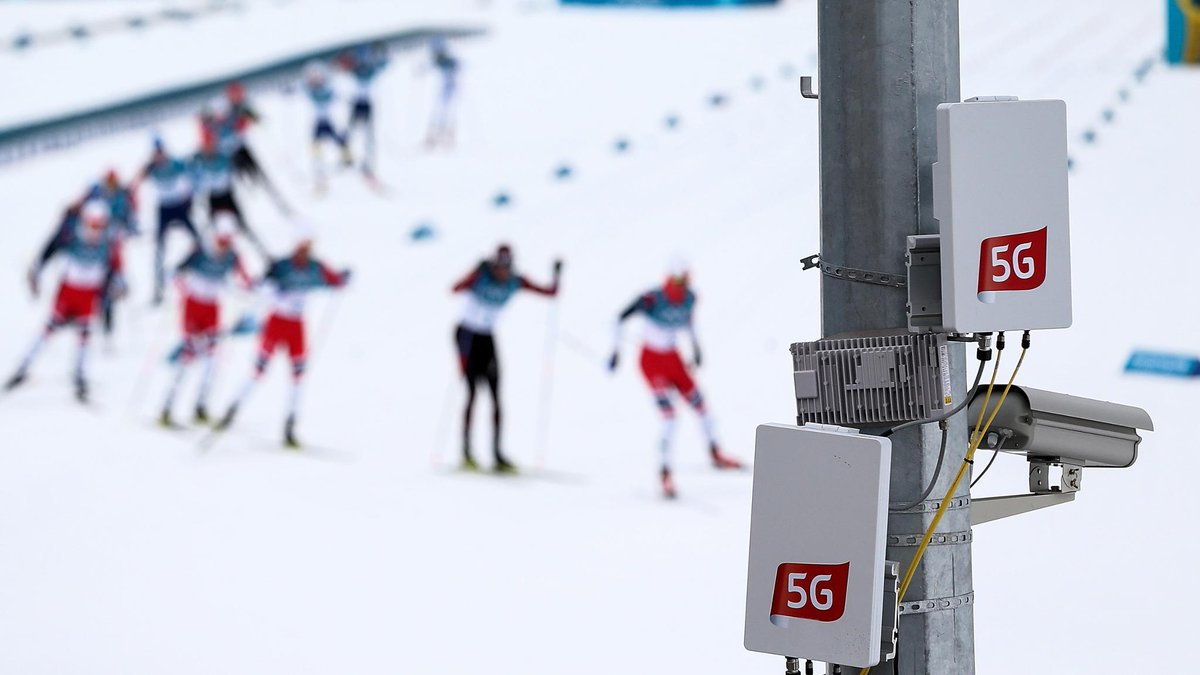
Spectators at the Winter Olympics in South Korea are getting a preview of the next-generation, ultra-fast wireless networks coming to other nations in the next year or two.
Bloomberg this week , developed by Intel, Ericsson, Samsung and Korean carrier KT Corp., in and around Pyeongchang.
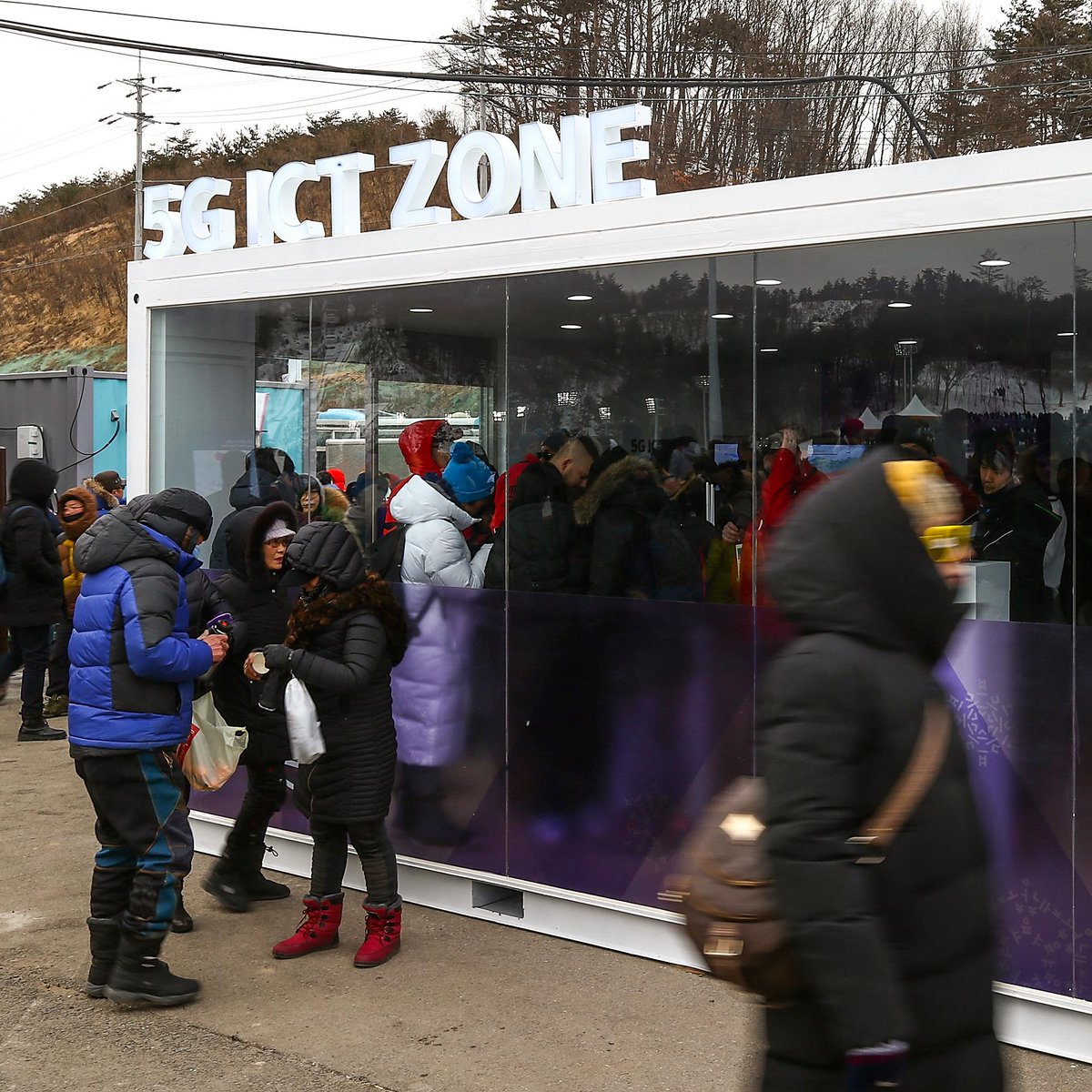
The systems allow viewers to stream live video of figure skating from any angle or experience bobsled races from the hood of the sled. Driverless buses, meanwhile, course through the area using 5G networks to navigate roads — and display 5G video to passengers.
The network will be shut down after the games, the report added, as developers work to resolve any issues and prepare for in 2019. –
First Ever Intercontinental, Quantum Encrypted Video Conference
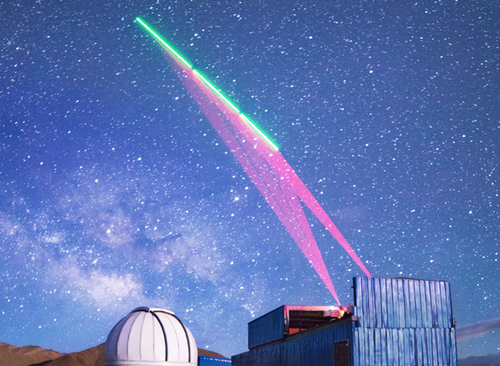
The satellite Micius relayed quantum-secure signals between China and Austria. –
Led by physicist Jian-Wei Pan of the University of Science and Technology of China, the team relied on networks of optical fiber, a handful of encryption algorithms, and a that China launched in 2016—the only one specifically designed for quantum cryptography.
“They’ve demonstrated a full infrastructure,” says Caleb Christensen, the chief scientist at MagiQ Technologies, which makes quantum cryptography systems that connect a small number of users. “They’ve connected . Nobody’s done that with [quantum encryption] ever.”
If implemented the way physicists first envisioned it back in the 1980’s, quantum encryption would be unbreakable.
The protocol is a bit complicated, but it essentially involves the sender transmitting photons to the recipient to form a key, and both parties sharing part of the key publicly. If someone had tried to intercept it, the recipient’s key would not match the sender’s key in a specific statistical way, set by rules in quantum mechanics. The sender would immediately know the key was compromised.
Physicists also see quantum encryption as an important tool for when quantum computers finally become functional. These quantum computers—or more likely, the ones to follow a few decades later—could bust the best encryption algorithms today. But no computer could crack a properly quantum-encrypted message. –
MARKETS
Amazon

The visualisation is interesting … because it leads you to ask “What on earth are they doing?”
Profits are managed to be as low as possible and the financial resources generated by the business are being reinvested to increase profitable growth.
“Companies are valued not on their percentage margins, but on how many dollars they actually make, and a multiple of that. When forced to choose between optimizing the appearance of our GAAP accounting and maximizing the PV of future CF, we’ll take the cash flows.” –
Why declare earnings, and pay corporate income tax on them, instead of reinvesting the funds in profitable growth?
–
COMPANIES / PROJECTS / PRODUCTS
SpaceX Launches Falcon Heavy, the World’s Most Powerful Rocket

Tell me that’s not one of the coolest things you have ever seen. Congrats everyone involved at SpaceX. –
In the run up to launch, it wasn’t at all clear that the rocket would work.
Thousands of onlookers in Florida could be heard cheering on the company’s livestream, which was viewed by about 3 million people.
“People [came] from all around the world to see what will either be a great rocket launch or the best fireworks display they’ve ever seen,” Musk said.
The rocket’s smooth takeoff wasn’t the only stunning thing about this launch.
In a never-before-seen feat, SpaceX also managed to guide two of the Falcon Heavy’s first-stage rocket boosters to land upright back on Earth. They cut back through the Earth’s atmosphere and landed in unison at a Kennedy Space Center landing pad.
“That was probably the most exciting thing I’ve ever seen — literally ever,” Musk said.

On board the rocket that’s now headed deeper into space is Musk’s personal Tesla roadster. At the wheel is a dummy dressed in a spacesuit. Musk said in December the car would play David Bowie’s “Space Oddity” on repeat. Cameras on board the car show it cruising by Earth, which appears as a big blue orb in the background.
The success marked a huge step forward for a company that’s already managed to shake up the rocket industry with its groundbreaking technology.
The company made the world take notice when it proved it can safely return first-stage rocket boosters to Earth with its Falcon 9 rocket, which the company has used for more than 40 missions dating back to 2012.
Those rockets have a single first-stage booster, and SpaceX has safely recaptured them after 21 Falcon 9 launches.
Now, SpaceX routinely puts used boosters back to work. In fact, the inaugural Falcon Heavy flight actually used two pre-flown Falcon 9 boosters (the center booster was new.)
Reusing hardware is part of SpaceX’s plan to drive down the cost of launches.

Last pic of Starman in Roadster on its journey to Mars orbit and then the Asteroid Belt
–
SpaceX’s Falcon Heavy Just a Prelude to the Main Event

SpaceX’s BFR is a proposed giant rocket that will dwarf the Falcon Heavy
BFR is the rocket Musk is counting on to return astronauts to the moon and to ferry colonists to Mars.
According to SpaceX, the BFR will generate 11.8 million pounds of thrust and be able to carry a 150-ton payload. That far surpasses any rocket now in production, outstripping even the promised capabilities of , or SLS. (The names of the two rockets speak volumes about the difference between the cultures of NASA and SpaceX.)
Even more important than BFR’s size will be its cost. SpaceX says the Falcon Heavy will cost about $90 million per launch but aims to make BFR cheaper than that — possibly a lot cheaper — because it will be 100-percent reusable.
In contrast, NASA’s SLS will cost a whopping $1 billion per launch, according to former NASA deputy administrator Lori Garver.
The staggering expense of the SLS is a key reason why NASA’s long-discussed plans to send astronauts back to the moon and to Mars have remained theoretical exercises. SpaceX’s success with the Falcon Heavy could free NASA from the SLS in favor of vastly more affordable private rockets.
“Government development of SLS was demanded by Congress,” Lori Garver says. “If SpaceX successfully develops BFR, there is no role for SLS. This launch is a game-changer that can save NASA from themselves.”
Dramatic drops in launch cost will have repercussions far beyond NASA, especially if the BFR performs as promised. At the press conference, Musk vowed that “we want a ,” a global competition to see who can provide the most capability for the least money.
In reality, that race is well underway.
–
Over 100 Launches Likely This Year as Space Economy Grows
As of February 2018, more than 180 orbital launches were planned for the year, double the 90 orbital rockets that flew in 2017. Although the space industry is growing, many of those missions are likely to be delayed. –
All Kinds of New Possibilities Emerging in Space Industry
“Russia and China cannot afford to match Elon on costs,” says Charles Miller, a private-space entrepreneur and advisor to the Trump administration. “Neither can Europe. They all need to go back to the drawing board and reinvent themselves.”
With the Falcon Heavy, SpaceX has already cut the cost of space access by about a factor of 10. If it or one of its competitors can drop the cost by another factor of 10, all kinds of new possibilities emerge.
Countries that currently ride America’s coattails could have human spaceflight programs of their own. Universities, nonprofits, and corporations could claim their own place in space. might at long last emerge from the world of science fiction.
BFR is still in the planning stages, but it won’t stay there for long. SpaceX has been testing the that will provide thrust for the rocket for nearly two years. Musk predicts short “hopper flights” of BFR hardware in 2019. These will be mini-test launches in which parts of the rocket go up just a few miles to prove their mettle.
First flights of the full BFR hardware could take place around 2022, according to Musk.
By pressing ahead with the BFR Musk is accelerating the push to make human space exploration more accessible. China has well-known goals to send crews to the moon. More relevant, perhaps, Jeff Bezos has many of the same ambitions for his own low-cost rocket company, .
–
Tesla’s 100% Autonomous LA to New York Trip Now 3 To 6 Months Away

During the Q4 earnings call, Tesla CEO Elon Musk spoke about the missed coast-to-coast autonomous drive, reasons behind the delay, and his thoughts regarding the technology.
According to Musk, Tesla could have pulled off the , though it wouldn’t have been good enough.
The CEO says that the tech may be ready in as soon as three months, but it could take up to six.
Essentially, Musk explained that it’s important that the Full Self-Driving technology is capable of working in any location, regardless of conditions. This is much different from using a pre-planned route and attempting to aim for cooperative weather. He shared:
“We could have done the coast-to-coast drive, but it would have required too much specialized code to effectively game it or make it somewhat brittle and that it would work for one particular route, but not the general solution. So I think we would be able to repeat it, but if it’s just not any other route, which is not really a true solution.”
–
KNOWLEDGE
Problem Solving
Problems are inevitable. Problems are soluble. Get better at solving problems. Get better at life. Get more powerful. Embark on the journey of rapid progress. It’s rapid progress or death. There are no alternatives. Problems will keep coming – including big ones with big consequences for failure (including the extinction of humanity). Either make ongoing progress at problem solving or failure is inevitable. There is no power level which is safe forever, but at least making more progress as fast as possible is the safest thing to do, it’s the only thing that can possibly work. –
Choose Reason or be a Puppet
You can let your life be run by your static memes, your culture, convention, tradition, ritual, religion, biology, other people’s opinions, social pressures, your parents … or you can run your own life. The choice is yours: choose reason or be a puppet. Pursue more control over reality – rapid ongoing progress – or be controlled by forces you don’t even understand, without even knowing what’s going on. If you aren’t taking control over your life, and learning all you can, and being as rational as you can, then you are being controlled quite thoroughly, and more than necessary, by forces beyond your understanding (especially memes – which are widely misunderstood, and to understand them you must read ).
Reason is the only effective way to make progress and get control of your own life. Without reason, you’ll do it wrong, because reason is the name for methods of thinking which are good at correcting mistakes and actually getting things right.
People say “yeah, great” to this then don’t do it. Well, . Learn about reason. Study it. Write about what you’re learning. Discuss it and get criticism because you’re going to get things wrong, and the set of mistakes you make will not be identical to the sets of mistakes other people make. –
UNBOUNDED PROGRESS
Artificial Intelligence
MIT Tech Review:
No. AI was not better than radiologists. AI when trained BY radiologists who labeled data for it, and when it was tested on the very same data, and only needed to worry about a small number of diagnoses, sometimes does better than radiologists alone.
Enough of this breathless “AI is better than humans at X” reporting. Rather say humans are developing AI tools to help them do their job better. And stop generalising performance from test data sets as if it is equivalent to performance in the real world. Non trivial differences! –
3D Printing System for On-Demand Pharmaceuticals
Seriously disruptive technology being born: A practical device for on-demand synthesis at home of pretty much every small molecule compound in the pharma space. –

As proof-of-concept, Kitson’s team produced baclofen, a muscle relaxant, from readily available chemical precursors (chemicals that change into other chemicals) using a three-step process.
It’d be hard to overstate the potential of this sort of drug (or chemical, generally) manufacturing.
“By demonstrating the multistep synthesis of baclofen in this integrated, benchtop device, the door has been opened to making complex molecules, such as APIs [active pharmaceutical ingredients], on demand in nontraditional manufacturing environments such as hospitals or even doctors’ offices, bringing manufacturing closer to the point of use,” writes Christian Hornung.
These manufacturing scenarios might also include remote settings, synthesis of personalized medicines, small-scale production of abandoned pharmaceuticals, or even space missions.” –
SENS Receives An Additional $1 Million bitcoin Donation From Pineapple Fund
“Regenerative medicine for ageing will be transformative to medicine and humanity, and I’m excited to be supporting SENS Research Foundation!” –
Vitalik Buterin Donates $2.4 Million Ether to SENS

Vitalik Buterin, Ethereum’s co-founder, has donated $2.4 million to SENS Research Foundation, a non profit that “works to research, develop, and promote comprehensive regenerative medicine solutions for the diseases of aging.”
Buterin said: “I’ve been a fan of Aubrey’s work since I first read Ending Aging when I was a teenager, and I am happy to have been blessed with the opportunity to personally support SENS’s efforts. Their focus on creating solutions to the diseases of aging, one of the greatest problems facing humanity, is very much in line with my goal to positively impact the lives of millions of people around the world.”
Regarding the donation by Buterin, Mike Kope, CEO at SENS Research Foundation, said:
“SENS Research Foundation is honored to be the recipient of Vitalik’s incredible generosity. This was his second donation to us in 2017 and his support is critical to SENS Research Foundation’s expansion of our programs.”
–
Therapies to Repair Aging Damage
Because we accumulate in the body so many different types of damage, that means we have many different types of therapy to repair that damage. And of course, each of those types has to be developed independently. It’s very much a divide and conquer therapy.
The therapies interact with each other to some extent; the repair of one type of damage may slow down the creation of another type of damage.
Some of these therapies are much easier to implement than others. The easier components of what we need to do are already in clinical trials—stem cell therapies especially, and immunotherapy against amyloid in the brain, for example. Even in phase III clinical trials in some cases. –
SENS Progress
Looking back over the past couple of years, I’m particularly proud of the successes we’ve had in the very most difficult areas. If you go through , there are two that have absolutely been stuck in a rut and have gotten nowhere for 15 to 20 years, and we basically fixed that in both cases.
We published two years ago in Science magazine that essentially showed a way forward against the stiffening of the extracellular matrix, which is responsible for things like wrinkles and hypertension.
And then a year ago, we published a real breakthrough paper with regard to placing copies of the mitochondria DNA in the nuclear DNA modified in such a way that they still work, which is an idea that had been around for 30 years; everyone had given up on it, some a long time ago, and we basically revived it. –
Aubrey de Grey: “People in Middle Age Now Have a Fair Chance”
Cultural attitudes are going to be turned upside down by sufficiently promising results in the lab, in mice.
Once we get to be able to rejuvenate actually old mice really well so they live substantially longer than they otherwise would have done, in a healthy state, everyone’s going to know about it and everyone’s going to demand – it’s not going to be possible to get re-elected unless you have a manifesto commitment to turn the FDA completely upside down and make sure this happens without any kind of regulatory obstacle.
I think we have got a 50-50 chance of getting to that tipping point in mice within five years from now. Similarly, for humans, a 50-50 chance would be twenty years at this point.
I would say people in middle age now have a fair chance. A 50/50 chance of within 20 years, and when you get there, you don’t just stay at biologically 70 or 80, you are rejuvenated back to biologically 30 or 40 and you stay there, so your risk of death each year is not related to how long ago you were born, it’s the same as a young adult.
Today, that’s less than 1 in 1000 per year, and that number is going to go down as we get self-driving cars and all that, so actually 1000 is a very conservative number.
It’s just like a car. What you’re doing is you’re repairing damage, and the damage is still being created by the body’s metabolism, so you can just choose how frequently and how thoroughly you repair the damage. And you can make a different choice next time. –
Follow me on Twitter
bitcoin: 3LRwJ7p3tMxCL2PPdtPGRS7ZjPPHdjvc3Z