· March 1, 2018 · 3:00 pm
Porsche Leads the Pack in Race for Automotive Blockchain Integration

Capitalizations Index – B ∞/21M
Porsche is officially the first automobile manufacturer to both implement and successfully test the blockchain directly in vehicles, thanks to Berlin-based start-up XAIN.
In the race to implement blockchain technology into consumer automobiles, Porsche is firmly in the lead.
According to the company’s , the German automobile manufacturer tested remotely locking and unlocking vehicles via a blockchain-powered app, as well as temporarily granting access authorizations. Additionally, Porsche is testing new business models based on encrypted data logging, with goals of improving autonomous driving functionality.
As noted by Oliver Döring, Financial Strategist at Porsche, holds tremendous potential in the world of high-performance automobiles. Said Döring:
We can use blockchain to transfer data more quickly and securely, giving our customers more peace of mind in the future, whether they are charging, parking or need to give a third party, such as a parcel delivery agent, temporary access to the vehicle. We translate the innovative technology into direct benefits for the customer.
According to the announcement, it only takes 1.6 seconds to open and close a car using the blockchain-powered app – six times faster than before. Additionally:
[Efficient cryptographic encryption] ensures that all activities are documented in the blockchain in a way that prevents them from being modified, and can be viewed using an app. For example, access authorisations can be distributed digitally and securely and can be monitored by the vehicle owner at any time. Access also works remotely.
The addition of blockchain technology also affords users possibility of securely and efficient assigning temporary access to a vehicle while protecting communication between participants. Smart contracts are also used to integrate third-party providers, thus eliminating the need for additional hardware.
Porsche is also currently developing further blockchain applications for charging and parking, in addition to constructing a new blockchain-based business model relying on auditable data logging and local encryption in a distributed blockchain – effectively putting users in complete control of data while activities are logged and deletions are made transparent.
Blockchain technology will also greatly improve autonomous driving functionality, thanks to the ability to obtain regional learning effects shared securely with other vehicles, as well as protected swarm data.
Are you excited about the future of blockchain technology on automobiles? How long do you think it will be until we see blockchain technology implemented in affordable consumer cars? Let us know in the comments below!
Images courtesy of Shutterstock, AdobeStock
Published at Thu, 01 Mar 2018 20:00:15 +0000
Blockchain Technology
Little-known altcoin DigiByte is following Litecoin and Syscoin in making investors rich with impending SegWit activation.
Metrics highlighted by developers Saturday show the proportion of DigiByte miner support at 72.48% – inching past the 70% activation threshold.
“6 more days to go till activation at this rate! Happy Easter everyone!” a Twitter post added.
We have hit the 70% activation threshold for on ! 6 more days to go till activation at this rate! Happy Easter everyone!
— DigiByte (@DigiByteCoin)
//platform.twitter.com/widgets.js
Despite having barely made a name for itself prior to the announcement, DigiByte is currently 63rd in CoinMarketCap’s , its price increasing 15% in the 24 hours to press time Sunday and having more than doubled since the beginning of April.
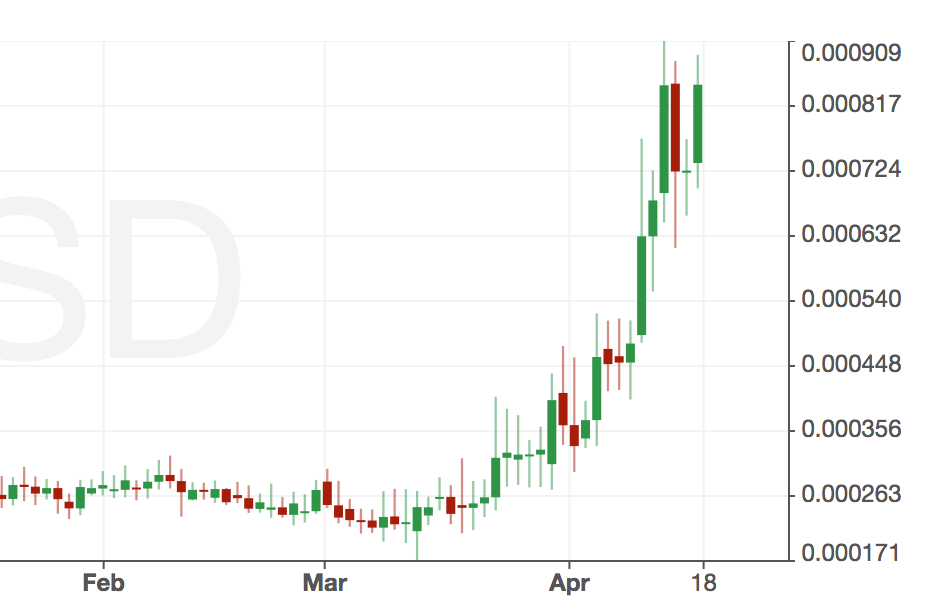
The events continue an increasingly familiar pattern of behavior among altcoins. Both Litecoin and Syscoin have already benefitted from elevated interest, trading and publicity from SegWit activation ‘likelihood,’ with traders after extended periods of flat prices.
Litecoin is currently trading at $10.76 per token, maintaining highs not seen since 2014 and dwarfing the many months it spent dormant at just under $4.
SysCoin’s story is almost identical. Having staged a modest increase in April 2016 following a , prices remained at around $0.01 per token until SegWit activation announcements saw them treble to $0.03.
Reactions to the altcoin phenomenon have been mixed. While SegWit potentially provides a convenient method for get-rich-quick schemes, reflecting on bitcoin’s battle with the technology’s activation, BitFury CEO George Kikvazde was rueful.
“One can only imagine at what price level bitcoin would be now, if a sound, well-tested tech like segwit had been activated,” he last week as Litecoin’s success edged closer.
In further bitcoin news, major Chinese mining pool F2pool said on Friday in accordance with its poll results it would be implementing SegWit on both Litecoin and bitcoin “soon.”
As 56% from the poll in favor of segwit & agreed UASF is bad. We'll respect ur opinion and implement segwit on both BTC & LTC soon. Thanks.
— Wang Chun (@f2pool_wangchun)
//platform.twitter.com/widgets.js
The decision comes despite lead figure Wang Chun’s frequent criticism of bitcoin Core and preference for a user-activated soft fork (UASF).
Following the SegWit statement, Chun Core to Chairman Mao, with users similar to the Red Guard.
What do you think about altcoins and SegWit activation? Let us know in the comments below!
Images courtesy of Twitter, Segwit.co, Shutterstock
The post appeared first on .

Max’s Corner: Computing Your Way Out of a Paper Bag Photo: Unsplash This week we learned that a self-taught programmer solved the MIT cryptography puzzle 15 years earlier than expected. In honor of that achievement, […]
