May 6, 2026

Capitalizations Index – B ∞/21M

Perfect Storm: Bitcoin Didn’t Exist in the Last Financial Crisis

Bitcoinist.com
Perfect storm: bitcoin didn’t exist in the last financial crisis

Perfect Storm: bitcoin Didn’t Exist in the Last Financial Crisis
Perfect storm financial crisis bitcoin

bitcoin has been quietly preparing for over a decade for the next market storm as a non-political alternative to the money printing pyramid.

bitcoin Separates Money and State

bitcoin was forged by the last great financial crisis of 2008 and designed to thrive in financial turmoil.

bitcoin adoption has always been driven by bank failures, bailouts, bail-ins, and political unrest,” said Max Keiser in an interview with Bitcoinist earlier this month.

It’s certainly no coincidence that Satoshi Nakamoto left a message in the first ever mined bitcoin block —known as the genesis block. It famously contains the dated title of an FT article:

The Times 03/Jan/2009 Chancellor on brink of second bailout for banks.

The anonymous creator hints that bitcoin is a non-political alternative to the existing financial system. The Bitcoin whitepaper could, in fact, be interpreted by some as a declaration of the separation of money and state. 
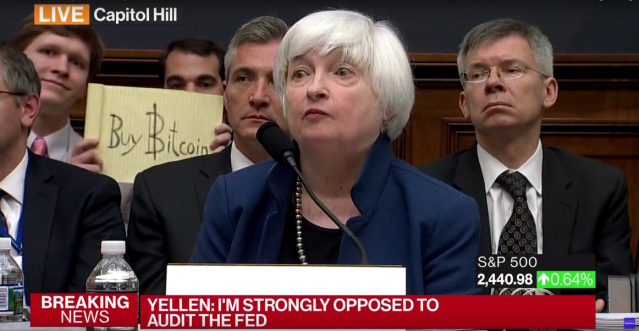
Perfect storm: bitcoin didn’t exist in the last financial crisis

bitcoin was an inevitability  a solution to downfalls of the trust-based monetary system — in which central banks and governments have historically abused that trust at the expense of the public.

For almost fifty years now, the de facto global currency has essentially been running on ‘full faith and credit’ only. The problem is that when this faith is tested by the markets (i.e. reality), credit-fuelled bubbles are exposed. When they go pop, liquidity dries up and cash once again becomes king.

bitcoin: Trust Buster

So it’s no surprise that cash injections — euphemistically known as QE (Quantative Easing) — have become the preferred drug prescribed by central banks to fuel the longest bull market in history. 

At the same time, the demand for the US dollar hasn’t waned but actually risen. This phenomenon may have impacted the price of bitcoin 00 this year, according to Keiser.

“The problem bitcoin has had recently is its competitor, the US Dollar, has been rising,” he explains.

When the dollar rolls over and starts dropping, bitcoin will hit new ATH.

Meanwhile, critics say it’s too volatile to be a safe haven alternative. Its price has admittedly dropped by 85 percent from its all-time high in 2017. But proponents, like Max Keiser and many others, argue that short-term price fluctuations do not matter if the legacy fiat monetary system is inherently flawed.

They also note that savvy investors are realizing the long-term value proposition of holding the world’s most politically-neutral, hard form of money.

Simply put, trusting no one pays off for those who wait.

bitcoin Transfers Value From the Sodler to the Hodler

Saifedean Ammous, economist and author of the bitcoin Standard, states that bitcoin’s attributes, particularly immutability and neutrality, make it attractive to investors with a long-time preference.

Saifedean

Saifedean Ammous

He explained:

bitcoin has already gone through 9 years of growth out in the wilds of the internet, mostly without a central planner in charge of it after its creator disappeared. It grew because it offered utility to enough users and developers to keep maintaining it.

It has weathered attacks and hacks and ‘community conflict’ and plenty of powerful interests and questionable characters trying to bend it to their will. After all of this, bitcoin can indeed claim to be immutable. Once it became clear bitcoin was successful at doing this, then anyone who was interested in an immutable digital hard money could use it.”

Coinbase President Asiff Hirji, whose San Francisco-based exchange launched a custodial platform for institutional investors earlier this year, also sees bitcoin and cryptocurrencies rewarding the patient in the future.

According to Hirji, none of Coinbase’s investors speculated on BTC price when they valued the exchange at $8 billion earlier this year. They weren’t betting on what the price will be “today, tomorrow or even a year from now,” he said 

“If that’s your time horizon, as an institutional investor, you shouldn’t be touching this,” adds Hirji.

Fragile Fiat

From a security standpoint, centralized money systems are also honeypots. Centralized infrastructure is prone to hacks and shut down compared to a much more robust decentralized network like bitcoin, which has been operating 24/7 with 99.8 percent uptime.

What’s more, third-parties aren’t just security holes. They are also structurally political. A duopoly such as Visa and Mastercard, for example, can (and do) restrict access for their own reasons, and even have the power to push other companies to toe the line.

Bakkt earnings season wall street's old guard has a double standard when it comes to bitcoin

The next global financial crisis is baked into the fiat cake. It’s a matter of not if, but when.

Will bitcoin be ready? Only time will tell. But with warning signs already surfacing such as global social unrest and the markets tanking, the test may come sooner rather than later. 

Do you consider bitcoin the perfect long-term investment? Share your thoughts below! 

Images courtesy of Bitcoinist archives, Shutterstock

The post Perfect Storm: Bitcoin Didn’t Exist in the Last Financial Crisis appeared first on Bitcoinist.com.

Previous Article

Newsflash: Dow Climbs 1,050 Points in Largest-Ever Rally While Bitcoin Slumps

Next Article

Scientists Turn Copper into ‘Gold’ — Will Bitcoin Replace as Store of Value?

You might be interested in …

SophiaTX Integrates Blockchain Technology With SAP

https://www.sophiatx.com/en/blog/2/the-world-s-first-open-source-platform-to-integrate-sap.html

In September, SophiaTX announced the first open-source platform to primarily integrate blockchain technology with SAP software, used by 87 percent of global businesses and 98 percent of the top 100 most-valued brands.

“To advance blockchain into business operations, the blockchain must integrate with ERP [enterprise resource planning] and other enterprise applications such as SAP,” notes the SophiaTX white paper. “This sector has been relatively untouched until recently when Equidato Technologies AG [SophiaTX’s parent company] announced their first project, SophiaTX, an open source blockchain platform and marketplace designed for businesses of all sizes.”

The integration of blockchain technology with ERP, CRM (customer relationship management) and SCM (supply chain management) business software is certainly a hot topic pursued by major vendors and blockchain-oriented solution developers. In May, SAP itself launched its innovation system, dubbed SAP Leonardo, focused on next-generation technologies, with an SAP Cloud Platform Blockchain service targeted at all industries, including but not limited to popular use cases in financial services and supply chains. SAP’s blockchain technology platform allows customers and developers to build blockchain extensions for existing applications and integrate SAP solutions in the blockchain ecosystem. Embedded in the SAP Cloud Platform, SAP’s blockchain-as-a-service (BaaS) pilot allows customers to experiment with the technology.

SAP is also envisaging the integration of blockchain technology with other next-generation technologies, such as the Internet of Things (IoT). In September, SAP announced a blockchain co-innovation initiative and plans to make blockchain technology an integrated part of IoT, manufacturing and digital supply chain solutions using its Cloud Platform Blockchain service.

“Prior to defining the strategy and approach for SophiaTX, we assessed the technological capabilities of other blockchains to ensure we were truly adding value,” Jaroslav Kacina, CEO of Equidato and SophiaTX,  told bitcoin Magazine. “We wanted to create a product that will not only be suitable for business but also provide superior functionality and features. We found that very few of the existing blockchains are focused on business and enterprise applications, and we couldn’t identify any that would be suitable for business from compliance, security and architecture perspective.”

Kacina explained that Ethereum, for example, is probably the most dominant platform for initial coin offerings (ICOs) and token generation events (TGEs), but in his view, Ethereum’s use of proof of work makes it inappropriate for providing secure, holistic, high-performance blockchain solutions.

“On the other hand, SAP’s own Leonardo initiative, Blockchain as a Service (BaaS), is shaped as a private solution and therefore tends to be relatively expensive for smaller businesses, as well as less transparent, since it is cloud based,” Kacina added. “We designed SophiaTX with business use in mind so it is compliant, secure and public, therefore allowing businesses and customers across entire the value chain to join and adopt the use of the platform.”

Based on the same proprietary technology as the DECENT blockchain, SophiaTX was created by Equidato Technologies AG, a joint venture between DECENT on the technology side and the Venaco Group bringing its experience in enterprise applications for business to the project.

“We have decided to use DECENT technology due to the fact that DECENT uses DPOS (Delegated Proof of Stake) which is faster than Proof of Work used by Ethereum and bitcoin,” Kacina explained. “We needed a platform which is suitable as a starting point to create additional features to make it compliant, secure and relevant for business. And also, having access to [the] DECENT team’s capabilities allows us to bring [the] product to market in [an] accelerated fashion. The ‘hard fork’ was created as a copy of the DECENT’s main net and installed as a proprietary solution for SophiaTX.”

A proof of concept (PoC), recently demonstrated to a select group of attendees in Zurich, shows how businesses can use blockchain technology to transparently and reliably exchange information between their enterprise systems in real time, with a customer invoice directly created in one SAP system automatically transferred via the SophaTX testnet to another company using a different SAP system.

SophiaTX wants to be a cross-industry platform allowing both vertical and horizontal integrations for businesses of all sizes. “At the initiation of this project, we analyzed all standard modules of typical ERP systems (SAP) across finance, procurement, logistics, sales, manufacturing and others, and we have identified over 15 specific use cases within several industries,” Kacina told bitcoin Magazine.

“It became apparent to us that, in order to adopt blockchain [technology] into various industries and connect to the enterprise applications, we needed to provide common building blocks across all modules of ERP, SCM and CRM systems. This led us to the concept of establishing a platform, as a key infrastructure for peer-to-peer smart transactions, prior to building industry specific solutions.”

Kacina explained that different types of cross-industry scenarios have been worked out. For example, one-to-one document exchange could be used by any industry needing to acknowledge the transaction of invoices, purchase orders, delivery notices and other documents, while multiparty-information exchange is especially relevant for projects or systems with multiple vendors, contractors or collaborating firms. As an industry-specific example, SophiaTX wants to enable a “track and trace” solution across value chains, allowing supply chain transparency and security, which is considered as being of particular interest to the food, pharmaceutical and luxury markets.

The proprietary SophiaTX token, SPHTX, will fuel the SophiaTX blockchain. The SophiaTX token sale will last for 10 days with a hard cap of 115,000 ETH and fund the development, marketing and ongoing management of the project and the overall SophiaTX platform. Kacina explained that the token will grant rights to use and transact using the platform, thus rewarding miners validating transactions and blocks on the chain.

The SPHTX token will also allow access to the development platform and facilitate the licensing for private blockchains. Finally, the SPHTX token will permit using the marketplace, a web-based entry point for customers and solution developers, which will feature an App Store and a Dev Store.

“The SophiaTX marketplace will be used by both industrial companies and a global community of experts, consultants and developers,” Kacina told bitcoin Magazine. “It will be specifically designed to not only share applications and assets, but also to exchange know-how, process maps and blueprints, integration strategies, and to offer professional consulting services to encourage accelerated adoption and use of the platform. A developer, for example, could publish an app in the marketplace which would be accessible to businesses, as well as the end-user community, [that] use applications that integrate with their existing systems. Developers are rewarded when their application is downloaded and deployed.”

The post SophiaTX Integrates Blockchain Technology With SAP appeared first on Bitcoin Magazine.

China’s first blockchain-enabled notary opens office in beijing

China’s First Blockchain-Enabled Notary Opens Office in Beijing

China’s First Blockchain-Enabled Notary Opens Office in Beijing China’s first blockchain-enabled notary has opened offices in Beijing, local media People reported on April 19. Per the report, the service opened last Friday at the Beijing […]