By : is one of the earliest mainstream media proponents of . He has consistently preached the values of as a path to individual financial sovereignty.
bitcoin is on its Own Journey
In a recent episode of the Keiser Report, his show on RT.com, Keiser starts out by saying he will be speaking at an upcoming event. He then proceeded to explain “what you need to understand,” saying:
“ is on its own journey and it has a way of making people who challenge it look really stupid. In the space, of course, you have Craig Wright, you had Roger Ver, you had Mike Hearn, these type of people who suffer from derangement syndrome. Now in the past couple years you’ve got Nouriel Roubini, Paul Krugman, and a few others that are in mainstream economics who are looking really stupid because they never took the time to investigate what is all about.”
This was in response to his co-host, Stacy Herbert, who pointed out that had recently spiked, seemingly in direct response to the Federal Reserve’s stance on rate hikes. For those who haven’t been paying attention, low-interest rates may be here to stay .
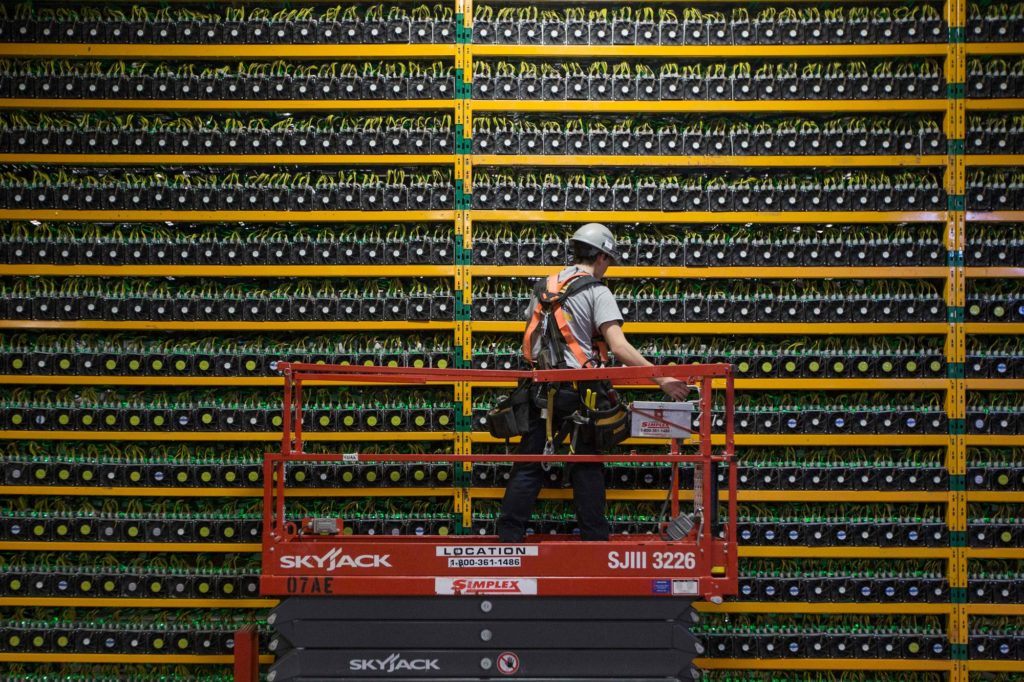
Keiser went on to say that he believes a “state actor” will soon be for “strategic reserve purposes.” He believes that countries will soon compete for hashpower in an effort to control the network.
“The hash wars will be played out on a state level and that’s what will take us to new all-time highs.”
Keiser believes nation-states will begin to compete for domination.| Credit: Lars Hagberg / AFP
The view is somewhat radical from a crypto perspective. If the majority of hashpower is controlled by state actors, would the people who’ve secured the network financially for so many years have such an interest in it? Their interest and decision to sell or not to sell, for what it’s worth, create what we perceive as the price.
Would State-Mined BTC Retain the Same Interest?
A huge factor in many people’s interest in is its sovereignty from government control. It’s conceivable that states would quickly try to seize a majority hashrate in an effort to control the network – reshaping the rules of consensus.
Herbert brought the subject back to the Federal Reserve’s minutes, pointing out that this was perhaps the first time had responded in quite so similar a way as gold. Both gold and spiked on the and both deflated the following the day, she said. A common trope is “don’t fight the fed.”
If you simplistically trade on negative from the fed, you are. Although, if you were long up to $5400 that particular day, you made some money; but if you thought what amounts to a footnote would push a lot further than that, well, hopefully, you realized your error before it was too late.
Keiser, the eternal bull, has a specific line of thinking about how will reach his old prediction of $100,000 per unit. Governments will take a more active role in it, and speculation will push higher and higher. Will this actually be how it happens? Again, it’s questionable whether or not could sustain the same level of interest from people if it became the domain of governments. A new asset might emerge to usurp the money, perhaps a privacy coin or a smart contract platform.
Then again, Keiser could be right. He’s certainly .
Published at Wed, 17 Apr 2019 06:16:19 +0000