September 11, 2026

Capitalizations Index – B ∞/21M

PBOC Deputy Governor Calls STOs ‘Illegal Financial Activity’

bitcoin News
PBOC Deputy Governor Calls STOs ‘Illegal Financial Activity’
Pboc deputy governor calls stos ‘illegal financial activity’

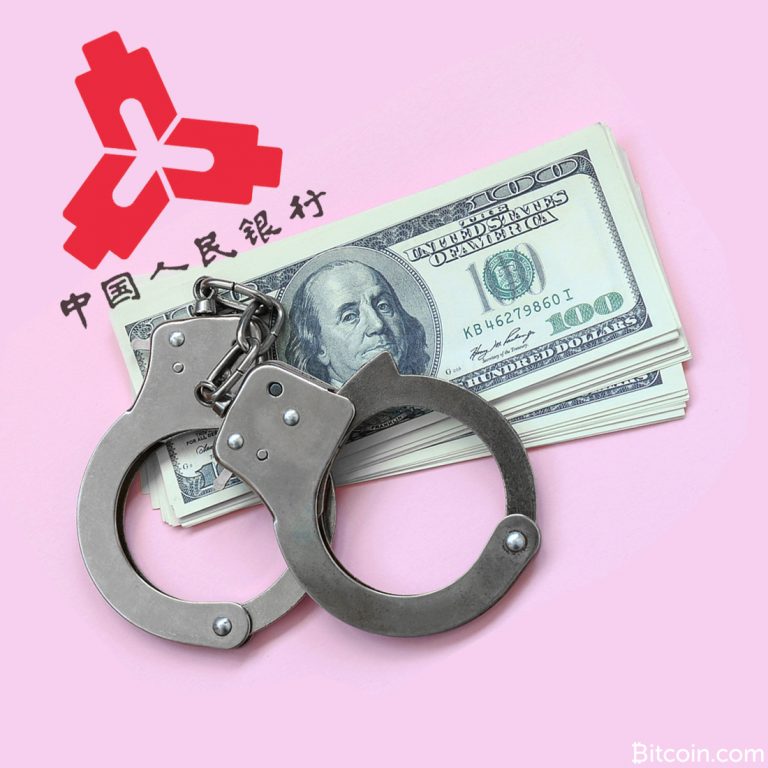
Local media has reported that the People’s Bank of China (PBOC) has banned security token offerings (STOs). Pan Gongsheng, a deputy governor of the PBOC, has mobilized the same rhetoric used with regard to initial coin offerings (ICOs) in describing STOs, accusing security token offerings of comprising “illegal financial activity.”

Also Read: Federal Agents Told This Silk Road Moderator to Fake His Own Death 

Security Token Offerings Deemed to Comprise Illegal Activity in Mainland China

Pboc deputy governor calls stos 'illegal financial activity'Gongsheng recently told state-owned media channel China Central Television that STOs are “still essentially an illegal financial activity in China.”

Speaking at the recent 2018 Global Wealth Management Forum, Huo Xuewen, the director of the Beijing Municipal Bureau of Local Financial Supervision, also sought to discourage entities from conducting STOs, stating of the emerging phenomenon: “I want to warn those who are promoting STO fundraising in Beijing. Don’t do it in Beijing. You will be kicked out if you do it.”

Despite Widespread Perceptions of Greater Legitimacy, Chinese Officials Lump STOs Alongside ICOs

Gongsheng claimed that “virtual money has become an accomplice to all kinds of illegal and criminal activities,” seeking to emphasize the successes of the Chinese ICO crackdown that was launched during September 2017. Prior to action taken against Chinese ICOs, it was approximated that 80 percent of global ICO financing was taking place in mainland China.

Pboc deputy governor calls stos 'illegal financial activity'The deputy governor added that the majority of ICOs conducted in China are suspected of engaging in illegal fundraising, pyramid schemes, and other financial fraud.

Cao Hua of United Asset Management predicted that China’s regulators will “continue to strengthen regulation in the financial technology market” to ensure stability, adding that “new business models in the financial technology sector are not welcome in China now.”

A tokenized real estate investment trust STO was conducted in the U.S. at the end of November, which saw Convexity Prosperities launch a token offering seeking to raise $20 million from accredited investors in partnership with private investment tokenization platform Harbor. For now, though, STOs, as with ICOs, remain largely off-limits to Chinese citizens who are barred from participating.

Do you think that STOs will be met with regulatory hostility in other jurisdictions? Or will a crackdown be implemented by few states other than China? Share your thoughts in the comments section below!

Images courtesy of Shutterstock

The bitcoin universe is vast. So is bitcoin.com. Check our Wiki, where you can learn everything you were afraid to ask. Or read our news coverage to stay up to date on the latest. Or delve into statistics on our helpful tools page.

The post PBOC Deputy Governor Calls STOs ‘Illegal Financial Activity’ appeared first on Bitcoin News.

Previous Article

Cryptography failure leads to easy hacking for PlayStation Classic

Next Article

Conducting Security Token Offerings (STOs) in China Is Illegal

You might be interested in …

Adding Some Fun and Games to Bitcoin Scaling Debate Angst

Adding Some Fun and Games to Bitcoin Scaling Angst

If you’re good at puzzles and familiar with the world of bitcoin, you may be interested in signing up for the second round of the CoinGate bitcoin Challenge, starting Saturday, July 15 at 6 p.m. UTC.

CoinGate, the Lithuanian-based bitcoin and altcoin payment center, is holding its second bitcoin Challenge to highlight the history and benefits of bitcoin as their response to the ongoing contentious scaling debate.

Like many in the bitcoin space, CoinGate CTO Rytis Bieliauskas is watching with some concern and hoping bitcoiners will come back to their roots and remember the origins and original intentions of bitcoin founders.

Every two weeks throughout the summer, CoinGate is publishing a challenge related to bitcoin and blockchain history. Solving the puzzles quickly requires some knowledge and skill, but mostly the challenges are designed to be “geeky fun” for anyone involved with bitcoin to some degree.

On Saturday, contestants can register and access a number of challenges of varying degrees of difficulty on CoinGate’s website and on /r/bitcoin here.

In preparation for the second contest, the Reddit thread is a good source of examples with answers from the last challenge, which began on July 1.

During the July 1st challenge, there was considerable discussion on Reddit among contestants.

“We were really surprised that participants started sharing their thoughts on our Reddit thread, even though there was only one prize for each riddle,” the Coingate team told bitcoin Magazine. “And so all the riddles were solved and prizes snapped up within just 3 hours.

“Our team is really happy with the results and the number of participants [the challenge] attracted. All in all, we logged over 800 attempts and more than 600 people who were up to solve the tasks in a matter of several hours.”

Contestants received a series of puzzles to choose from, leading to a bitcoin private key and the address for a wallet containing BTC.

Three challenges of varying difficulty were launched at once, with the most difficult taking from 4-6 hours to solve. As is evident on the Reddit comments, some found the puzzles baffling while a few seemed more than ready for the challenge.

In one puzzle, for example, contestants were given a grid of four CoinGate logos that seemed identical. A private key was hidden in the image and the participants had to figure out what was hidden and assemble the private key leading to the reward.

Most of the puzzles involve steganography — extracting of the meaning of a secret message hidden within an ordinary message.

Some of the solutions will provide a private key, while some others will provide another method to retrieve bitcoins, for example in the form of a wallet “seed.”

The end goal of each challenge is to get access to a bitcoin address by finding its private key (or otherwise). Depending on the difficulty of the challenge, that address will contain a reward of 0.01 to 0.1 BTC. (The prize will be sent to a bitcoin address just before the challenge.)

CoinGate: On SegWit and UASF

CoinGate CTO Rytis Bieliauskas told bitcoin Magazine:

“CoinGate is seeking to attract people back to the basics of bitcoin and blockchain [technology]. Having been involved in the bitcoin world since 2011, we deeply love the original blockchain and we strongly believe that consensus [on scaling] will be reached.”

Bieliauskas is concerned about the direction bitcoin is taking and is asking Bitcoiners to remember what the original essence and intent of bitcoin was.

Bieliauskas considers himself to be a Core supporter but is hopeful all parties involved will come to a consensus on how to scale bitcoin.

On the CoinGate blog, he wrote:

“We strongly believe in a future for bitcoin. As we have officially stated previously, our team strongly supports SegWit as the best bitcoin scaling solution, and we therefore maintain a close eye on BIP148 (UASF).”

In an email from the CoinGate team, a representative explained: “We have officially expressed our support for SegWit and UASF back in April, though we have not made any comment on the SegWit2x as it was coined after the New York Agreement. We strongly support any scaling solution that will help bitcoin grow and become accessible and useful to people across the globe.

“However, since we are involved with bitcoin from its technical side, we know that a scaling solution must not only seem viable ‘on paper,’ but also undergo rigorous testing before it can be launched across the network.”

Regardless of what the future brings, CoinGate has expressed that it is here to stay:

“[W]hatever the changes in the bitcoin landscape, our team is ready to adjust to any technological developments. In the end, our goal has always been to make cryptocurrencies accessible, simple and convenient for both businesses and individuals.”

CoinGate is a payment gateway/processor for bitcoin and more than 40 altcoins including Litecoin, Ethereum, Zcash, Monero, Dash, Ripple and Golem. According to CoinGate, it is not an exchange because although the site offers customers ways to buy and sell bitcoins, it does not connect customers to each other.

Those interested in applying to play can sign up here.

The post Adding Some Fun and Games to Bitcoin Scaling Debate Angst appeared first on Bitcoin Magazine.