In what could count as a boost for propagating the adoption of cryptocurrencies, April 2018 saw – the world’s most extensive payments network – a fixed levy of $4.99 per cross-border transaction. However, low fees represent only one certain benefit, with other issues severely impeding the sector’s growth.
Crypto’s Low Transfer Fees
Paypal’s move was satirically lauded by crypto enthusiasts, who argued that the high service fees charged by centralized bodies will not compete with the minuscule fees when using cryptocurrencies. This sentiment is deeply grounded in reality, as the fee hike helps expose the deficiencies of using traditional, centralized payment operators.
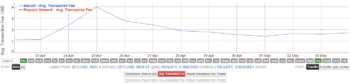
Despite all negative press, bitcoin’s average transaction fee, at the time of writing, is under $2, and this figure remains constant regardless of the user’s location. The potential cost savings aren’t limited to bitcoin either. For example, (LTC) a $99 million transaction on its network for a low fee of $0.40 on April 24, 2018.
(Source: )
Additionally, , a top 100 cryptocurrency by , charges an almost negligible fee of per transaction.
Various Barriers Lie Ahead
Crypto pundits have been quick to point out that the difference in service fee would drive cryptocurrency adoption. While this makes logical sense, it is certainly not enough for a large part of the population courtesy of the remaining barriers to entry.
The average person is comfortable with the ease-of-use associated with opening a bank account, using a credit or debit card for transactions anywhere in the world, and not having to adopt advanced security measures.
In contrast, cryptocurrencies are widely regarded as an investment vehicle, and require the user to incorporate various security measures to ensure the safety of their funds. Another issue is that only a small number of businesses accept them as payment. In 2017, a by Morgan Stanley noted that only three of the world’s top 500 e-commerce websites accept cryptocurrencies, cementing the fact that the technology still has a long way to go.
Developer teams must necessarily work on on-boarding platforms for using digital currencies, and crypto enthusiasts who own shops and businesses must consider accepting payments in digital money to drive adoption.
While development might be slow, it is indeed noticeable. Earlier, BTCManager reported on Singapore-based , which launched physical bitcoin “banknotes” in the island country. The platform allows payments to be made via a highly secure, portable wallet that is intended to be circulated instead of being used as an alternative to other crypto-wallets.
After the problem of security and adoption comes technical capability to handle thousands of payment requests on the blockchain, without experiencing massive delays or an unfortunate shut-down. To tackle this, networks like are proposing a , as opposed to proof-of-work, in addition to sophisticated protocols like .
Sharding is coming.
— Vitalik "Not giving away ETH" Buterin (@VitalikButerin)
To deal with the infamous price volatility, a type of digital currency called “stablecoins,” which claim to be backed by fiat or other physical assets like gold, are being developed. Although their legitimacy remains an issue, VC-backed startups like provide much-needed transparency and trust to this particular type.
Crypto Needs to Exceed Customer Expectations
Finally, to dethrone payment and remittance providers, blockchain-based alternatives have to compete with functionality, clean user-interfaces, and significant levels of customer support that their nemeses offer. In short, cryptocurrency companies must exceed current standards of customer expectations to ensure widespread adoption.
As by Irish Tech Times:
“The winners in this race will need to marry brand-new technology with this familiar but crucial marketing expertise to trigger mass adoption of cryptocurrency and unseat PayPal and other remittance heavyweights.”
The post appeared first on .


![Bitcoin [btc] sentiment analysis suggests king coin could surge higher post imminent pullback |](https://ohiobitcoin.com/storage/2019/04/whatsapp-icon-square.svg "Bitcoin [btc] sentiment analysis suggests king coin could surge higher post imminent pullback |")