February 25, 2026

Capitalizations Index – B ∞/21M

Opinion: Pakistan Made a Big Mistake by Banning Cryptocurrencies and ICOs

Opinion: pakistan made a big mistake by banning cryptocurrencies and icos

Opinion: Pakistan Made a Big Mistake by Banning Cryptocurrencies and ICOs

Opinion: pakistan made a big mistake by banning cryptocurrencies and icos
Advertisement

Join our community of 10 000 traders on Hacked.com for just $39 per month.

State Bank of Pakistan, the country’s central bank, has recently banned cryptocurrency trading and initial coin offerings (ICOs). The rash decision of the bank could become a major mistake for Pakistan’s economy moving forward.

Mistake

Throughout 2018, many of the major economies internationally including South Korea, Japan, and the US have embraced the cryptocurrency market. The three countries have imposed practical regulations for cryptocurrency exchanges and investors, and Japan has already introduced its intention to legalize initial coin offerings (ICOs).

The South Korean government and the Financial Services Commission (FSC) released its plans to legalize domestic ICOs once again, as soon as taxation policies for token sales are drafted and passed by the government. While the US and the Securities and Exchange Commission (SEC) are cracking down on unregulated iCOs, the SEC clearly stated that it is open to regulating private iCOs if it goes through the agency. So far, the SEC has stated that not a single ICO has applied to the SEC.

Earlier this year, Kakao, South Korea’s largest internet conglomerate which manages KakaoTalk, KakaoPay, KakaoTaxi, KakaoStory, and other massively popular applications in the country, teased its plan to launch a blockchain venture and an ICO outside of the country, due to the strict policies of South Korea. Consequently, the South Korean government stated that it may allow domestic ICOs, if they are approved by local financial authorities.

While major economies are scrambling to regulate the cryptocurrency market, small economies like Pakistan and Vietnam have completely shut out the cryptocurrency market, rejecting users, investors, and businesses, and possibly billions of dollars.

On April 6, the State Bank of Pakistan announced that local financial institutions, banks, and credit card service providers are not allowed to be involved in the cryptocurrency market in any way, and are not allowed to process cryptocurrency transactions, promote, and invest in the cryptocurrency market. It completely dismissed its local cryptocurrency market.

In hindsight, Pakistan’s ban on cryptocurrencies has virtually no impact on the global cryptocurrency market, given that the Pakistan cryptocurrency market does not even account for 0.1 percent of the global cryptocurrency market. But, Pakistan has made an error in dismissing overseas blockchain companies that could potentially expand into or relocate to countries like Pakistan for cheaper resources.

Case of Malta

Malta has taken the opportunity to appeal to the blockchain sector and companies within it. This week, Changpeng Zhao, the CEO at the world’s largest cryptocurrency exchange Binance, stated that 20 large market cap companies, mostly billion-dollar companies, are planning to move to Malta, following the roadmap of Binance.

In its official statement, Binance also revealed that it will hire 200 full-time employees in Malta to oversee its cryptocurrency exchanges, which are expensive positions to fill given most of the openings are for full-time developers. Tron and other multi-billion dollar companies may do the same and move to Malta, while blockchain startups disregard countries with impractical regulations, such as India, Vietnam, Pakistan, and Thailand.

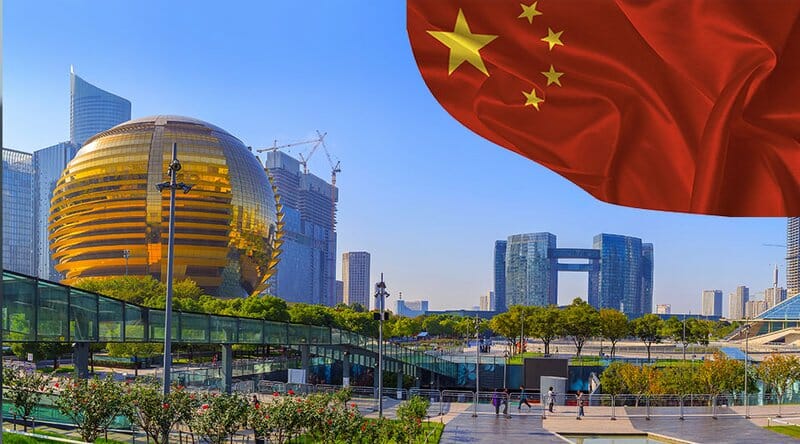
Featured image from Shutterstock.

Follow us on Telegram.
Advertisement

Published at Tue, 10 Apr 2018 08:46:30 +0000

bitcoin Opinion
Previous Article

Opinion: Pakistan Made a Big Mistake by Banning Cryptocurrencies and ICOs

Next Article

Cryptocurrency Exchange Develops An App And A Debit Card To Pay And Cash Out Cryptocurrencies

You might be interested in …

How One London Startup Plans to Conquer the Bitcoin ATM Industry

Bitcoinist spoke with Landry Ntahe, head of operations at BCB ATM, a London-based bitcoin ATM startup that currently holds the number two position by market share in the UK. 


UK bitcoin ATM Scene

Today, BCB ATM has 16% of the bitcoin ATM market share in the UK with seven locations in London where their Lamassu machines can be found. With an aggressive strategy of expansion to other UK cities and beyond, it’s planning to take over this nascent industry by undercutting their competition, offering customers much lower fees when buying bitcoin.

Bitcoin ATM

While the number of bitcoin ATMs has already broken the 1,000 mark, the scene in London is thriving in particular, with new machines being added every month. Besides simply buying bitcoin, BCB ATM is aiming to provide additional services through their machines such as sending money abroad, topping up mobile accounts and more, which should help bring bitcoin closer to mainstream adoption.


Bitcoinist: What has been your biggest challenge in running a BTM business?

Landry Ntahe (LN): Lack of awareness of bitcoin in the elder generation, which makes them reluctant to place a BTM in their establishment. More needs to be done to educate others about cryptocurrency and blockchain technology. That’s why we’re here to bring online currency to the high street. 

Bitcoinist: What competitive advantage are you relying on to become the number one BTM company?

LN: We are always working hard to find new ways of bringing our services to the masses. Our next plan is altcoin adoption across our ATM network.

Bitcoinist: How big is your team?

LN: We have a core team of 5 from different working backgrounds including a young apprentice as well as agents throughout the UK.

Bitcoinist: Have you considered producing your own machines?

LN: We leave the hardware to the manufacturers, our main focus and interest is on the software and developing relationships with the manufacturers to suggest features that we feel would be should be implemented in the future to improve the services offered.

Bitcoinist: What features do you feel should be added besides buying bitcoin?

LN: We’d like to merge everyday payment services such as topping up your mobile phone with our BTM’s. We would like to see everyday household bills paid with our machines. That is gas, electricity, Internet, phone etc.

Bitcoinist: How are you able to offer your customer 4% fees compared to your competitors’ 8%?

LN: With strategic planning to reduce overall overheads and costs as well as a risk strategy to manage volatility and also working very closely with an upcoming Lithuanian based exchange who we met at the recently held bitcoin & Blockchain conference in Moscow. 

Bitcoinist: Does that mean you’re looking at Russia to grow your BTM network?

LN: We have been approached by a few countries to expand our network but we have made a promising friendship with a development team along with a manufacturing company in Russia.

Bitcoinist: Are you currently only focusing on London however?

LN: We’re currently open to any city in the UK. We have an installation due in Birmingham coming soon. We’re also in talks with CoinFestUK to get a BTM installed and assisting a venture to increase awareness in Manchester.

Bitcoinist: What’s your market share threshold that you’d like to reach before expanding into other cities?

LN: Our plan is that we want to expand to every major UK city within the next 18 months.

Bitcoinist: Are your machines one-way or two-way as well?

LN: We currently have one-way machines but our new two-way machines are due to be installed at one of our Central London locations next week.

Bitcoinist: From a business standpoint, is one type more profitable to operate than the other; or does it depend on location?

LN: From online studies and articles, there is a higher demand for one-way BTMs. However, we would like to stay ahead of the game and have taken a business decision to install 2-way machines moving forward. We couldn’t say as of yet if it would be more profitable but in our opinion location is the key factor in determining sales and profit.

Bitcoinist: What do you look for in a location or merchant when placing a machine?

LN: Presentation of the establishment, open attitude towards cryptocurrency or willingness to learn about.

Bitcoinist: What does one need besides cash to buy bitcoin from your BTM? Is there a buy limit?

LN: Our current policy doesn’t require any identification such as passport or driving license at the point of sale. But we are currently working with developers to find a way of implementing this without the need of a physical ID to comply with KYC procedures. The buy limit currently is £600 per transaction.

Bitcoinist: Who is the typical BTM customer?

LN: We wouldn’t know, that’s the beauty of bitcoin, anonymity!

Bitcoinist: Where do you acquire your bitcoin?

LN: We use an array of suppliers from exchanges and miners.

Bitcoinist: What would you tell someone who wants to start their own BTM business?

LN: Don’t do it, haha. 

Bitcoinist: Can you share where we could see a BCB machine next?

LN: We have 8 installations due in the next 6 weeks, keep an eye out on social media for updates.

  • Facebook facebook.com/bcbatm
  • Twitter @bcb_atm
  • Add us on Snapchat as we regularly snap videos and pics of installations and updates @bcbatm

Bitcoinist: Thanks for the insight into your business. Best of luck with your expansion plans!


Images courtesy of BCB-ATM.com, Shutterstock, CoinATMradar.com

The post How One London Startup Plans to Conquer the Bitcoin ATM Industry appeared first on Bitcoinist.com.