This op-ed on GDPR and blockchain was written by Robert Chu — CEO of Embleema, the patient-driven healthcare blockchain, and Former SVP at IMS Health (Now IQVIA) — and Alexis Normand, former Head of B2B of Nokia Digital Health
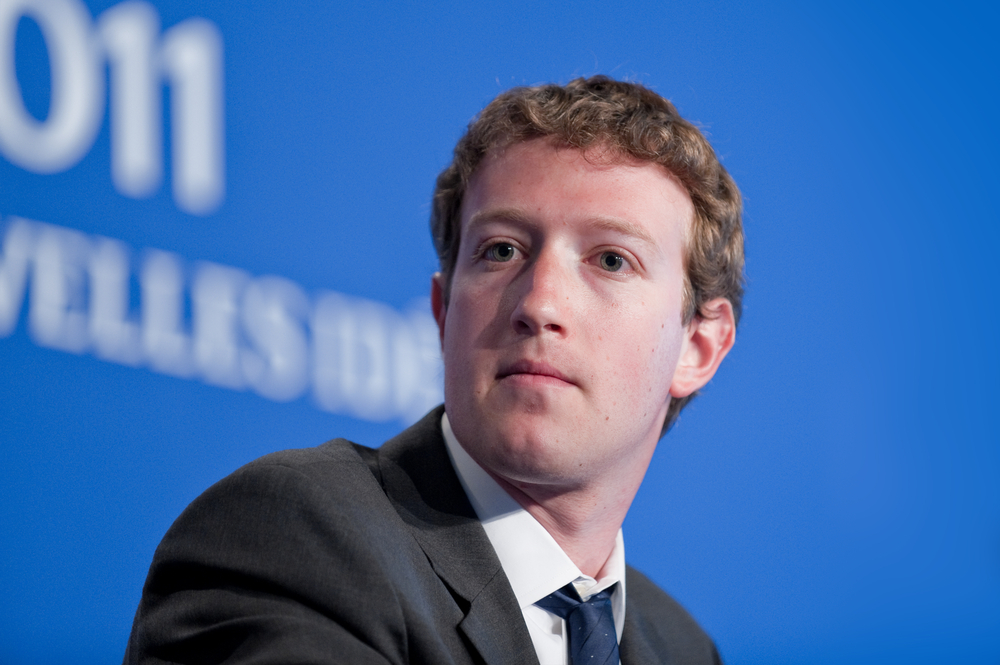
Internet privacy advocates are surely disappointed by Mark Zuckerberg’s mid-April performance in front of the US Senate. After Cambridge Analytica misused 87 Million Facebook users’ accounts for political purposes, the young billionaire demonstrated that Internet platforms do not know how to regulate themselves. Asked by a senator about the nature of his business, Zuckerberg responded simply, “We run ads”.
It seems of little concern to Facebook whether our data defines us as consumers, patients or citizens. Asked about which rules would seem more desirable, Zuck barely conceded that the General Regulation on Data Protection (GDPR) which comes into force in Europe at the end of May, offered “many good things”. However, It’s not clear what there is to “like” for Facebook.
2018, thus far, really has been the year where data privacy and how our data is being utilized by technology companies has come to the forefront of media and the public’s consciousness. As European companies ready themselves for GDPR May 25th kickoff, the world has been made well aware of the Cambridge Analytica/Facebook scandal and the Russian meddling in the US Presidential election, with data-driven advertising being their weapon of choice. But this is not just an issue for 2018 — 15.5 million Electronic Medical Records were breached in the US in 2016 according to the US Department of Health and Human Services.
GDPR imposes costly and significant obligations on platforms to avoid abusive data harvesting: there is “clear and explicit” consent to Terms & Conditions. These will limit the collection of information to only that which is necessary for the service to run. This feels like the sword of Damocles is hanging over the heads of Facebook and Google because nobody uses their services to be profiled, but the old adage “you are not the customer, you are the product” has never rang truer.
GDPR also establishes a “right to be forgotten”, to have embarrassing or damaging material taken down and erased from the public domain. Companies will need to provide a record of data processing, which generates significant overhead. The ability to hold on to one’s data history will become a right in Europe, the same way one can keep hold of the same mobile phone number when changing service providers. In health, the portability of patient records will facilitate the coordination of care, including treatment for complex diseases.
Facebook has since admitted that it would not implement these rules for its US users and has gone to great lengths to reduce its exposure to GDPR. It is also possible regulators are increasingly reluctant to weaken US tech giants as the pressure from China increases. The Red State is now on par with the United States in terms of number of patents in artificial intelligence (AI). Its president Xi Jingping made AI a centerpiece of his Made in China Plan for 2025, aiming to take world leadership. AI has become a security issue whose importance goes beyond our private lives.
Europe has lost the AI battle, but is serious about Blockchain & Privacy.
Like Don Quixote, Europe wants to be the moral flag bearer for consumer rights, holding firm the belief that the GDPR and defense of privacy will in time garner a competitive edge. If the argument was only audible in Mountain View or Shenzen, perhaps the Masters of AI & the Universe would shine a smile. But for how long?
What if Europe, like the “knight with the sad face”, was actually visionary? Blockchain, as a breakthrough technology is already reshuffling cards. “History has more imagination than men”, said Lenin who knew a thing or two about revolutions. The hype should not make us blind to the profound transformation operated by Blockchain, the technology behind bitcoin.
The First Age of the Internet was that of information. The constitution of databases, search engines, and the combined knowledge of users, together brought down transaction costs and freed many segments of the economy from imperfect information and geographic distance. By monopolizing these technologies, US tech giants captured the benefits of all these efficiency gains.
We are entering a Second Age, that of the “Internet of Currency” or its equivalent, the exchange of certified information. Blockchain is a peer-to-peer IT infrastructure that records a transaction between two parties in real time for all participants in a network so that it becomes tamper-proof and immutable. It offers the means to certify, without any third party, an exchange of information, which can also be an economic transaction. Vitalik Buterin, the founder of Ethereum, a development platform for Blockchain apps summarizes: “While most technologies aim to automate workers on the periphery performing repetitive tasks, Blockchain automates the center. Instead of putting the taxi driver out of work, it puts Uber out of work and lets the driver work directly for the client. “

The disruption goes further, because the very business model of the company which operates the network switches from maximizing profit to maximizing exchanges between nodes in the network. Indeed, blockchain companies act like Central Banks within the economy they generate, paying themselves by issuing tokens, like Disneyland gives you vouchers to use on different rides.
Taking a familiar example in healthcare, Blockchain offers the patient a rare opportunity to share their data seamlessly with a doctor or laboratory, being compensated automatically for each exchange. This is a paradigm change for the data exchange industry, which currently lets large data brokers take the bigger slice of a $15billion cake, leaving the patient with zero compensation. In short, Blockchain would give patients back ownership over their health data.
In all sectors where traceability is critical, blockchain essentially removes the need for a trusted or not so trusted third party, and any “rent” that he might perceive from his privileged position as owner of the marketplace. Blockchain reduces the cost of coordination between stakeholders of a network. This could be the demise of Silicon Valley’s centralization of data and power, and perhaps even of modern capitalism as we know it. Had Karl Marx lived in the time of blockchain, he would finally have found a way to free workers from companies becoming monopolies and capturing all the “added-value”.
A new divide is emerging between AI-powered platforms, which are hostile by design to privacy protection, and blockchain-powered decentralized network: a conflict between monopolies and libertarians, Big Brother and Crypto, the United States and Europe. This is good news for individuals and end users who can no longer simply trust institutions to protect property over data. This is good news for Europe, which can reset the meter by combining GDPR and Blockchain. This is very bad news for Silicon Valley. It invented the sharing economy of your physical assets that AirBnB and Amazon have captured the better share of. Now, old Europa is writing the rules for the sharing economy of your digital assets. Tomorrow, we will all be the CEOs of our data.
Disclaimer: The views expressed in the article are solely that of the author and do not represent those of, nor should they be attributed to CCN.
Images from Shutterstock
Follow us on .
Advertisement
Published at Thu, 24 May 2018 22:10:15 +0000
Blockchain News
