Each day, more and more people are realizing the value that blockchain technology brings. However, there’s still one pestering, albeit valid, argument against the mainstream adoption of cryptocurrency – most stores don’t accept it. As a peer-to-peer currency, crypto is the best. But, what good is a currency if you can’t spend it anywhere?
That’s where crypto cards come into play. With these cards, you hold your favorite coins and can spend them at any merchant, even if they don’t accept cryptocurrency. The technology behind the cards makes the conversion to fiat at the time of sale. Although each card uses a different approach to provide this, the result is the same:
You spend crypto. The store receives fiat. Everyone’s happy.
In this article, we’re going to break down the top projects working to get cards in your hands and spendable crypto in your pockets.
TenX

Technology
leads the pack as the crypto card with the largest market cap as well as the first one to bring a product to market. The card is built on the , an in-house created routing protocol that connects different blockchains.
Fees
The physical card costs $15 to order while the virtual card (not available yet) costs $1.50 to activate. After that, there’s a $10 annual fee for each type of card, but this is waived if you spend over $1000 during the year. Additionally, there’s a $2.50 fee for each ATM transaction you perform.
TenX doesn’t charge any conversion rates when you use the card.
Rewards
According to the TenX whitepaper, you receive a 1% reward on each purchase in the form of PAY tokens. Additionally, as a PAY token holder, you’ll receive a portion of 0.5% of the entire network’s transaction volume. Although this is based on all currencies on the network, you’ll receive your reward in .
The above is the current reward scheme; however, the TenX team has stated that this will change soon. They have not provided any details, though.
Availability
You can use you TenX card anywhere that VISA is accepted outside of the US. Due to recently losing their payment solutions partner, WaveCrest, the team has temporarily stopped issuing new cards. They state that they’ll begin again by the end of Q1 2018.
Currently, TenX only supports and Ethereum payments, but the team is working on integrating and some ERC20 tokens as well. They’re slotted to be available in Q2 of this year.
Monaco

Technology
is right behind TenX in terms of market cap but is quickly catching up. Much of the Monaco technology is proprietary, but the project uses a Mastercard and Visa accredited payment processor and is built on Ethereum. Offering more than just a debit card, Monaco also provides credit services and automatic investment features.
Monaco offers four types of cards with different features, rewards, and fees. To get each card, you have to hold the following amount of MCO tokens for 6 months:
Midnight Blue: 0 MCO
Ruby Steel: 50 MCO
Precious Metal: 500 MCO
Obsidian Black: 50,000 MCO
Monaco will only produce 999 Obsidian Black cards.
Fees
As mentioned early, the fees differ for each type of card, but all of them have no monthly and/or annual fees. Each card has a 2% ATM fee after going over the monthly limit which ranges from $200 for the Midnight Blue to $1,000 for the Obsidian Black.
Monaco charges a 1% fee on each cryptocurrency purchase that you make.
Rewards
Once again, the rewards vary depending on the card that you use. The Midnight Blue has no rewards while the Ruby Steel and Precious Metal cards have 1% and 1.5% cashback rewards, respectively. The Obsidian Black has 2% cashback. All rewards are in MCO tokens.
Additionally, the Precious Metal and Obsidian Black cards include LoungeKey Airport Lounge Access.
Availability
Monaco cards are not currently available. The team will roll out the card in stages, starting with Asia, then Europe, and finally, North America.
The cards will initially support bitcoin, Ethereum, and Monaco tokens.
Centra
Technology
After a steep drop down in market cap, we find . The card utilizes a patent pending Currency Conversion Engine (CCE) module to facilitate exchanges between currencies. Using the project’s Centrachain, you can also create smart contracts, decentralized applications (dapps), and tokens that are automatically supported on the Centra card.

Similar to Monaco, Centra offers three cards with varying fees, limits, and rewards. To get each card, you have to purchase the following amounts of CTR tokens:
Centra Blue: 50 CTR
Centra Gold: 10,000 CTR
Centra Black: 100,000 CTR
Fees
It costs $20 to activate your card. The annual fees for each card range from $50 in CTR for the Blue to $500 in CTR for the Black.
There’s also a $2.50 ATM charge for USD and a 1.00% + $3.00 ATM charge for non-USD withdrawals.
All three cards have 0% spending and exchange fees.
Rewards
With each card upgrade, you get additional rewards. The Centra Blue gives 0.2% cashback, Centra Gold, 0.5%, and the Centra Black has 2.0% cashback rewards. The Black also provides “member exclusive rewards”, but Centra doesn’t specify what those are.
Availability
Right now, only ICO contributors have access to Centra cards. However, customer support states that they’ll be running additional card campaigns over the next few months.
The first card releases support bitcoin, Ethereum, Centra, Dash, , , and .
TokenCard

Technology
Last on our list is . Utilizing the Ethereum network, TokenCard gives you complete control of your funds. Combining the wallet app with the card, you can choose how you want each purchase to be split amongst your coins.
Fees
The team has not decided on what the annual fee structure will be for holding a card or whether or not they’ll charge you to receive your card. There is a 1% licensing charge for each transaction that the team pays out to TKN holders.
Rewards
Neither the website nor whitepaper mention any cashback rewards.
Availability
TokenCard is not available yet. The project’s shows that within 3-6 months, it’ll be available publicly with a shorter timeline for core contributors. TokenCard supports Ethereum and tokens.
There Can Only Be One
Well, not really. Just like traditional debit and credit cards, it’s likely that most, if not all of these cards survive. As they further differentiate their rewards, you may find yourself using, say TenX, for travel, and Monaco for dining.
These aren’t the only projects solving the spending problem, either. Companies like and have offered bitcoin debit cards for a while now. On the other end, is tackling the merchant side of transactions as a payment processing gateway.
No matter which projects win out, the message is clear – crypto will soon become the transactional currency it’s always been meant to be.
This is originally published at CoinCentral.com It is reproduced and shared here with the kind permission of the CoinCentral.com Editorial Team – our partner in your crypto success.

bitcoin in Brief continues with the second day this week of mostly FOMO news. The biggest economy in the world faces the tax man today, as the United States and its crypto enthusiasts must atone for the sin of last year’s gains. Economists and market bulls are insisting that this fact caused dramatic sell offs, leading to haircuts across the board. Bulls believe, after today, prices ought to soar.
Also read:
Tom Lee on Crypto Tax
Once again, we get another chance to test the predictions of a much cited financial professional. We’re once again focusing on crypto’s favorite guru, Tom Lee of .
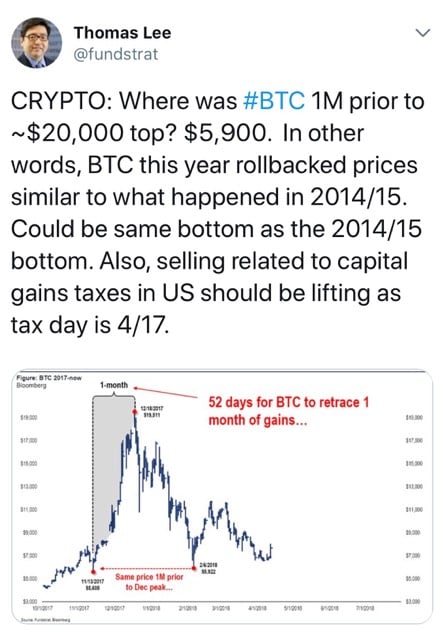
He was seen recently on , making his case for why the ecosystem should prepare itself for the potential of incoming cash tsunamis, as this year’s US tax deadline is upon us today. It is estimated americans owe the tax man . The panel doesn’t just accept Mr. Lee’s prognostications, and instead makes him work a little to better flesh out why he continues to say what he does. If you’re a bitcoin core proponent, these five minutes will be comforting.
They Pay You
Assuming after-tax price spikes, you’re going to need a hot wallet to store your bitcoin cash. After you’re done installing the .com Wallet, check out the idea. Gift cards are gaining in popularity among enthusiasts, for a variety of reasons, and this wallet seeks to capitalize and grow that trend.
Supporting both bitcoin core and bitcoin cash, the company claims average minimum fees of 3 cents, the ability to send payments through Twitter and email, your own bitcoin address, same day turnaround, with the intriguing notion of buying gift cards for them (they’ll pay you). “Sell bitcoin and bitcoin cash at any time and receive USD funds in your bank account. We support all banks and credit unions in the USA via ACH transfer,” the company website promises.
Hacked?
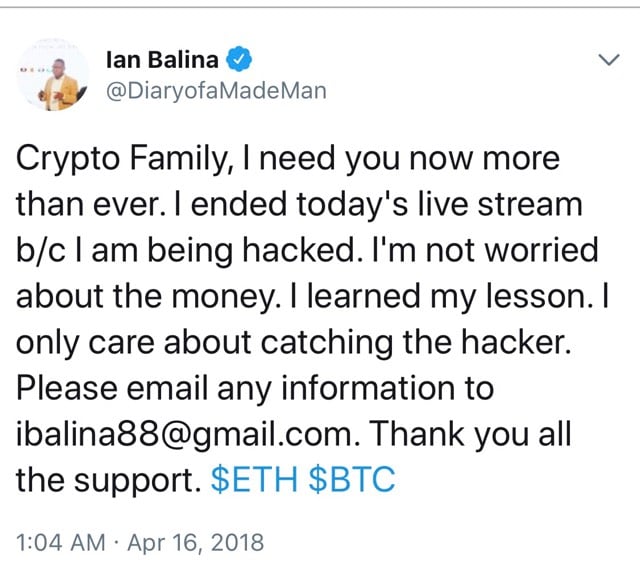
You ever come across a cry for help, and instantly you find yourself almost humming? Prominent initial coin offering investor (and some say, shill), , claims to have been hacked for a loss of something like $2 million USD. Hmmmmmm. I’ll just leave this .
bitcoin Fetus
It had to , right? A tweet explained, “After months of private Alpha, we are pleased to announce the official release of the public Beta version of the project previously [known] as ‘bitcoin Fetus.’ Codename: ‘bitcoin Baby.’ Notable changes: autonomous breathing, more modular design.” They’re not .
 bitcoin Fetus has a mined genesis block.
Spring Cleaning
And what would Spring be without a good cleaning! The following briefs don’t really follow a theme, but are worthy of mention: convinces popular podcaster to accept crypto; the New York Times’ is having none of the hype surrounding Coinbase’s latest acquisition; bitcoin Core to receive good-natured ribbing; when it comes to bitcoin cash, is killing it; crypto enthusiasts areto show adoption all over the world; and hopeful signs appear in as Localbitcoins continues its charge. We’ll see you again, here, tomorrow.
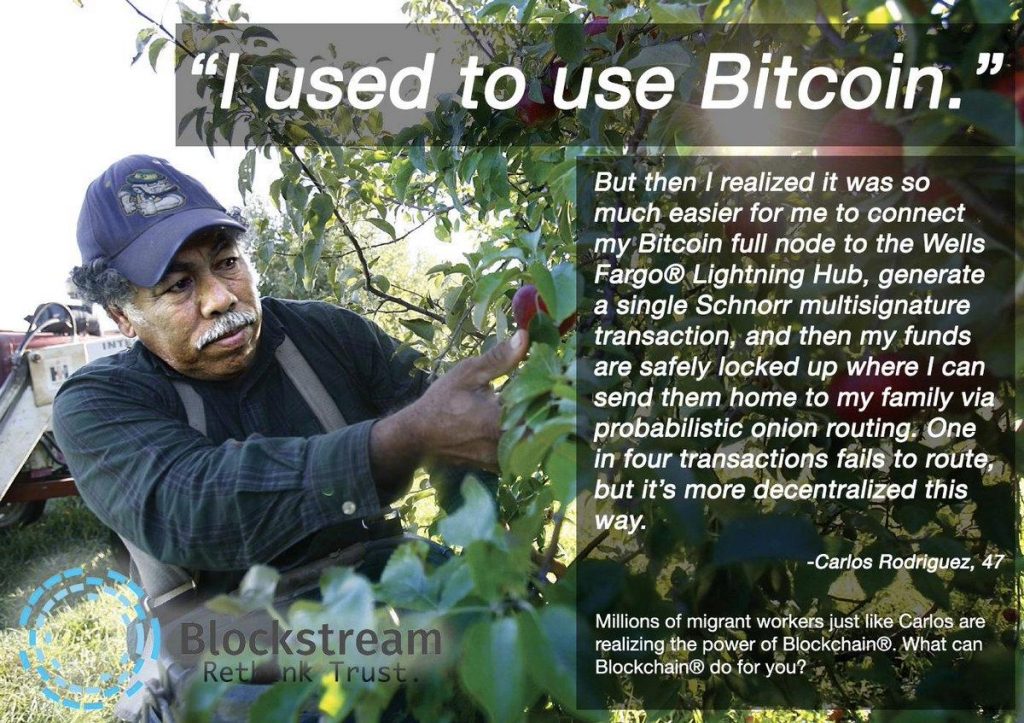
Would you use a wallet like I Pay You? Let us know in the comments section below.
Images courtesy of Shutterstock. Special thanks to , for sourcing.
Need to calculate your bitcoin holdings? Check our section.
The post appeared first on .


