Nvidia CEO Believes Cryptocurrency Will Be Core Business for Company

Capitalizations Index – B ∞/21M
The CEO believes the need for GPU processors in the industry will help the company’s growth in the future. However, he claims that it will not be an immediate driver for profits just yet.
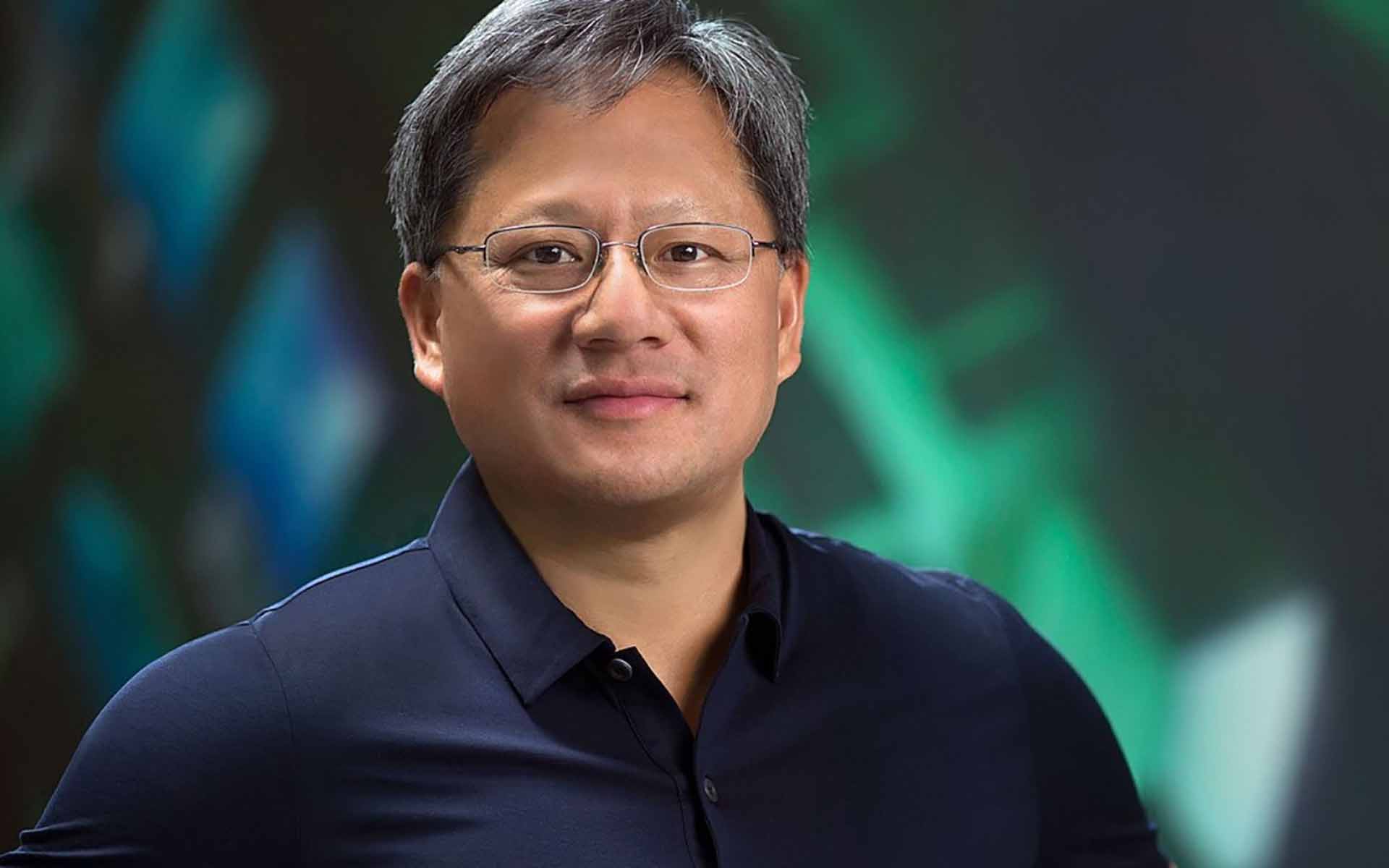
Nvidia has been involved in cryptocurrency mining recently, a move which has seen its stock options decrease. However, despite the move, the CEO and founder of the company, Jensen Huang doesn’t see the cryptocurrency craze ending anytime soon.
Speaking to Mad Money TV show host, Jim Cramer, the CEO mentioned that cryptocurrency was here to stay. The industry allowed people to work with something that would not give them any friction. It also allowed users to transfer and change at low costs, Huang noted, which allowed the industry to stand the test of time.
Huang and his company have been involved in everything tech related now including the manufacture and production of some high powered graphics processing units. The chip maker company has also been involved in various other parts of the tech industry. Nvidia started to invest in the cryptocurrency craze last year for some time until the Wall Street people eventually got tired of it. Cryptocurrency got more and more popular last year with exorbitant hikes in the interest levels of most of the currencies.
In his interview with Cramer, Huang noted that the was going to stay for a while. He noted that the technology was going to be crucial in the years to come. Huang also added that he expected both blockchain and cryptocurrencies to be heavily involved in GPUs in the future. He also admitted to the fact that the GPU processors made by the company were ideally perfect in making and mining cryptocurrency.
He explained that one of the reasons that they got heavily involved was because of the capability of the processor to mine cryptocurrency. This made their devices the perfect candidates to enter the market. He added that the GPUs were on the top list of desired processors to mine cryptocurrencies. Their supercomputing power was ideal for the work needed.
The Blockchain technology requires a computer that can be used to distribute all over the world, and at the same time be safe and immutable. The GPU processors of the company can be widely used in this aspect.
However, Huang noted that even the GPU processors were solely vital to cryptocurrency mining, they were not willing to move on it yet. He emphasized that the craze would not be the primary driver for investment in the near future yet for the company. Nvidia is involved in the gaming business and the data center industry. They are also in the industry and professional graphics visuals.
Huang noted that the company saw these industries as their primary focus and they were going to concentrate on them more and more. The crypto craze only helped fuel the demand and need for GPU processors, but it would not determine how we do business, Huang said.
Image courtesy of Wikimedia Commons
Published at Sat, 31 Mar 2018 10:00:25 +0000
Altcoin News

🔴 THUNDERSTORM Sleep Sounds | Heavy RAIN Sounds, THUNDER & LIGHTNING at Night (24/7 Storm) Thunderstorm sleep sounds. Heavy rain sounds, heavy thunder and lightning at night (24/7 Non-stop storm). These soothing thunder and raining […]

Blockstream is , a new programming language for blockchain-based smart contracts, intended for inclusion in Blockstream’s sidechains and eventually in bitcoin. The new language was presented by its creator, Russell O’Connor, Infrastructure Tech Developer at Blockstream, at the ACM SIGSAC Workshop on Programming Languages and Analysis for Security ().
“Simplicity is a blockchain programming language that is so simple, it fits on a t-shirt,” O’Connor told bitcoin Magazine. “It is critical that smart contracts behave in ways that all participants expect, and applying formal verification to Simplicity allows us to achieve that.”
Simplicity is still a Blockstream Research & Development project, but there’s potential for its use in Blockstream products in the future, according to the company’s announcement.
“Simplicity is flexible enough that I anticipate many new, domain-specific, languages will generate Simplicity, and this will give users the freedom to generate smart contracts using the tools that most suit their needs,” added O’Connor.
O’Connor’s paper, titled “,” presents Simplicity as “a new programming language, designed to be used for cryptocurrencies and blockchain applications, which aims to improve upon existing cryptocurrency languages, such as bitcoin Script and Ethereum’s EVM [virtual machine], while avoiding some of the problems they face.”
bitcoin script is limited by design and unsuitable for complex smart contracts that need more than a small set of simple templates to perform tasks like digital signature verification. Ethereum, on the other hand, includes a more expressive and flexible, Turing-complete programming language, which allows for arbitrarily complex smart-contracts in principle.
But, in practice, Ethereum doesn’t support static analysis to pre-determine the computing resources that a program will require and, thus, filter out too costly contracts and infinite loops. Therefore, pre-paid “gas” fees are lost when an Ethereum program “runs out of gas.” The simpler bitcoin scripting, which supports static analysis, doesn’t present similar issues.
In -dev mailing list
, O’Connor proposed Simplicity as an alternative to bitcoin Script, noting that static analysis is important for both node operators and for Simplicity program designers.“Static analysis is a technique that provides a universal algorithm to determine how much any Simplicity program will cost to run before you stake your money on it,” O’Connor told bitcoin Magazine.
Simplicity can be seen as a more flexible alternative to bitcoin scripting, not Turing-complete but expressive enough to build useful smart contracts for blockchain applications, or as an alternative to Ethereum, which will support static analysis and other desirable features including improved safety, formal semantics, and Merkelized Abstract Syntax Trees (MASTs).
While Simplicity is intended as a low-level language for smart contracts, O’Connor envisages the possibility of compiling programs written in higher-level languages (like Ethereum’s Solidity) to Simplicity.
“Ivy and the Σ-State Authentication Language are existing programming language development efforts that may be suitable for being compiled to Simplicity,” notes O’Connor in the paper. “For the time being, generating Simplicity with our [] and [] libraries is possible.”
The next step in Simplicity’s development will be a bare-bones SDK (Software Developer Kit) that will include formal semantics and correctness proofs in Coq, a Haskell implementation for constructing Simplicity programs and a C interpreter for Simplicity. Then, the new language will be ready for initial deployment in the project, Blockstream’s open-source codebase for , so that developers can start experimenting with the code.
But, as O’Connor stated on -dev, “Only after extensive vetting would it be suitable to consider Simplicity for inclusion in bitcoin.”
The post .


Why Coinbase’s Support for Ethereum Testnets & ERC-20 Tokens Matters Advertisement Toshi, the Ethereum-based decentralized application browser and wallet operated by Coinbase, the world’s largest cryptocurrency exchange, brokerage, and wallet platform, has added support for […]