Nocoiner Financial Advisers Are Failing Their Clients
· May 18, 2018 · 12:00 am
With institutional investment being something of a major theme in the blockchain space these days, financial advisors better start studying up on cryptocurrencies and their underlying technology – and fast – lest they risk losing their clients.
‘It’s Really Here to Stay’
JP Morgan chairman once called bitcoin a “fraud,” and Vanguard CEO Tim Buckley once told CNBC, “You will never see a fund from Vanguard on bitcoin.”
Their loss.
Despite a slew of negativity from high-profile individuals in the world of investment banking, bitcoin and other cryptocurrencies are an increasingly more viable alternative to traditional investments that should be a part of any serious investor’s portfolio — as evidenced by the number of traditional bankers for cryptocurrency-related investment vehicles.

With this in mind, traditional investment bankers who are stubbornly rooted in their old ways would be wise to study up on both cryptocurrency and blockchain technology before their clients move elsewhere. Lex Sokolin, global director of fintech strategy at Autonomous Research, to CNBC:
Cryptocurrency is very controversial, but it’s really here to stay. And the underlying [blockchain] technology is really fundamental to the types of companies that people are building right now.
As such, investment bankers are doing their clients a serious disservice by failing to properly advise them on cryptocurrency and blockchain-related investments. Explained Sokolin:
So [advisors] can choose to say that this whole thing will fall apart and not get educated about it and not help [investors], but that’s really irresponsible […] Advisors really need to start to understand the basics of how blockchain works. Start to understand why there are different cryptocurrencies.
For example:
What’s the difference between a payments coin, like bitcoin or ethereum? All of these things are different, so advisors have to spend the time so they can actually help their clients make sense of this.
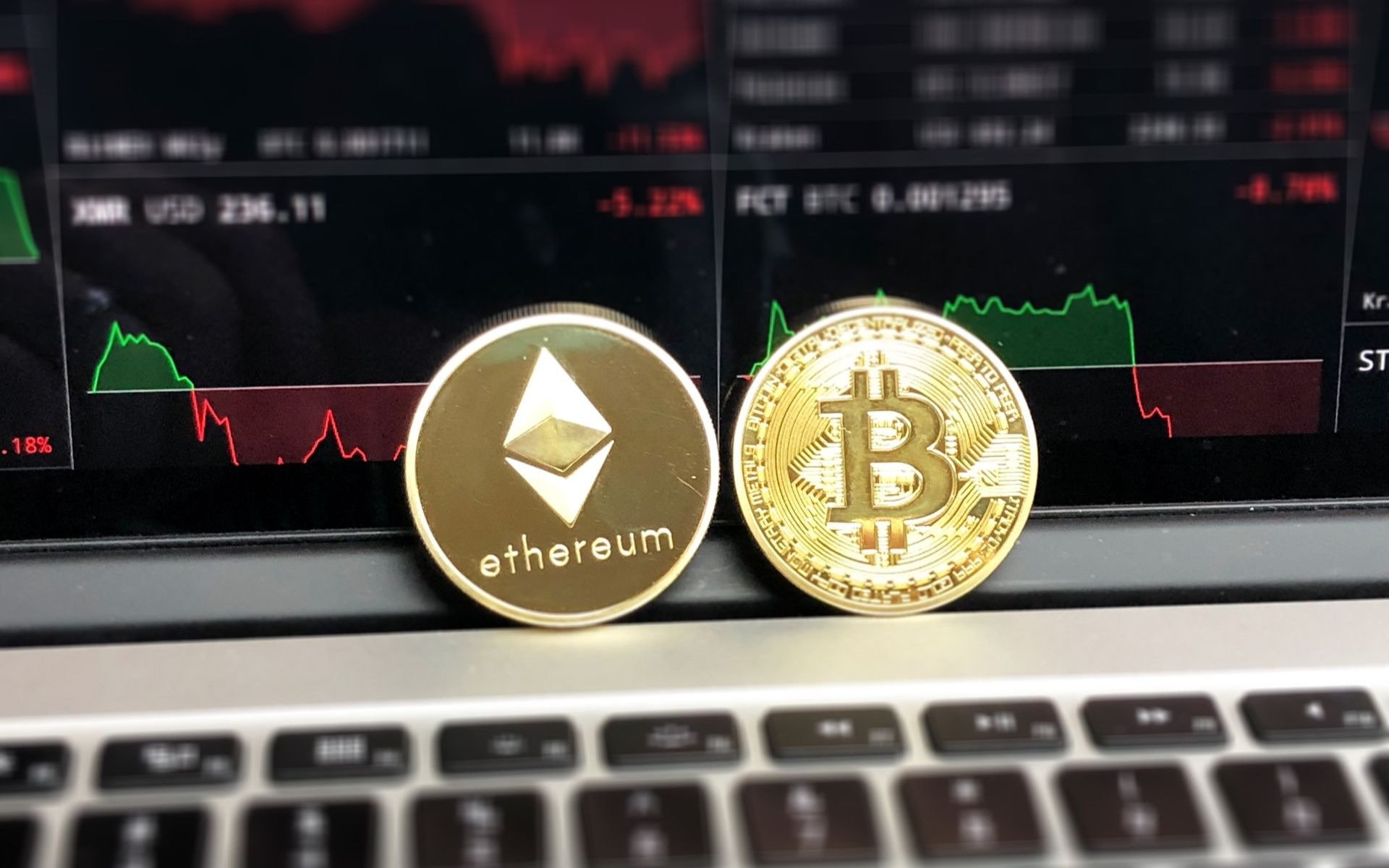
Still, Sokolin doesn’t recommend going all-in on cryptocurrency. Rather, he thinks bitcoin and brethren ma
It’s volatile right now, so you should not just go and fill your entire portfolio with cryptocurrencies. But it is a good way to add alternatives to your general allocation, something like 3 [percent] to 5 percent of your portfolio.
Do you think traditional financial advisers are failing their clients by not knowing enough about bitcoin and other cryptocurrencies? Be sure to let us know in the comments below!
Images courtesy of DepositPhotos, Pexels, Shutterstock
bitcoin Core 0.17.1 Released bitcoin Core version 0.17.1 is now available for download containing several bug fixes and minor improvements. For a complete list of changes, please see the release notes. If have any questions, […]
Please note: Everything in this article is just advice, based on our best understanding of the current situation. Everything is still very uncertain and subject to change: Be extremely careful!
bitcoin Cash (sometimes referred to as Bcash, and mostly using the tickers BCH or BCC) launched today. Anyone who held bitcoin at 12:20 p.m. UTC should have an equivalent amount of BCH attributed to their bitcoin private keys.
In our, which was subsequently updated to also cover the bitcoin Cash launch, we explained how to secure your private keys so you could be sure to access your BCH. At the time of writing that article, much was still uncertain about how this event would play out.
Much is still uncertain, but to the extent that the situation can be understood at present, this article explains how you can claim — and potentially use — your BCH.
Author’s note: If you want to play the BTC/BCH markets as soon as possible, and you are fine with taking risks and/or you really know what you are doing, this article is probably not for you — it’s a beginner’s guide.
Take Your Time
The good news is that, if everything went according to plan, bitcoin Cash enforces strong replay protection. This means you shouldn’t be able to accidentally spend your BTC when you mean to spend BCH, or vice versa.
As such, if you don’t care about BCH at all right now, you don’t need to do a thing. You can just keep using bitcoin as you always have. If you ever change your mind (and don’t lose your bitcoin private keys in the meantime), you can still claim your BCH at any point in the future.
Likewise, if you want to hold on to your BCH long-term, you also don’t need to do anything right now. You can keep using BTC as if nothing happened; just make sure to never lose your private keys.
Now let’s assume you do care about BCH right now, at least enough to want to sell your share.
If you followed the advice outlined in our beginner’s guide, the good news is that you should be in full control of your bitcoin private keys. This means you now hold BTC as well as BCH.
The bad news is that it’s not necessarily easy or safe to claim your BCH straight away. If you are not careful, you may accidentally expose your private keys while claiming your BCH. And because these are the same private keys that secure your BTC, this could lead to your BTC being stolen. Needless to say, you want to avoid this! You almost certainly stand to lose much more from losing your BTC than you stand to gain from, say, selling your BCH fast.
Therefore, you are going to want to take your time and make sure you understand what you are doing well enough to do it without exposing your private keys. Your BCH isn’t going anywhere. And in part because the situation is still developing, even this article may contain accidental errors …
Claim Your Coins
In our previous beginner’s guide, we explained how to secure your private keys and recommended different wallet options. Here, you can find, per option, how to access your BCH.
Full Node Wallet
Our first recommendation was to use a full node wallet, like or. These wallets store your private keys in a dedicated folder on your computer. You can make a backup of this folder using the menu in your wallet. Once you’ve done this, you should be able to import this backup into a bitcoin Cash full node, like.
However, to be on the safe side at this point in time, we are not fully comfortable recommending any bitcoin Cash software. It is all very new, developed within a short timeframe, and the peer review done on all this software has probably not been as extensive as it usually is within the bitcoin space. It is therefore probably wise to not import your private keys in such software right away; instead, wait to see if there are any reports of problems.
Furthermore, some bitcoin Cash full node wallet software, like bitcoin ABC, conflict with bitcoin software, such as bitcoin Core. It is therefore not recommended to install a bitcoin Cash full node wallet on the same computer. Instead, it’s best to install it on a completely different computer. It is on this computer that you can import your wallet backup and have access to your BCH.
If you are not exactly a beginner, there is one alternative option. NBitcoin developer Nicolas Dorier created a, which allows you to split your BTC from your BCH. However, this tool requires you to work in the command line of your operating system; if you know how to do this, you probably don’t need this article.
Paper Wallet
Our second recommendation was to use a paper wallet. This advice was given in the context of storing your coins long-term in particular. But if you want to access your BCH, of course you can do this right away.
Unfortunately, however, not many wallets actually support directly importing your private key(s) — and less so for BCH. One wallet that does allow for this option in bitcoin is. Therefore, the BCH version of Electrum, dubbed “,” should allow you to do this, too.
However, Electrum itself has issued an concerning Electron Cash. Electron Cash is not properly vetted and therefore not guaranteed to work as advertised. This is a big risk, and we recommend against using it for now. (This may change in the future.)
That said, if you do choose to opt for this solution (at your own risk!), make sure to at least take two additional precautions. First, run the software on a different computer as the computer you run Electrum on, if you already run Electrum. (In fact, it’s probably best to use it on a different computer than the one where you hold any bitcoins or any other sensitive data, for that matter.)
Additionally, first move the BTC from your paper wallet to a new bitcoin address (like a new paper wallet) before you do anything with BCH. That way, even if the Electron Cash wallet manages to steal your private keys, the damage should be limited: these private keys won’t hold any BTC anymore. (Make sure not to send BTC to this address later on either, though.)
Hardware Wallet
Our third recommendation was to use a hardware wallet, as listed on. Two of these hardware wallets in particular, and, have gone through the effort of offering you access to your BCH. So if you have one of these wallets, you’re in luck: this is probably the safest and easiest way to access your BCH.
Ledger has published a blog post explaining how to access your BCH, which you can find.
Trezor has also published a blog post on how to claim your BCH, which you can find . Update: Trezor has removed BCH for now, due to a bug in their bitcoin Cash backend server. Don’t worry, your funds are secure.
The third hardware wallet,, has published an on how to access your BCH. However, note that this wallet recommends using Electron Cash, which is not guaranteed to be secure. See the above section on paper wallets for more details.
The last hardware wallet,, has also published a blog post on. At the time of writing, it seems you won’t be able to access your BCH quite yet; keep an eye on their for updates.
If you didn’t take these three recommendations, perhaps you used one of the other wallets listed on.
Once again, whichever of these wallets you used, your BCH should be safe and there’s no rush to claim them. But actually being able to claim them may differ a bit from wallet to wallet.
Most wallets use a recovery phrase. This phrase essentially holds your BTC private keys, and therefore also your BCH private keys. As such, you should be able to access your BCH by inserting this phrase into a dedicated BCH wallet.
However, at this point in time there are no BCH wallets available yet that allow this and which we can confidently recommend using. If BCH becomes somewhat of a success over time, this will probably change. It’s probably best to just wait until this is the case. (If it ever becomes the case.)
Until then, you can just keep using BTC without worrying about your BCH.
If you did not follow our advice, and instead stored your BTC in any other wallet, or on an exchange, or anywhere else, you may or may not still be able to claim your BCH. In this case, you’ll have to figure out for yourself whether this is the case or not, and how to do so.
Using (or Selling) Your BCH
Once you have claimed your BCH, you can use it however you please. Just like any other (alt)coin, you could for example sell it for BTC, or perhaps spend it somewhere, or move it to another wallet, etc.
However, there are still three factors to keep in mind before doing so.
The first factor is privacy. Your addresses are identical for BTC and BCH. This means that whenever you spend your BCH (for example, to send them to an exchange), you do not only reveal your BCH addresses but also your BTC addresses. This can in turn reveal a lot about your current holdings as well as your past and future transactions, and can by extension even reveal such data about people or entities you have transacted with. Make sure you are comfortable with giving up this data if you are going to send your BCH to an exchange or anywhere else. (There may be more privacy-friendly options for selling your BCH for BTC in the near future, but these aren’t ready yet.)
The second factor is mostly theoretical at this point, but worth mentioning nonetheless: security. When you spend from a BCH address, you do not reveal your private key, but you do reveal your public key (which is not the same as your bitcoin address). This strips away one layer of cryptographic security, even for your BTC (or BCH) addresses. It shouldn’t mean (and hopefully doesn’t mean) that your BTC are insecure right now, but there is an increased chance that your BTC aren’t secure at some time in the (far) future when this particular cryptographic standard is weakened. It is therefore best to move your BTC to a new address at some point within the next couple of years.
The third factor was already mentioned but bears repeating: if you’re using insecure software to claim your BCH, your BTC may be at risk. This is why it’s probably best to move your BTC to a new address before you even start meddling with BCH. That way, if you do mess up with insecure BCH software, you shouldn’t lose your BTC. (Though note that this doesn’t necessarily hold up if you send your BTC to a new address from the same seed. You may in that case even want to create a whole new wallet with a new seed.)
Additionally, if you move your BTC to one of your own addresses before touching BCH, you reduce the risk of replay attacks — but as mentioned, if all goes well this shouldn’t be a factor in the first place.
So, to Recap …
1. You don’t have to do anything if you don’t want to, and there is no rush. If your private keys are secure, your funds are secure.
2. If you want to use your BCH in any way, it’s probably best to first move your BTC to a whole new address that you control, or even an address generated from a whole new seed. (But don’t lose your old private keys or seed: these still hold your BCH!)
3. Once you know what you’re doing, move your BCH either to a new address you control or perhaps to an exchange to sell, or whatever it is you want to do with your “free money.”
This article will be updated as the news develops.