No One Knows What Venezuela’s Petro Cryptocurrency is Actually Worth
The value of Venezuela’s oil-backed cryptocurrency, the petro, is seemingly currently unclear, and even taking a look at official government sources yields inconclusive results, given substantial price differences.
The petro, as a tool for the South American nation to combat international sanctions, has been a controversial currency so far. Supposedly, the government has — the sovereign bolivar — to the petro and started . Each petro is purported to be backed by one barrel of oil.
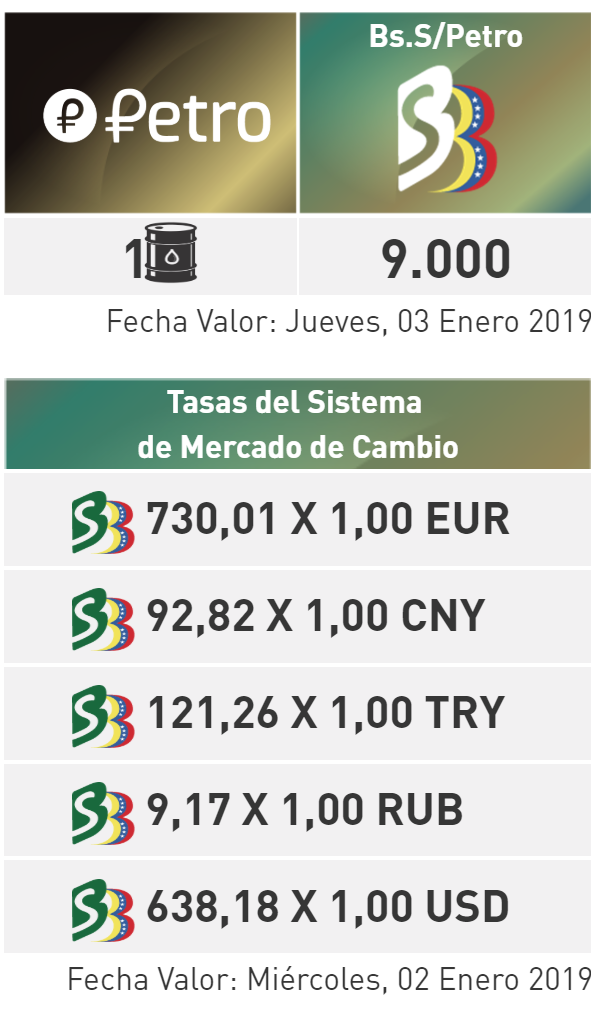
A November 30 article published on the claims that as a “unit of account” the Petro’s value is to be of 9,000 sovereign bolivars. On its website, it features exchange rates that confirm this value and that claim one US dollar equals 638.18 sovereign bolivars.
This would mean one petro, supposedly backed by an oil barrel, would be worth $14.10. Looking at the exchange rate of Banco de Venezuela, a commercial bank acquired by the government , one petro is currently worth roughly 38,200 sovereign bolivars, or about $59.85.
Where Banco de Venezuela’s exchange rate comes from is currently unclear, as local sources only report that the cryptocurrency’s price has surged. Outside of Venezuela, oil prices have been rather volatile, as in the last from a $77 high to a $45 low, before rebounding to $47 thanks to signs of .
It’s important to note that the exchange rate of the sovereign bolivar against the dollar also isn’t clear. While Venezuela claims it’s of 638:1, puts it at at least 900:1, as one cup of coffee in the country currently costs 450 bolivars, and is equivalent to “less than $0,.50.”
The petro’s price isn’t the only thing is off about the cryptocurrency. Reports have suggested exists, and the whitepaper published by the Venezuelan government seems to show the of privacy-centric cryptocurrency Dash.
Nevertheless, the Venezuelan government has been pushing for its adoption — so much so that President Nicolas Maduro had last year and revealed that Venezuela in it.
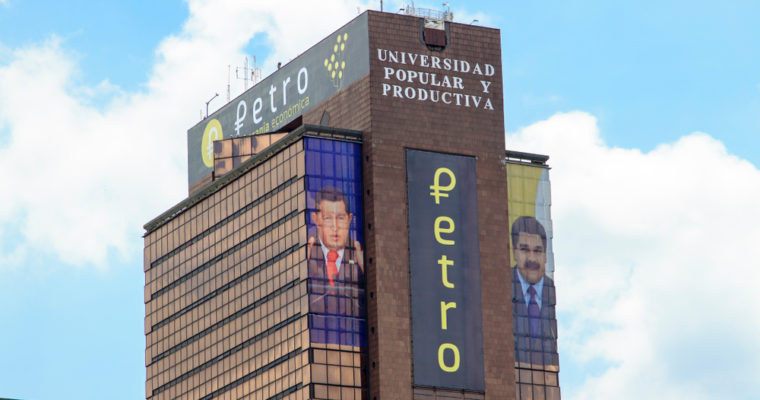
Featured Image from Shutterstock
We are hiring full-time and part-time journalists based in the United States. Ideal candidates will have extensive knowledge of traditional markets and/or the cryptocurrency industry. Apply for a position
Charles Hoskinson Launches Enterprise Blockchain with Ethiopian Government Forbes reported that Ethereum and Cardano co-founder, Charles Hoskinson, has announced the launch of an enterprise blockchain framework in collaboration with the government of Ethiopia. Financial Services for […]
Photography can be doubtlessly regarded as one of the most thrilling inventions of modern times. The art dates back to the 19th century, where the earliest known surviving photograph captured by a camera was taken back in the late 1820s (either 1826 or 1827). Many regard this point in time as the birth of photography. However, the industry began to profoundly change with the invention of the first true digital camera in 1975, in a breadbox-size that took 23 seconds to take a single black and white image.
This invention marked the beginning of a new era that allowed people to document their lives on a minute-by-minute basis. Fast track to today, anyone with a camera can be a photographer. Anyone with a camera can use it to communicate an idea, a message or an emotion. However, this has come with its own share of demerits. Interestingly enough, ideas today are built on the works of others. Most images we see today, especially on social platforms are plagiarized in a rather unusual way by re-creating an idea from scratch rather than represent a whole new approach.
Put plain and simple; the problem exploded with the internet where 85% of the images used online are used without a valid license from the copyright owner. Modern technologies are of course revolutionary in content sharing but have given people the wrong impression. When people see images on the internet they, unfortunately, make assumptions that it’s okay to use without permission as long as it’s posted online. As the demand for images steadily rises, photographers lose potential earnings from the use of their material through illegal channels.
A lasting solution to fair and sustainable image licensing for both, creators and users have not been created yet. Existing solutions to this decades-old problem are still rather shortsighted to date: One of the more common methods to prevent image theft are watermarks. Watermarks work as an aforementioned deterrent and a promotional tool but take away from the consumption experience. The other common solution at hand are tracking pixels. Tracking pixels are tiny transparent, pixel-sized images embedded in images.
While the two can be considered as the best option for image theft prevention, the two – and any other method thereof – are no match for the new age of hackers. For this reason, photographers are uploading less of their work online while the time is right to do so. With blockchain gaining increased adoption, it is time technology works for the creator at the expense of the unauthorized user. Blockchain technology will pave the way for the creation of a decentralized copyright registry backed by smart contracts to help curb this growing discourse.
COPYTRACK, the platform with an ongoing ICO has developed a unique start-to-finish process for the enforcement of copyright. Once the rights-holder has confirmed the unlicensed use of an image identified by the algorithm, a fully automated process is set in motion, which will only require minimal user interaction at 2 of the nearly 50 stages.
What is COPYTRACK today?
Established in 2014, it is a fair online platform for publishers, photographers, image agencies, and e-commerce vendors. The company was established for the fair management and enforcement of image licenses for its users on the internet.
Today, copyright infringement is difficult to pursue and is often considered a trivial offense. In contrast, COPYTRACK provides tools to comfortably search and match the online use of images worldwide. Even if images are cropped, edited or flipped – they will be found. Once the rights owner detects that an image was stolen, he can simply click & submit a claim to COPYTRACK and lean back. COPYTRACK offers post-licensing or legal enforcement without any risk or hassle to the right holder. The service is available worldwide and COPYRACK operates a network of qualified lawyers in 140 countries. One more added advantage, it’s free – of course, COPYTRACK will take a small success-related commission – but that’s it.
So far COPYTRACK has served thousands of photographers, image agencies and publishers and turns a claim volume of over $2.5 million USD each month for its clients.
More information about COPYTRACK’s existing business at:
So what about COPYTRACK’s new business unit?
Now COPYTRACK brings a new solution to the centuries-old problem by providing photographers with a decentralized register for their images.Using smart contract and blockchain technology, the photographer will retain control over their licenses and pricing, thereby retaining up to 70% of the revenue.
Rights owners will be able to authenticate themselves on the new platform and then upload their images for certification. Once approved by the COPYTRACK Global Register all data will be secured by hashes in the blockchain. From there on, those images will be permanently tracked for online use worldwide and licensing information as well as payments will also be stored in the BC.
This ultimately brings full transparency to the image licensing market and finally returns control back to the rights owner.
COPYTRACK will champion a new era of copyright protection with its upcoming ICO on 10th January which is intended to raise just enough capital to realize their vision.
More information about COPYTRACKs ICO is available at –
JPMorgan Notes Marginal Improvements to Payment System With Blockchain Technology Experts at financial services giant JPMorgan say that blockchain technology will provide benefits to banks and payment systems, Bloomberg reports on Jan. 29. JPMorgan’s […]