New York-based Asset Management Firm Files for BTC [BTC] ETF
Wilshire Phoenix, a New York-based Asset management firm, has filed for an ETF which will store bitcoin, treasury bills and the US Dollar, January 15, 2019.
Coveting the ETF
The journey to finally getting a Cryptocurrency ETF has been a long and one. Many firms have pursued and applied to the SEC for ETF approval, with many being rejected. Despite this, yet another firm has thrown its hat into the ring as Wilshire Phoenix, an asset management firm based in New York, has that they are pursuing a United States BTC [BTC] and Treasury Investment Trust.
Previously, the SEC has rejected many applications on the grounds of skepticism about market size, with one statement , “Among other things, the Exchange has offered no record evidence to demonstrate that bitcoin futures markets are ‘markets of significant size.’
Details of the application
According to the published , the ETF will be used to store bitcoin, short-term U.S. Treasury bills, and U.S. dollars.
The reason for this is that Wilshire Phoenix is trying to leverage the mainstream acceptability of treasury bills and fiat currency. By having all these together in the ETF, they feel that it will be easier to pitch to investors than an ETF that is solely focused on bitcoin.
Advertisement
advertisement
“While the Shares are not intended to, nor is their purpose to, replicate a direct investment in bitcoin, they seek to provide investors with exposure to bitcoin with substantially lower volatility than a direct investment in bitcoin,” the filing said.
Bill Herrmann, a managing partner of Wilshire Phoenix, has that while his firm’s approach to the subject has been unorthodox, they have the same end goal as other firms that have applied for an ETF.
Is It Necessary?
Wilshire Phoenix’s plan to get the ETF approved by linking them with treasury bills and US dollars is a creative one, but it begs the question about whether it is necessary.
On one hand, tying crypto to fiat currency in order to help it gain acceptability isn’t a new practice, and in fact, it is the entire idea behind stablecoins. However, stablecoins have been rather and are a great source of debate in the industry.
On the other hand, a move like this could send the message that bitcoin in itself isn’t enough to succeed in the market without aid from more ‘mainstream’ assets.
Regardless, it is only a matter of time before we know whether this bold move will be successful or rejected like all the others.
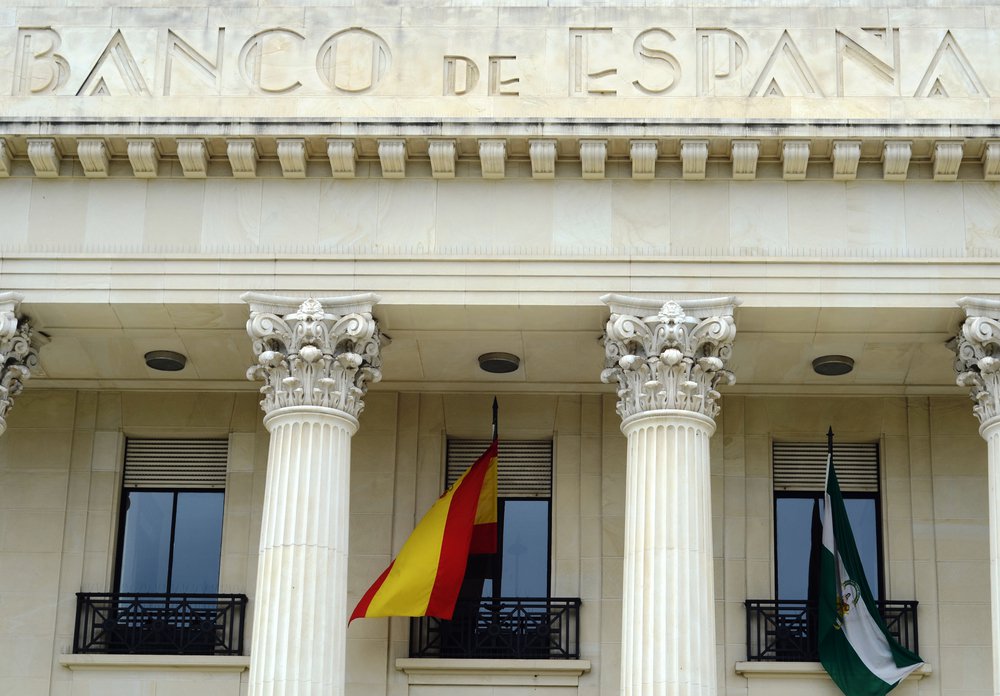
Bank of Spain Governor: Cryptocurrencies Pose 'More Risks Than Benefits' The head of Spain’s central bank believes in blockchain technology, but is far more uneasy about cryptocurrencies. Banco de Espana governor Luis María Linde discussed […]
As the bitcoin revolution continues to spread throughout the world, there are still some places where buying or using bitcoin is illegal and can get you in trouble.
As bitcoin’s popularity continues to grow throughout the world, some governments are beginning to realize its benefits and potential and are integrating bitcoin and cryptocurrencies in their economy, rather than trying to punish those that use it with restrictive policies and exaggerated taxes.
Japan, for example, has recently that makes bitcoin a legal form of online payment, removing taxes and setting up a regulatory framework for bitcoin-based businesses. Australia has also taken a stance in favor of cryptocurrencies and removed the that was penalizing average bitcoin users.
However, not all countries are as forward thinking especially when it comes to cryptocurrencies. Believe it or not, bitcoin is still illegal in , which says a lot about bitcoin as a disruptive technology.
To be clear though, the world’s first decentralized cryptocurrency is not illegal because it poses any risk to the citizens of the countries we will list. Rather, it provides an alternative, open, P2P monetary system — and an — which is seen as a threat to their centrally-controlled, legacy monetary system.
All of the countries listed below banned bitcoin in 2014, following the . As bitcoin begins to gain traction throughout the world, it’s possible that these countries may eventually change their stance on bitcoin and digital currencies.
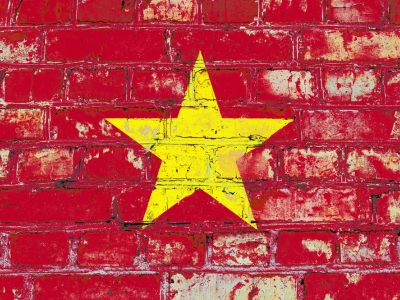
Vietnam
Although bitcoin can be freely used by citizens, the State Bank of Vietnam issued a statement in February 2014 warning against the use of bitcoin and credit institutions to deal with the cryptocurrency.
The statement reads:
All bitcoin exchanges that allow users to trade anonymously, therefore, can be used to launder dirty money, sell drugs, hide from paying taxes, exchange and pay for illegal activities.
In December 2016, the government of Vietnam stated that it will as its current provisions “fall short.”
Iceland
bitcoin’s legality in Iceland is not very clear. According to a statement issued in March 2014 by the Central Bank of Iceland, dealing with bitcoin may violate the Icelandic Foreign Exchange Act, which specifies that Icelandic currency cannot leave the country and that foreign currency cannot be used in the country.
bitcoin mining is legal in the country and so is transacting with bitcoin, but apparently if those Bitcoins cannot be purchased from a foreign exchange or have to be mined in Iceland. This leaves a lot of room for questions. The statement reads:
There is no authorization to purchase foreign currency from financial institutions in Iceland or to transfer foreign currency across borders on the basis of transactions with virtual currency. For this reason alone, transactions with virtual currency are subject to restrictions in Iceland.
Bolivia
In May 2014, the country’s central bank, El Banco Central de Bolivia, officially any and all currencies not issued and/or regulated by the government, specifying bitcoin, a few other altcoins and any other currencies that do not belong to a state or economic zone.
The statement reads:
It is illegal to use any kind of currency that is not issued and controlled by a government or an authorized entity.
Ecuador
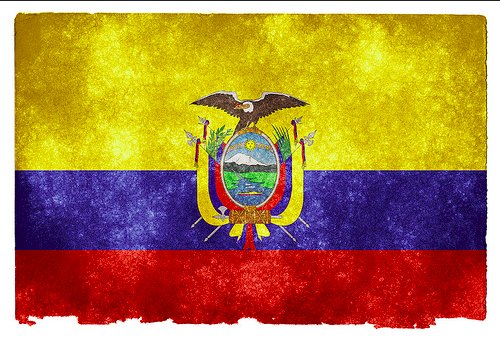
Ecuador not only banned bitcoin and all other cryptocurrencies, but it did so while establishing guidelines for the creation of their own virtual currency.
The National Assembly of Ecuador a bill that amends the country’s monetary laws in July 2014, banning cryptocurrencies and allowing the government to issue and transact in its asset-backed “electronic money.”
Kyrgyzstan
In Kyrgyzstan, using bitcoin as a form of payment is illegal, although no law prohibits users from buying, selling and using. In August 2014, the National Bank of the Kyrgyz Republic, issued a in which it noted that the use of bitcoin and other cryptos as a form of payment is illegal given that the only legal tender in the country is the country’s Kyrgystani Som (KGS).
The statement reads:
Under the legislation of the Kyrgyz Republic, the sole legal tender on the territory of our country is the national currency of Kyrgyzstan som. The use of ‘virtual currency’, bitcoins, in particular, as a means of payment in the Kyrgyz Republic, will be a violation of the law of our state.
Bangladesh
bitcoin is not legal in Bangladesh. Transacting with any type of decentralized cryptocurrency can get you up to 12 years in jail and it has been so for almost three years.
In September 2014, the Bangladesh Bank regarding the use of bitcoin and warning that it is punishable by law. Bank officials said that anyone found guilty of dealing with bitcoin or any other cryptocurrency could be jailed for up to 12 years under current anti-money laundering laws. The central bank went as far as to request citizens not to “spread information about it.”
The statement reads:
bitcoin is not a legal tender of any country. Any transaction through bitcoin or any other cryptocurrency is a punishable offense.
Do you believe these countries will change their stance on bitcoin and build a regulatory framework around it? Let us know in the comments.
![New york-based asset management firm files for btc [btc] etf](https://ohiobitcoin.com/wp-content/uploads/2019/01/lZimjX.jpg "New york-based asset management firm files for btc [btc] etf")
![New york-based asset management firm files for btc [btc] etf](http://ohiobitcoin.com/wp-content/uploads/2019/01/lZimjX.jpg "New york-based asset management firm files for btc [btc] etf")