We built the Blockchain Wallet because we’re driven by a relentless passion for making crypto easy to use. We want everyone to be able to use it, not just invest in it.
We believe that owning and controlling your own private key is the single most important aspect of using crypto. Without a private key, you aren’t using crypto – you’re just speculating and you’re missing the defining part of crypto: user controlled, sovereign money.
It was enabling that exact need that underpinned the development of the Blockchain Wallet six years ago. The mission? Make it easy for every user to have their own private key, to get users away from storing funds at exchanges and “bitcoin banks”, and to enable everyone to be their own bank.
Fast forward six years and we’ve achieved a few things that we’re proud of:
Building the first cross-platform, non-custodial, and cross-chain wallet
Signing up 30 million wallets in 140 countries globally
Powering over $200 billion in consumer transaction volume and over 80 million consumer crypto transactions in the last two years alone
Championing the cause of financial sovereignty and user-control with regulators around the world. (We’ve spent thousands of hours and millions on education and outreach.)
Helping our users store millions of BTC, BCH & ETH coins and generate over a quarter of bitcoin network traffic alone
Most importantly, it’s been a honor and privilege to be the first place tens of millions of people turn in order to actually use crypto and hold their own keys.
But there’s a lot still to do.
At the end of the last bull run, we did a serious self-assessment and asked ourselves, what do users need that we aren’t delivering today? We identified four common requests and frustrations:
Better, faster ways for new users to get their first crypto and make their first transaction
More storage types, like hardware, as users’ balances increased
More assets as users want to store and use an increasingly diverse asset set
Better, more reliable sources of liquidity as trading and investing across assets continues to increase
Satisfying these demands meant building a huge extension of our platform, at scale. We’ve had our heads down much of this year doing exactly that and starting today we’re excited to begin delivering new solutions to you, beginning with two new capabilities.
First, we’re launching Swap by Blockchain: a next generation trading product with best-in-class liquidity and execution, powered by our new machine trading software platform that ensures best execution across assets. Blockchain Wallet users will now have access to exchange-like prices without giving up control of their keys or their crypto. And trade limits will increase from hundreds to thousands of dollars of crypto per trade.
While the system currently has deep liquidity drawn from a variety of sources, we plan to add more liquidity sources over time, including decentralized exchange protocols. We’ve rebuilt our risk and KYC systems, so that you can onboard with ease, in minutes. Swap ensures our users stay liquid and can trade at the best prices in the market, regardless of overall market volatility and challenges. We’ve started rolling Swap out today and everyone will have access over the next two weeks.
Secondly, we’re launching Lockbox: a hardware vault in your pocket, built in partnership with hardware leader Ledger. Lockbox is simple to use and is even more secure thanks to a locked endpoint that prevents phishing and spoofing attacks. It’s hardware made easy, with a setup that takes just a few moments thanks to our custom hardware-software integration.
With Lockbox you’re able to check your balance and receive transactions, on mobile and web, without the inconvenience of having to plug your device in every time. In an industry first, you’ll also be able to trade directly from your Lockbox while still maintaining your keys. In conjunction with Lockbox, we’re also excited to let current Ledger device owners seamlessly pair with the Blockchain Wallet and trade directly from the Ledger device they already own.
And we have more coming this year, including additional assets and new products within the Blockchain Wallet that will bring you new, faster, and better ways to get started in crypto.
We’re here to build a new financial system and the Blockchain Wallet is your passport to that new world. Store crypto, trade crypto, transact with crypto and most importantly truly own and control your crypto.
We’re dedicated to building the functionality you want, without compromising your control of your key. Your crypto is yours, and it should stay that way.
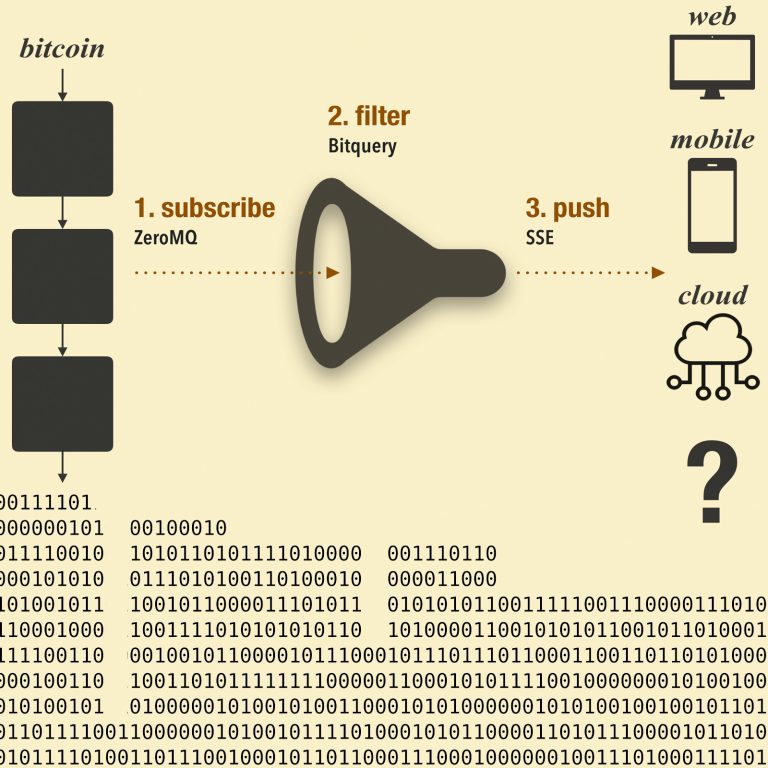
After a slew of new applications released over the last six months, on Oct. 24 the software developer Unwriter published another platform for the BCH ecosystem called Bitsocket; a real-time application program interface (API) for bitcoin Cash. Essentially Bitsocket compliments Unwriter’s Bitdb ‘pull’ based API with a ‘push’ based infrastructure for transactions on the bitcoin Cash network.
Also read:
Unwriter Publishes a bitcoin Cash Transaction Push API Called Bitsocket
The developer Unwriter recently created a new application called , push notification infrastructure that can be integrated with real-time based bitcoin Cash (BCH) applications. Unwriter explains in a written on Yours.org, that even though bitcoin has been around for almost 10 years developers couldn’t properly process, filter, and listen to transaction data in real-time. With Bitsocket coupled with Unwriter’s , the protocol provides developers with this resource.
“Bitsocket lets you subscribe to any pattern of real-time bitcoin transactions through Bitquery to build real-time bitcoin event-driven apps,” Unwriter’s Bitsocket documentation details.
The programmer shows an example of a filter that listens to the transactions in real-time and how Bitsocket reconstructs the data into a digestible API format. However, Unwriter explains that a raw stream is “boring” and displays how much more robust the application can become when using Bitquery. Similarly to the raw linear bitcoin transaction format processes, Bitsocket does the same for incoming transactions in real-time. So instead of storing the data in the Mongo database, the platform runs a real-time in-memory filter and organizes the functions into an application specific event.
Unwriter states:
Each transformed event from the previous step is pushed to the corresponding application via SSE (Server-Sent Events) — The apps can be anything from a mobile app to a web app to a server-side app to a hardware device.
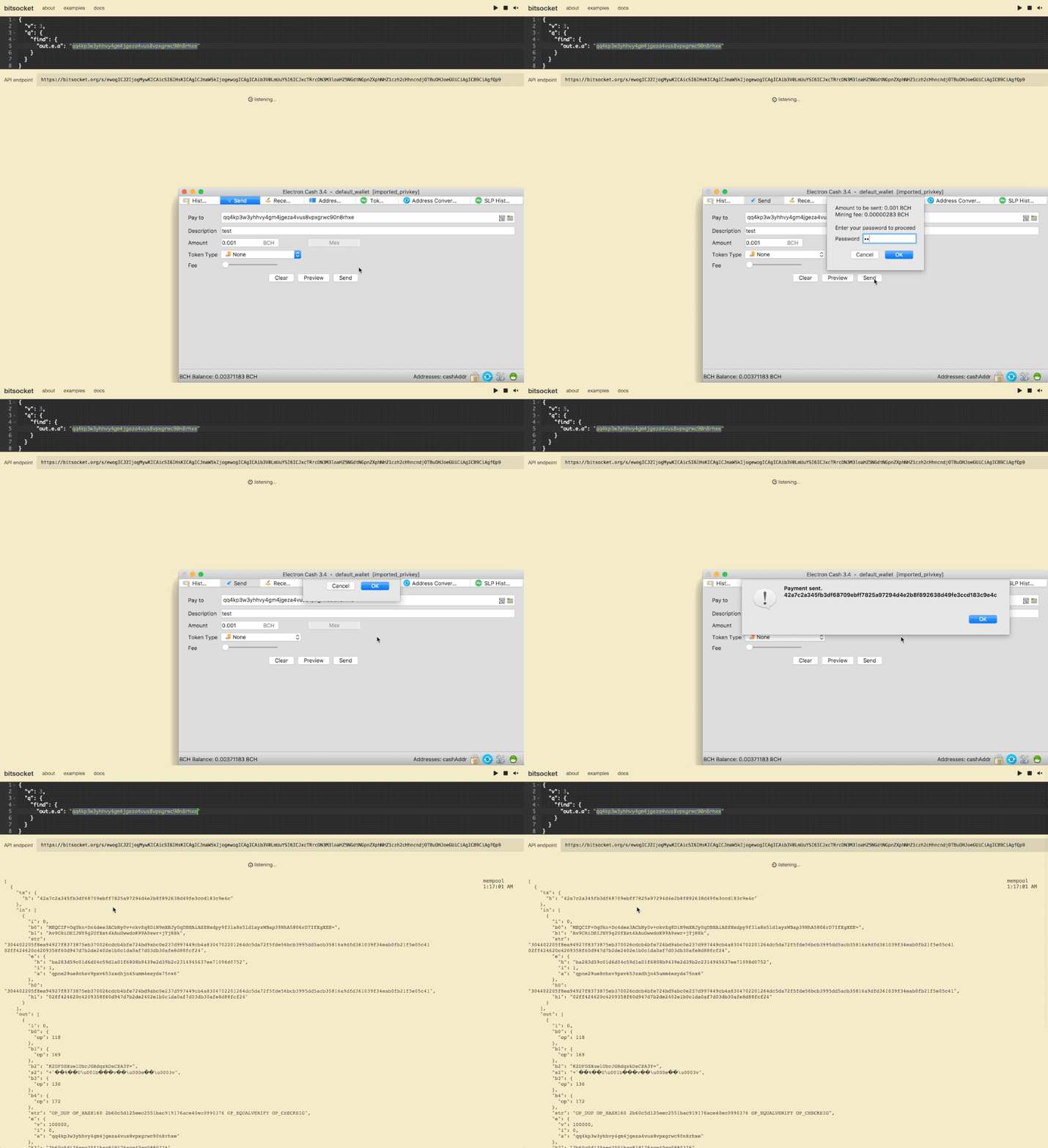 Unwriter listening to a query for all incoming transactions to a specific address, then sending 0.001BCH to the address using Electron Cash, and Bitsocket instantly pushing the filtered transaction in real-time.
Applying Bitsocket to Real-Time BCH Applications
Following Unwriter’s product release, a developer by the name of ‘Paool’ used the Bitsocket platform to a program called ‘,’ a real-time BCH ‘watch address’ notifier. The open source React component is basically for watching transactions tied to a specified address. This allows users who deploy the program the ability to get live notifications for any bitcoin cash address. Paool says that the next thing to do is add callback support to the push notification protocol.
 Paool’s ‘React’ push notifications is powered by Bitsocket’s API.
Unwriter has also used Bitsocket to create an application called ‘,’ a platform that allows a user to post to the BCH-based social media platform using the . The developer says on Twitter that Memobutton can now be used in real-time due to being tethered to Bitsocket. Unwriter tested the Memobutton platform on Safari, Chrome, and Firefox and the feed updates in real-time within all the browsers. Bitsocket is one of many Unwriter-created protocols as the prolific BCH developer has created a ton of bitcoin Cash applications over the last few months.
What do you think about Unwriter’s Bitsocket application? Let us know what you think about this project in the comments section below.
Images via Bitsocket, Twitter, Paool, Github, and Unwriter.
Need to calculate your bitcoin holdings? Check our section.
The post appeared first on .
Invemo GmbH is a Zug-based company that enables private individuals as well as companies to join the mining industry in the most professional and cost-effective way. With the recent decline of the mining profitability miners in Europe and especially in Switzerland have been struggling to maintain high profitability from their mining equipment.
Invemo applies multiple strategies in order to solve this problem. Invemo’s team is small consisting of currently 11 employees, but has extensive experience in crypto mining since 2014.
Why Invemo Advances in Crypto Mining
Peter Kubli, the company’s Co-Founder and CEO explains Invemo’s advancement over the other mining company’s worldwide the following way:
“Our main value proposition against other mining companies is our ability to combine Swiss quality with the abroad pricing. We have heavily invested into infrastructure by building advanced mining centers with every possible feature including ventilation across the whole building area, air filtration, natural cooling, dehumidifiers that enable to maintain highest possible lifetime value. We are currently hosting 2000 units, but are capable of managing 50’000 mining units (Bitmain ASIC S9’s for example).”
Along with start of the art infrastructure, we also employ 7 members of stuff that managing the equipment 24/7. Equipment management includes not only maintaining the operations but also maintenance service such as cleaning and wearables replacements. Peter says:
”We are not only providing industry leading equipment management for our customers, but also increase miner’s profits by adjusting the GPU or ASIC settings and running them with an inhouse developed software that allows us to switch between different algorithms or tokens depending on their profitability. As a result our customers obtain 30-40% higher profitability.”
Future Outlook
is analyzing several strategies which would allow it to sustainably exist in the future which includes manufacturing its own mining equipment and supporting enterprise rendering providers. Peter adds
“We are noticing a strong market consolidation in the blockchain space which forces projects with a weak business model and cost structure to close down and that does not only consider mining companies. Our team has to innovate if it wants to coexist which is why have already begun to develop our own ASIC miner and also actively test marketplaces that enable to trade computing power.”

