Interest towards cryptocurrencies in Belarus has increased significantly in the past year. Topics related to bitcoin, mining, and blockchain have been popularized by media. Belarusians are searching for more crypto information online, but there are some key questions search engines are unable to answer: Will ordinary citizens benefit from the upcoming legalization? Are they going to be able to receive salaries and pay bills in bitcoin? Concerns are growing that Decree №8 may simply turn Belarus into a “crypto-offshore”.
Also read:
Cryptocurrency Searches Spike in Belarus
Politically and economically isolated from the West, Belarus has been labeled “Europe’s last dictatorship”. However, last year Minsk made a strategic decision to embrace crypto, surprising many of its critics. In December, President Lukashenko Decree №8 to legalize cryptocurrencies, initial coin offerings, and smart contracts. It on March 28 and introduces tax breaks and other incentives for crypto-related activities until 2023, in order to develop the local digital economy.
 Interest towards cryptocurrencies in Belarus spiked last summer, when searches like “what is bitcoin?” and “what is blockchain?” increased substantially, according to the Russian search engine . By December, cryptocurrency topics climbed up to third place in its Belarusian statistics. Questions like “where can I get bitcoin?” have also contributed to that result. In January, Belarusians were typing “cryptocurrency” into the search bar 45 times more often than a year ago.
Queries regarding opportunities to earn money from crypto-related activities have also increased, Naviny reports. Phrases like “mining farm on credit” and “mining at home” are submitted much more often. Questions about mining hardware have jumped 20-fold since last year. Belarusians are also asking where they can buy “cheap cryptocurrency” and want to know the current rate of bitcoin. ICO-related searches have increased five-fold, with people interested in projects and opportunities.
All questions about crypto earnings have increased significantly in January after the signing of the presidential decree “On the development of the digital economy”. Experts and journalists, however, have been wondering whether Belarussians will be able to “monetize” the hype.
Is There a Catch-22 in Decree №8?
As , the presidential decree entitles companies and individual entrepreneurs to perform operations with tokens and cryptos. To do that, they have to register as residents of the Belarus High Technologies Park (). Private individuals will be allowed to convert cryptos to fiat, using services provided by “crypto-platforms” registered there. However, at this point it seems no one can tell if ordinary Belarusians will be able to spend cryptos in stores or pay for their summer trip in bitcoin. “The issue of regulating cryptocurrency circulation is really relevant. Jurisdictions react differently – some allow it, others ban it, but very few ignore it,” financial analyst Vadim Yosub told Belapan news service, noting that the stance of Belarusian authorities in that respect is not very clear.

Reading , one can find a subparagraph numbered 2.2., which states that “natural persons” (private individuals) have the right to possess tokens and, taking into account the specifics established by the Decree, perform the following operations: mining, storage of tokens in virtual wallets, acquisition and exchange for other tokens, and sale of tokens for Belarusian rubles, foreign currency, electronic money. They can also donate and bequeath tokens. Still unclear: will Belarusians be able to receive their salaries in crypto and pay their bills in bitcoin?
Annex 1 provides definitions for terms used in the presidential decree. Its paragraph 4. defines cryptocurrency as “bitcoin, other digital sign (token), used in international circulation as a universal means of exchange”. Paragraph 6. says that purchases and sales of tokens by residents of the Republic of Belarus are to be conducted in Belarusian rubles. Does that mean cryptos will be accepted as legal tender in Belarus after the legalization?
It is also unclear whether foreign companies can register as residents of the Tech Park directly or whether they should establish a local entity. The latter is more likely true, as paragraph 3. in Annex 3 states that “legal entities and individual entrepreneurs of the Republic of Belarus” may register as residents of the High Technology Park. To do so, they should submit the required documentation and carry out, or plan to carry out, one or more of the listed activities.
Banks Advised to Abstain from Crypto Deals
Decree №8 also states that “cryptocurrency operators” must set up local bank accounts to offer exchange services. According to Belarusian media, authorities have prepared a supplementary document describing the principles of interaction between banks and crypto-platforms. Preliminary reports suggest that the “operators” will be classified as “high risk” clients of the banking system. The National Bank has already said that “cryptocurrencies are not reliable assets” and warned commercial banks against cryptocurrency operations.
“Cryptocurrencies are not based on assets, but on electricity spent for their acquisition. Monetary authorities understand that and treat them with caution,” a source familiar with the position of the central bank told Belapan. He added that all necessary measures will be taken to prevent conversion of cryptocurrency in order to cash out proceeds from illicit activities, as that may lead to international sanctions and blacklisting.
 Taking into account the lukewarm attitude of the National Bank towards cryptocurrencies, commercial banks are not too eager to participate in cryptocurrency exchange operations. “Banks are advised to abstain from deals on the crypto market”, a “top-manager” told Belapan, remaining anonymous. Тhe legalization of cryptocurrencies and their circulation may end up being nominal, local media ponders.
Belarussians are really curious to know whether they will be able to freely buy and sell cryptocurrencies. “Many are interested in the mechanism of conversion – question number 1 we are being asked”, said Vitaly Koleda, IT specialist who took part in a panel discussion at the XIX Assembly of Business Circles of Belarus last week. Lawyers participating in the event also confirmed they were receiving many similar queries after the signing of the “digital economy” decree.
“The decree does not define and does not give legal status to cryptocurrencies,” says Oxana Sachkovskaya, Deputy Head of the Department of Digital Technologies at the Head Office of the Payment System. She points out that it is not clear who will be responsible for regulating their circulation in the country. Opinions have been expressed that the implementation of Decree №8 without additional regulations for the whole crypto sector, may turn Belarus into a “crypto-offshore” zone. “Тhere are concerns that this may lead to sanctions usually imposed on offshore companies,” financial analyst Vadim Yosub said, quoted by Navyni.
With more questions than answers, ordinary Belarusians may soon ask Yandex “What does legalization really mean?”
Do you expect Belarusian authorities to expand the legalization of the crypto sector to allow using cryptocurrencies as means of payment? Tell us in the comments section below.
Images courtesy of Shutterstock.
Express yourself freely at bitcoin.com’s user forums. We don’t censor on political grounds. Check.bitcoin.com.
The post appeared first on .
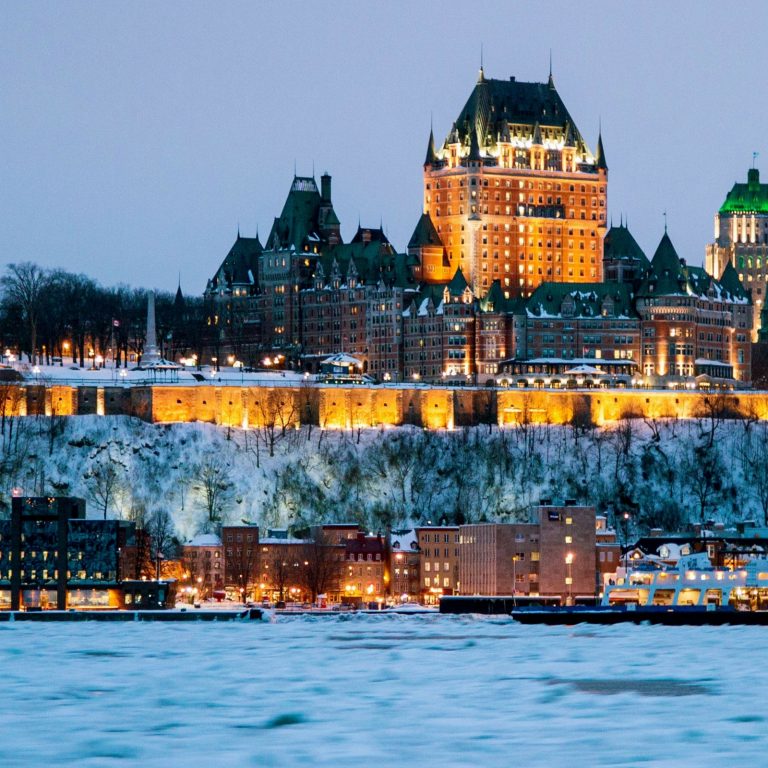
Québec, Canada has recently been thought to be a bitcoin mining boom town, as more data centers set up there to take advantage of relatively cold climes and low cost electricity. Not everyone is happy about it, especially the local government who fail to see why decentralized, invisible, magic internet money is worth anything at all.
Also read:
Québec Government Pushes Back on bitcoin Mining Craze
Québec currently boasts over 40 data centers, using roughly 350 megawatts. In just two more years, projections are more mining could result in using something like 1,000 megawatts. Premier Philippe Couillard isn’t pleased, however, scorning, “If you want to come settle here, plug in your servers and do bitcoin mining, we’re not really interested. There needs to be added value for our society; just having servers to do transaction mining and acquire new bitcoins, I don’t see the added value.”
And come bitcoin mining operations have to one of Canada’s quirkiest provinces. Hydro-Québec, the region’s government owned energy provider, through its CEO Eric Martel claim to have “received hundreds of applications,” according to , “which would need more than 9,000 megawatts of energy — about one-quarter of the utility’s total generating capacity of 37,000 megawatts. Hydro-Québec said last month it was in talks with more than 30 cryptocurrency companies.”
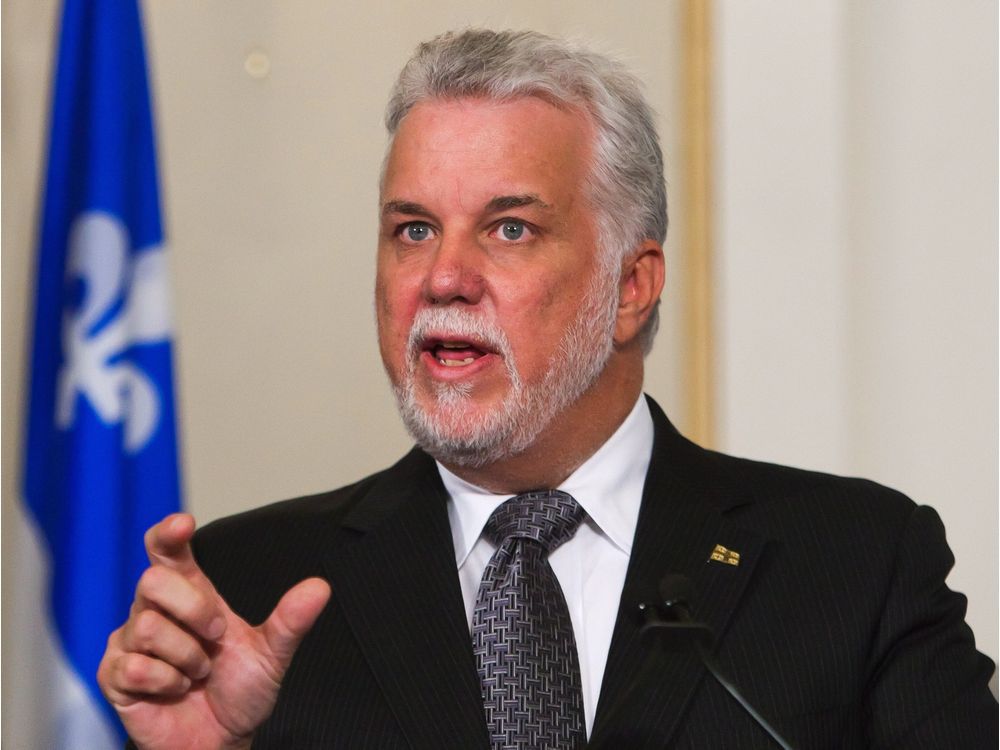 Premier Philippe Couillard
He continued, telling the online site, “There’s a real craze for Québec. I’ve got new Linkedin friends from Russia, China and many other places. The phone has been ringing off the hook,” Mr. Martel insisted. Even though Hydro-Québec is the largest utility, it does believe mining requests will not be able to be met. And signs of economic schizophrenia are beginning to show.
For his part, Premier Couillard doesn’t believe bitcoin mining makes for “a real ecosystem or a real technological transformation centered on blockchain.” Again, the province is known for quirky stands, most famously its attachment to the French language … which runs so deeply the state operates as almost a country within a country.
Uneasy Schizophrenia
Hydro-Québec seems to have caused its own problem. It solicited the mining community, at least for a while. The outfit has over 60 stations, powering over 36 thousand megawatts, often supplying even parts of New England with surplus. If any government energy provider would be able to accommodate mining, it’d be them.
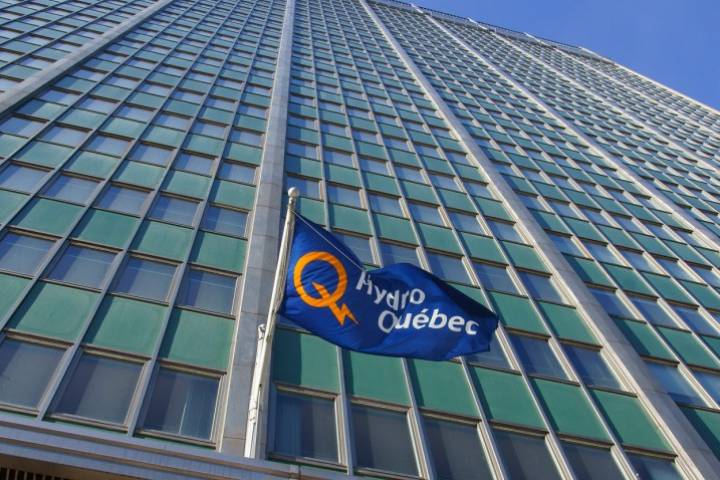
Still, “If all we do is connect the bitcoin miners who have applied, we could create an issue for ourselves. There are limits to what we can do. I have a huge network with lots of capacity, but I cannot host the entire planet,” Mr. Martel detailed. “If you think of the 10 biggest names in data centres globally, we’re talking to almost everybody. We have available land and our energy is 99 percent renewable. For a company’s branding, it’s much better when you can say your data centre operates with renewable energy.”
In a global economy where countries have either outright banned mining or are regulating it to death, Québec should be careful not to overplay its hand. Capital and business tend to go where they’re welcome. According to the Gazette, Hydro-Québec “will need several months to pore over all the requests, and probably won’t be able to accommodate them all. Nor does the company have plans to build new hydropower plants for the nascent industry. One option Martel is considering is charging bitcoin miners more than the rate of about 5 cents Canadian per kilowatt-hour that industrial users such as data centres would normally pay.”
Will Québec kill the goose that laid the golden egg? Let us know in the comments below.
Images via Pixabay.
At all comments containing links are automatically held up for moderation in the Disqus system. That means an editor has to take a look at the comment to approve it. This is due to the many, repetitive, spam and scam links people post under our articles. We do not censor any comment content based on politics or personal opinions. So, please be patient. Your comment will be published.
The post appeared first on .
Vincent Briatore Update: Private (BTCP) – You might want to HODL
Source:
With the large numbers of new Blockchain-focused projects doing (ICOs) it is rare to actually find a new use case for this game changing technology.
The start-up IPCHAIN Database managed to do just that. Originally formed by a number of scientists who wanted to use Blockchain technology to address known challenges in the context of protecting scientific research, the project has been met with enthusiastic feedback by leading stakeholders in intellectual property (IP) law.
Once released, the platform will offer users a large number of tools to protect, safely share and transfer all kinds of intellectual property, including scientific research, inventions, art and trade-secrets.
To better understand why Blockchain technology holds such a great potential for intellectual property law, one has to understand that the rights to a creation either lie with its the creator automatically or else have to be requested – in the form of patents for instance. In both cases it is essential that the applicant or author can prove that he or she did that piece of work prior to anyone else.
This simple fact has been difficult to prove in legal proceedings as witnesses, personal notes, webpages or social media seldom suffice as clear proof of first authorship. Blockchain technology has the characteristics of an immutable, incorruptible, decentralized digital ledger and as such is ideally suited to provide creators of IP with a time stamped proof when they first uploaded their work.
The possibilities for the better protection of intellectual property are not limited to publishing content on the Blockchain however. IPCHAIN Database therefore has established partnerships with important authorities in the field of IP, for instance Dennemeyer Group, the world’s largest IP law firm, and with the help of these experts developed a number of functionalities that also focus on the safe sharing of confidential information and the sale of such information or rights.
“To easily, quickly and safely share confidential information is essential for scientists but also for companies, who need to protect their many trade-secrets.”, explains Ingrid Kelly Spillmann, who, as Technology Transfer Manager at University of Vienna, is responsible for the management of the University’s patent portfolio, marketing University technologies to industry and licensing University technologies.
Blockchain technology has been identified as a potential game changer for intellectual property by experts in this field and the recent article “Blockchain and IP law: a match made in crypto heaven” in the official World Intellectual Property Organization’s (WIPO) magazine demonstrated a number of possible use cases. Due to their partnership with WIPO Green IPCHAIN Database already addressed the majority of these use cases in their already released whitepaper that also focuses on the company’s upcoming token sale.
The post appeared first on .