June 25, 2026

Capitalizations Index – B ∞/21M

Mixed Signals: China’s PBoC Doesn’t Recognize Digital Currencies Like Bitcoin, But Are They Looking to Create Their Own?

Mixed signals: china’s pboc doesn’t recognize digital currencies like bitcoin, but are they looking to create their own?

Mixed Signals: China’s PBoC Doesn’t Recognize Digital Currencies Like Bitcoin, But Are They Looking to Create Their Own?

Mixed signals: china’s pboc doesn’t recognize digital currencies like bitcoin, but are they looking to create their own?

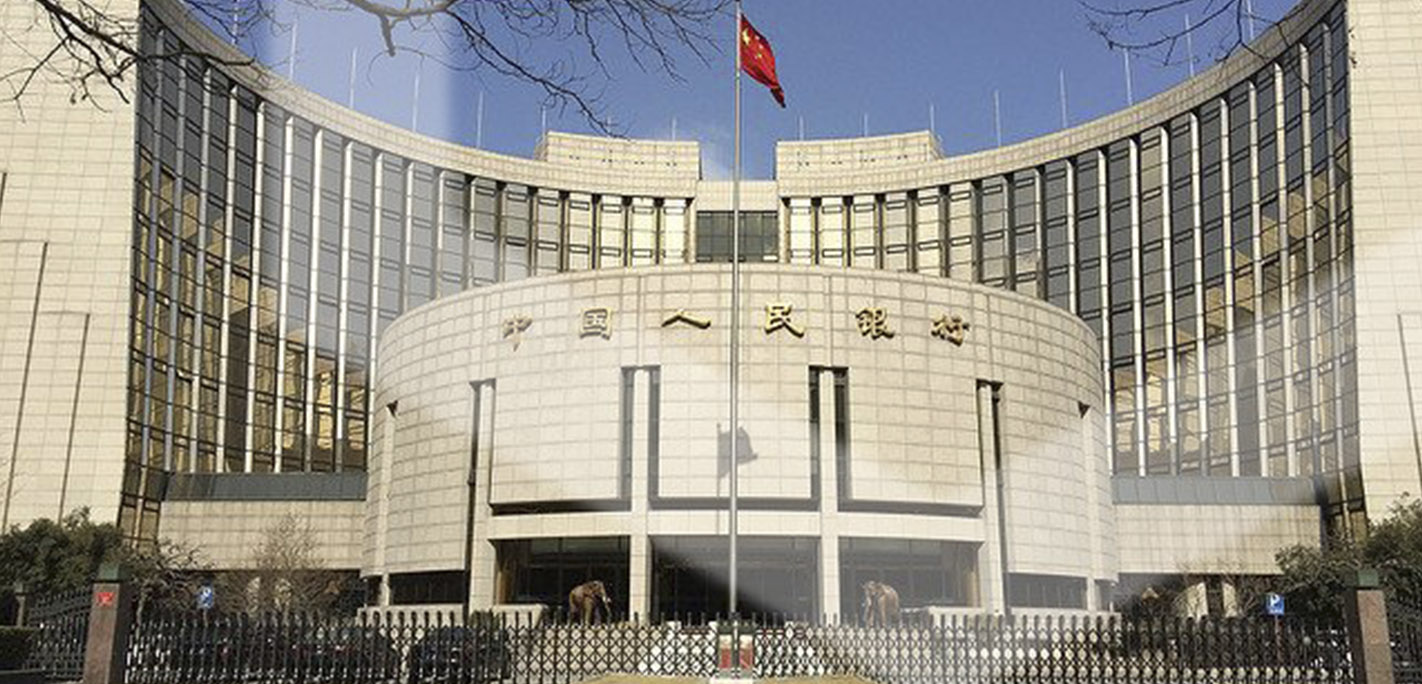
Speaking at a press conference on the sidelines of the annual session of the National People’s Congress, Zhou Xiaochuan, the governor of the People’s Bank of China (PBoC), made it clear that the country does not recognize bitcoin and other digital currencies like it does traditional banking tools such as paper money, coins, and credit cards: “The banking system does not accept it.”

Xiaochuan added that direct trading between bitcoin and yuan is not supported by the central bank, and also made comments that represent a sort of philosophical or cultural view regarding money, saying:

“We don’t like speculative cryptocurrency products since it is not a good thing to give people an illusion of getting rich overnight.”

Xiaochuan’s statement comes after months of negative sentiments from Chinese authorities, including the PBoC, who have taken a series of steps to clamp down on the cryptocurrency market both domestically and internationally.

In another interesting turn, and in sharp contrast to the attitudes of many other governments and large corporations across the globe, Xiaochuan warned that even an expansion of blockchain and distributed ledger technologies may have a negative impact on consumers — adding that it could also bring some unpredictable effects on financial stability and monetary policy transmission.

Digital Currency For Electronic Payment

That said, the country is developing some crypto-related plans: a few weeks ago Xiaochuan announced that the PBoC is planning to launch a digital currency called DCEP, or Digital Currency For Electronic Payment. The digital currency is expected to go through initial test phases in 2019. As of now, it’s not certain whether this digital currency will take the form of a cryptocurrency or perhaps just utilize blockchain-technology.

Any potential development of a digital currency must suit the needs of the country, Xiaochaun declared. These being a digital currency that focuses on “convenience, rapidity, and low cost in a retail payment system, while taking into account security and protection of privacy.” They should also not conflict with the current financial order, Xiaochuan added.

Mixed Signals?

The governor pointed out that PBoC had organized digital currency related seminars more than three years ago. That was followed by the establishment of a research institute for blockchain technology. Just a year ago, PBoC executives had spoken in favor of digital currencies.

And just last week a delegation of Chinese technology leaders visited Australia to explore the implementation of blockchain into the fintech industry. The delegation was comprised of top-level Chinese companies, including Ant Financial, WeBank, JD.com, ZhongAn, Wanxiang, and OnChain. 

As of now it’s hard to pinpoint hardline truths regarding the country’s real attitudes towards cryptocurrencies considering the mixed signals that the Chinese government and central bank has been sending the crypto and blockchain communities. It look as though the country will continue to shy away from cryptocurrencies like bitcoin, though they may be interested in further applying blockchain-based technologies, perhaps even using them to underpin a state-sponsored digital currency in the future.

Published at Mon, 19 Mar 2018 20:00:23 +0000

bitcoin

Previous Article

President Trump Bans US Citizens from Buying Venezuela’s Petro

Next Article

Daily Market Report for March 19 2018

You might be interested in …

Bitcoin Exchange Globitex Granted European Electronic Money License

Globitex.jpg

Globitex, a new bitcoin exchange co-founded by former bitcoin Foundation Executive Director Jon Matonis, is announcing that its parent Globitex Holding (Latvia) group company NexPay UAB has been granted an Electronic Money Institution (EMI) license by the Bank of Lithuania, a regulatory authority in the European Union, to carry out payment services and e-money issuance in the EU.

The acquisition of the EMI license will allow Globitex to integrate with the Single Euro Payments Area (SEPA) euro payment system directly through the central bank of Lithuania. This will enable NexPay to clear euro payments directly, without the involvement of commercial banks, and to issue IBAN accounts to Globitex clients just as banks issue accounts to their clients, which is could be an important step forward in terms of accessibility.

According to the company, this regulatory development opens the way for the institutional- grade bitcoin exchange to deal with EUR fiat payments globally and sets a new level of legitimacy for the cryptocurrency industry overall. It also represents a significant step toward widespread adoption of bitcoin as a unit of account suitable for global trade, with no geographic, political or monetary restrictions.

Eventually, Globitex wants to allow producers to purchase exchange-listed products for bitcoin, and trading firms, and speculators to hedge their risks in bitcoin with derivatives trading.

“Globitex is looking to set new cryptocurrency trading standards not only technologically, or by commodities linked product offering, but especially in Globitex’s legal setup, ensuring safe passage to the digital age,” said Liza Aizupiete, Managing Director of Globitex, who recently participated in a panel discussion on the future of blockchain technology and cryptocurrencies at e-com21 in Riga, Latvia.

While bitcoin offers enormous advantages for international settlement due to its speed and low cost compared to legacy money transfer services, order-book depth and liquidity cannot yet support very large trades; therefore, bitcoin cannot yet serve as a currency of international trade settlement across the world’s financial markets.

Globitex wants to tackle this challenge by dramatically increasing bitcoin trading volumes and facilitating bitcoin’s use across the spectrum of money and commodity markets, thereby allowing financial instruments and commodities like crude oil, gold and coffee to be priced directly in bitcoin.

Physical-Settlement Futures Contracts as Important Enabling Factors

“I look forward to this evolution of digital currency trading platforms that ensure futures contracts with a physical delivery component,” Matonis told bitcoin Magazine. “Strong connection to the spot markets, including contract limits and physical delivery that is linked to provisioned commodities, will serve as the market standard for price integrity.”

Matonis outlined some risks associated with cash-settled bitcoin futures contracts. He pointed out that the price index is too easily gamed, for example, and that there is no physical commodity (private keys) for integrity of short positions, maintenance margins could potentially approach 100 percent so there is no real leverage during volatility, and there is a risk of limit-up, limit-down insolvency for certain smaller members.

According to Matonis, the cash-settled bitcoin futures contract is a precursor to an exchange offering a proper physical-settlement futures contract like Globitex. In fact, decentralized crypto and physical-settlement bitcoin markets will be more robust, Matonis explained to bitcoin Magazine, since warehousing, open-contract limits and maintenance-margin calculations all behave differently under a digital assets class with physical settlement.

Globitex is holding a token sale, to be issued on the Ethereum blockchain, for its GBX utility token to fund the scaling of its existing exchange infrastructure into a commodities spot and derivatives exchange for bitcoin.

A short video explainer outlines a future where bitcoin is the preferred medium of exchange for everything and permits cheaply settling international trades; swapping precious metals and commodities in seconds; and opening new trading options for farmers, manufacturing companies, metal miners, oil refineries and more.

The post Bitcoin Exchange Globitex Granted European Electronic Money License appeared first on Bitcoin Magazine.