January 21, 2026

Capitalizations Index – B ∞/21M

Meteoric Bitcoin Rally Won’t Rescue Nvidia’s Flailing Stock

Meteoric bitcoin rally won’t rescue nvidia’s flailing stock

Meteoric Bitcoin Rally Won’t Rescue Nvidia’s Flailing Stock

By CCN: Nvidia previously blamed its negative earnings report on “crypto winter,” the vaunted extended bear market which bitcoin appears to have finally exited. The incredible rally of the past couple weeks means many industries related to crypto will see increased demand and valuation – everything from mining to software development will be in fashion again.

However, NVDA shareholders should not count on another cryptocurrency boom to rescue the ailing chipmaker.

Analysts Worry about Nvidia as Stock Implodes

Nvidia stock price chart

Nvidia stock cratered voer the past year, and it’s upcoming earnings doesn’t look likely to improve the situation. | Source: Yahoo Finance

Nvidia stock continues to teeter on the brink, and the company’s first-quarter earnings report isn’t looking very healthy, according to Wall Street analysts, who note that the quarter saw little recovery in demand for the company’s products. The report is set to come out today. Many believe the company’s main weakness lies in its data center division.

Nvidia just ended its first quarter of the fiscal year 2020. Previously, as sales exploded and then declined, due in part to the cycles of crypto, CEO Jensen Huang cited increased data center business as evidence that the company had much more to offer than gaming chips. This confidence may be undermined today as the company is likely to report a decline in that division, as well.

Nvidia Revenues Down 32% & a Resurgent Crypto Market Won’t Help
Ethereum cryptocurrency mining

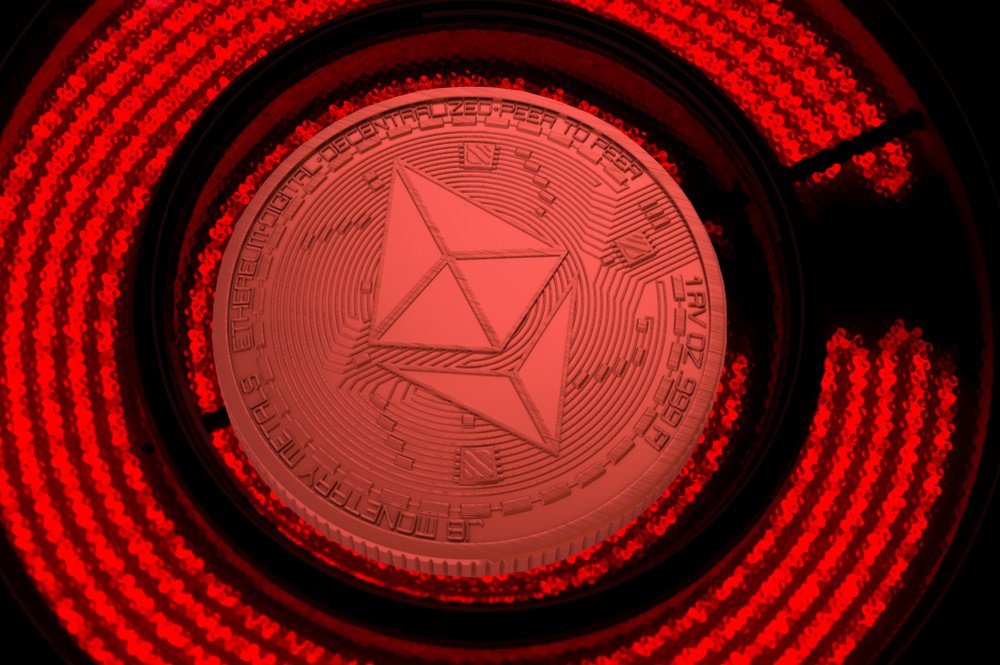
Nvidia shareholders shouldn’t count on GPU-intensive cryptocurrency mining to help the ailing chipmaker regain its footing. | Source: Shutterstock

First-quarter revenue is expected to be down about 32% from last year. The seismic boom of the crypto market increased demand in no uncertain terms: units would fly off the shelves. The increased demand mainly came from cryptocurrencies such as Ethereum and Monero, where GPU mining is still the dominant mode. Bitcoin and other SHA256 blockchains, as well as Scrypt-based chains like Litecoin, favor dedicated hardware known as ASIC miners.

Nvidia previously promised that performance in FY 2020 would be either stagnant or moderately bad. Now it’s looking like things may be worse than expected. An analyst with Stifel told Bloomberg:

“We are cautious on Nvidia shares in front of its earnings report. We believe the company will be challenged to meet its full year guidance for revenue.”

The report won’t come in until just before the market closes today, but it’s currently unclear what impact a returning crypto bull market might have on the firm. “Crypto winter” had a dire effect on most aspects of the mining industry, with a major Taiwanese chip supplier blaming its troubles on lack of demand from crypto mining giant Bitmain. Bitmain itself was forced to downsize and, amid other problems, let its application for an initial public offering expire.

The booms and busts of cryptocurrency are more extreme than most industries and therefore much harder for traditionally-structured companies to endure. Human nature is to expect the present situation to continue, and our institutions plan accordingly.

Is There A Future for GPUs in Crypto?
Bitcoin price chart

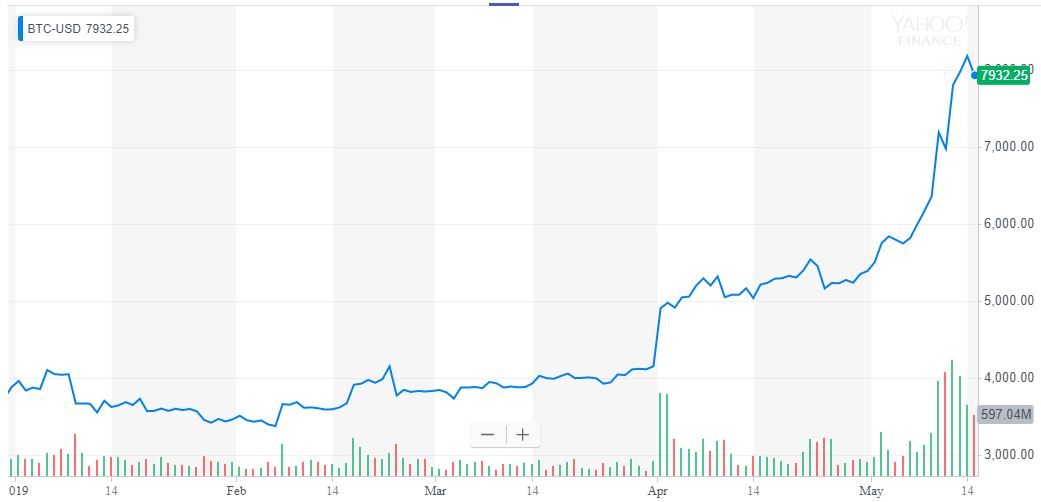
Nvidia shouldn’t count on a resurgent cryptocurrency market to reignite demand for its GPUs. | Source: Yahoo Finance

The rug was pulled from underneath a highly speculative crypto market near the end of 2017, and throughout last year a recovery became less and less possible. The final blows came in near the end of the year, which saw a 50% tumble in the price of Bitcoin and much worse freefalls for other major cryptocurrencies.

It’s entirely possible that Nvidia stock finds itself in the bargain bin in the coming weeks, as analysts downgrade their confidence in the symbol. An extreme pick-up might come briefly later on, fueled by a resurgence in Ethereum.

Unfortunately, Ethereum will soon be moving to a pure proof-of-stake model, which means that demand for mining equipment on that network will aggressively decline.

Several other networks still use proof-of-work. These will generate moderate demand for GPUs, but hardly any of them are even in the top 20 by market capitalization, meaning that demand should remain limited.


Published at Thu, 16 May 2019 17:39:59 +0000

Previous Article

Bitcoin (BTC) Price Analysis: Bulls Show Weakness as BTC Slips Below $8K

Next Article

Weiss Ratings slams crypto-project; claims FB is ‘noticeably absent’ from DLT discussions |

You might be interested in …

Trade.io – Blockchain Trading Platform Makes Traders Owners and Shares the Profits

Has the post-2008 bank cleanup allowed the banks to mop up more client money? Despite tighter financial regulation, banks are behaving like teenagers with no house rules. Not only are financial services fees rising, but it is becoming harder to see what big banks are doing with their money.  In fact, about 10 percent of big money trades now take place in the ‘dark pool’—faceless financial exchanges where traders can hide their identity.

The operation of financial services on the Blockchain is proving that innovation can succeed where regulations are failing. Over the digital ledger, cryptographic proofs replace intermediaries and their high fees while a smart contract monitors compliance in real time. Conducting financial transactions over a peer network of transparent nodes is rebuilding trust in the financial system.


A self-regulating repository of the truth

Trade.io is one of the revolutionary financial exchange models providing a solution to the financial system flaws that keep regulators up at night. On a transparent  Blockchain platform, trading partners are accountable for their activity since transactions are transparent and traceable. The trading record is irreversible, making it difficult for a corrupt broker to manipulate the market to increase his commissions.

The nightmare of every regulator, systemic risk, is also reduced. Markets are protected from the contagion effect—a failure in one part of the system leading to failures in other parts of the system—by the distributed and decentralized network. Transactions reside on the computer of each party in a transaction node. The focus is on security and information protection at the individual node level. Since transactions in fiat and cryptocurrencies are done directly from the digital wallet of traders, the trade.io platform can match and process trades without gaining access to trade information.

Democratizing crypto exchanges

Trade.io aims to be a model of the sharing and trust economy. Since investors in the Trade Token, the trade.io trading currency, take an ownership interest in the exchange and profit from its success, the incentive of members to cooperate rather than cheat is high.

Trade Token holders become investors in the trade.io Liquidity Pool. Fifty percent of the revenues (or losses) of the liquidity pool are deposited (deducted) daily to the wallets of pool participants. The distribution is based on a pro-rata allocation of each member.  A member with 500-999 tokens locked on the pool will receive 10 percent profit participation, while a member with over 5,000 tokens locked-in will receive 100 percent of the profit plus a 10 percent bonus. Revenue is generated from a number of sources, including trade spreads, commissions, P2P margin lending fees and investment banking fees.  

Trading on the trade.io platform is conducted with the Trade Token. The token is more than a medium of exchange at a lower cost than traditional exchanges. It also provides membership in the liquidity pool through the trade.io wallet. The membership fee, which allows participation in the pool, is 2500 Trade Tokens. These Trade Tokens will be secured by the underlying assets pledged by the participants, which may include fiat or cryptocurrency.

For traders who lament losing their traditional trading tools in the crypto world, the trade.io Blockchain platform provides integration of MT4, the most popular trading platform.

Playing by the rules

Trade.io will be licensed as a bank and financial exchange. Different from the dystopian world of cryptocurrencies portrayed by some banks, the regulated crypto exchange is becoming the model in the US, Japan and elsewhere. The model leverages the innovation of the Blockchain while providing the security of a regulated exchange. Unique Blockchain services include P2P margin lending.

Participants can lend directly to each other through a peer-to-peer lending program. The investment banking arm of trade.io will help companies issue tokens and launch initial coin offerings (ICOs).  Investors may use the Trade Token to invest in initial public offerings (IPOs) and ICOs. Trade Token holders can also receive preferred access to ICOs, discounts and other market benefits. Trade.io has a Seed & Venture Fund to support the development of Blockchain technologies and potential ICOs.

The trade.io ICO

The initial coin offering started on Dec. 7th, 2017. Two-thirds of 500 mln Trade Tokens (Symbol: TIO)  will be available for crowd sale. The trade.io liquidity pool will be launched for trading in April 2018, followed by the investment bank in July 2018.

The post Trade.io – Blockchain Trading Platform Makes Traders Owners and Shares the Profits appeared first on NEWSBTC.

Ripple (xrp) bb squeeze hints of undervaluation and demand

Ripple (XRP) BB Squeeze Hints of Undervaluation and Demand

Ripple (XRP) BB Squeeze Hints of Undervaluation and Demand Ripple prices up 1.4 percent in last day Remittance faster and cheaper in Ripple platform Participation levels low as prices flat-line The decentralization argument will continue […]