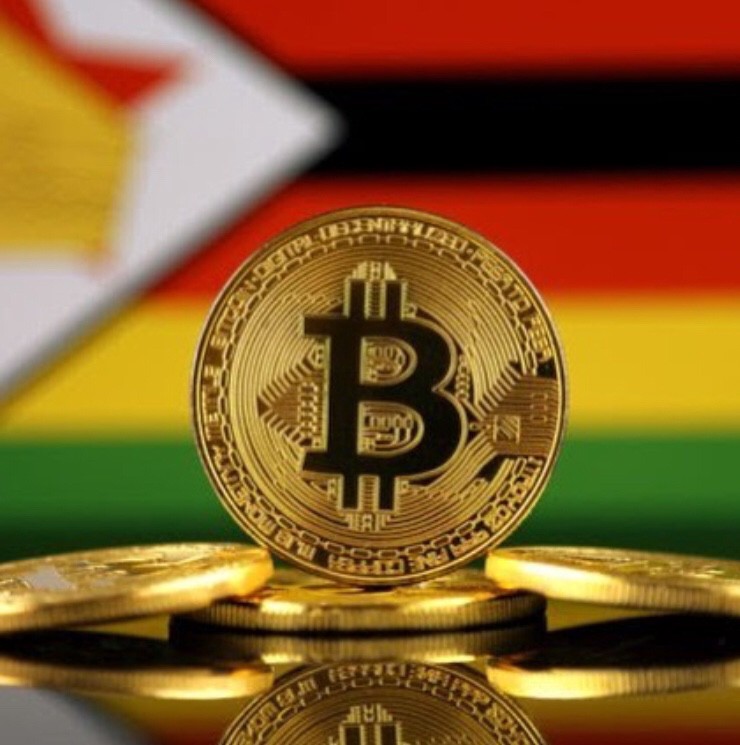
Making the case for of in Zimbabwe
Introduction
, also known as crypto assets or digital assets will upend the world. The recent announcement by J.P. Morgan that the bank will issue a bank backed in a first for a US bank gives us a peak into the future. The future of money is in digital form. open a window of. possibilities transcending across areas such as cross border remittances, e-commerce, shipping, financial services, data security to anything which exist in physical form which can be tokenised.
Underlying Technology
Most people have probably heard of the term technology, which is currently the buzzword in most circles but probably do not understand what the big deal is about this technology. The term on itself is quite vague and requires unpacking- this refers to distributed technology which is an electronic which is spread across a network. All computers on the network keep a piece of information which authenticates a transaction on the network and becomes a permanent record. of the occurrence of that transaction. This technology’s first use case was through the nascent asset . The is the infrastructure on which units () are moved around and tracked from one person to the next. Anyone who wants to take part would need to have a (electronic) created on that .
There are many different blockchains which were created after such as , waves e.t.c. With , the inventor, Satoshi Nakamoto solved the problem of double spending which had been the main obstacle to verifying that a digital currency has not been used to settle a transaction with someone else previously (double spending). Solving this problem made digital money possible. Others argue that digital money has always been there through plastic card payments and Real Time Gross Settlement Systems, however these are different in that they are simply a database administered from an account held with financial institutions recording credits and debits through intermediaries. Unlike bank accounts, bypass intermediaries and the owner of the asset/ has the responsibility for the security of their and the private keys which are the only way of authorising and authenticating a transaction. The asset moves by means of what is known as peer to peer or through acquisition on exchanges which borrow from the idea of stock exchanges.
How work
The concept of blockchains should be clearer by now and is worthwhile to explore how interact with the . An example would be the best way to explain this concept and the comes to mind as an easy example. (ETH) is another in the same way as and it is the native coin for the . The evolved into an ecosystem and hosts other created through smart contracts. The adopt a standard known as ERC20. Anyone can issue a on the (or any other public bockchain) which makes it possible to the issued asset in any which supports ERC20 . An example of which exist on are Zilika (ZIL), Cashbet (CBC) and many more (now run into hundreds). All data about the is stored on the which is accessible publicly by anyone through a simple search (unless the has a privacy functionality)
One would be wondering by now what these. are for and the fact that they are so easy for anyone to create. The easy way in which one can issue a is the main reason why quickly gained a reputation of being scams. Whilst some of the projects are outright scams, there are many which serve a real purpose. Some technologies which are now on the market will have huge significance in how we currently perform different tasks and activities. A good example is a called xrp which is open source and is being used by a company called which is based in the US. The example later in this article demonstrates how useful the technology can be.
Potential of to upend Zimbabwe’s economy
An ecosystem of has the potential to impact on the economy in a positive way, however, time is of the essence as any delays could carry the potential to make implementation costly. This is because technology is normally cheaper to adopt in early days as innovators try to push their products into the market. Once a product is well established, entities become more driven by profits, which can often result in higher costs of .
Tokenisation
The huge potential for tokenisation in Zimbabwe lies in natural resources. It doesn’t make sense to physically take all the gold to the Reserve Bank of Zimbabwe for logistics to transport and sell abroad thereby increasing expenses. Tokenisation is enabling the implementation of what were once thought of as possibilities. are no longer used (only) for buying if that was ever the case, which is the narrative pushed by mainstream media. Gold can now be tokenised and sold as a representing its value on an exchange to the world without getting moved from the borders of Zimbabwe. All that is needed is an audit by a credible financial company of the gold backing the and getting the results of the audit public. This is the concept behind called stablecoins whereby the issuer deposits an equal amount of hard currency to the issued with a bank. The same can be done with gold by issuing which equal the value of gold held in reserves. The government can even issue a currency on the on the basis of the same concept thereby bringing costs of printing money down and also having a finite supply of money which can be viewed on the by the public thereby achieving transparency and gaining public confidence.
Companies such as Econet can quickly turn things around where government policy is enabling. If Econet is to issue a for use to pay for services such as data bundles, this could see a lot of efficiencies. Furthermore, Econet has a presence across borders which could make moving value through a company issued easy and remove the foreign currency obstacle out of the way. If all companies could do the same, then reliance on centrally issued fiat such as USD will reduce. It would be counter-intuitive for the government to allow foreign currency circulation in the market but not allow local business to issued to make business processes more efficient.
Financial services
One of the areas where there are a lot of inefficiencies is in money remittances. It is costly to remit funds to Zimbabwe and recently it has been observed that sanctions are having an impact on the easiness at which funds are moved which is increasing costs. avoid intermediaries such as the century old inefficient and costly Swift system. Currently it does not make sense to send $1 through remittance companies as it costs more than $1 in fees. If you are to send $1m it costs almost $3k in fees and it can take several days through the Swift system. Companies such as have come up with a solution which can solve both the issues mentioned above at a cost of less than $0.01 and with the benefit of instant availability of funds using the (XRP). If one is to imagine with the millions remitted into Zimbabwe from the diaspora, there can be huge savings which can end up increasing available funds and saving businesses thousands every year.
Other use cases include in the issuance and of company shares on digital asset exchanges. A company could raise equity through selling (Security Offerings) which represent shares in the company. This is an area which is increasingly becoming popular around the world.
Cash Crisis
If a ecosystem is to develop in the country, this can boost the economy. However, this can only have a positive impact on this front if the are indigenous and created in Zimbabwe. Most which are currently in circulation were created and distributed. from within the borders of other countries which essentially make them digital exports in the same way as software. This means that these digital assets which would have been created locally ended up being exports with the funds raised in the crowdfunding making way into the country of creation. This can impact on the economy in that the companies issuing the end up creating jobs and developing local infrastructure and talent. All the funds can be invested and spent in local businesses and it can also be a source of foreign investment into local companies. Most countries have so far gone to lengths such as offering tax breaks and developing friendly regulatory policies, a good example being Malta.
Taxation
Governments which have developed tax policies now benefit from tax revenues from traders in the form of income tax or capital gains tax. Some states such as Ohio in the US have gone further to even allow tax collection in the form of . if the $1m prediction of future value of by IBM’s VP materialises, the public purse can expect a windfall. Closer to home, South Africa developed a tax policy and citizens can have liability to pay tax on income from . Currently the South African Government is consulting on of . The implication of this is that Zimbabwe will in any event end up having to deal with this matter.
Lastly, the biggest benefit which friendly policies will have is that it will allow citizens to freely take part in the economy and invest. The head of at IBM recently stated that the value of could reach $1m per coin in the future. ’s value was under $1 in 2014 and it is currently valued over $130. This area has a huge potential to give a source of income to those who are interested in taking part. After all, when citizens realise gains, the money is likely to be spent locally thereby boosting the economy.
Fundamentals for
As are a new asset class, the world has been struggling for the past decade in terms of how to handle this matter. In most jurisdictions, are alien to law, as they are a manifestation of technological advancement and innovation. Some have chosen to call it Web 2.0 due to the scale of disruption which can be likened to the discovery of the internet. As a result of this development which is more like a technology revolution, some jurisdictions have attempted a complete ban which was the case in Golix -v- Reserve Bank of Zimbabwe, an ongoing case in which I supported with some expertise. Others have as indicated above decided to strike a balance allowing innovation whilst retaining some level of control through . The Us State of Wyoming became the first state to pass a Bill which defines digital assets and recognise them in law as property which is a precursor to effective . This appears to be a sensible approach.
What is clear is that have the potential to upend Zimbabwe and the world, but before this can occur, the government will have to start paying attention to this area and have a policy paper which gives certainty for companies to invest in the financial technology required. The of this technology by US banks is the earliest and clearest sign so far that are making in-ways to the mainstream. There are huge benefits which can come as a result of this, the obvious one being the ability to curtail the power of the Reserve Bank of Zimbabwe to issue money as the offers transparency.
Other developments which points to mainstream of include the decision by Nasdaq Stock Exchange. and New York Stock Exchange to have involvement in this space. Marshal Islands also recently announced plans to issue a as a state which follows after Venezuela’s Petro digital currency and Iran’s gold backed . In the Middle East, Saudi Arabia and the UAE announced plans for a joint which is now being developed.
Like a plague, are spreading across the globe and the time for in Zimbabwe appears to be now.
Published at Sat, 23 Feb 2019 03:06:05 +0000
