
January 25, 2026

Capitalizations Index – B ∞/21M

London Police Seize £500,000 in Bitcoin from “Cyber Crime Wave” Hacker

London police seize £500,000 in bitcoin from “cyber crime wave” hacker

London Police Seize £500,000 in Bitcoin from “Cyber Crime Wave” Hacker


London police seize £500,000 in bitcoin from “cyber crime wave” hacker
Advertisement

Get exclusive analysis and cryptocurrency insights on Hacked.com for just $39 per month.

Described by his sentencing judge as a “one man cybercrime wave”, British hacker Grant West caused hundreds of thousands of dollars worth of damages through his activities stealing and selling personal and financial information on the dark web.

West sent phishing emails under the guise of surveys from popular takeaway food delivery service Just Eat, offering food vouchers in exchange for completing a survey. The survey was a fake, and respondents were actually sending their personal details back to Grant so that he could sell them to the dark black market  – the phishing scam alone netted West £180,000 or $240,000 which he then converted into bitcoin. BBC reports that the scam cost the Just Eat company £200,000 or $265,000.
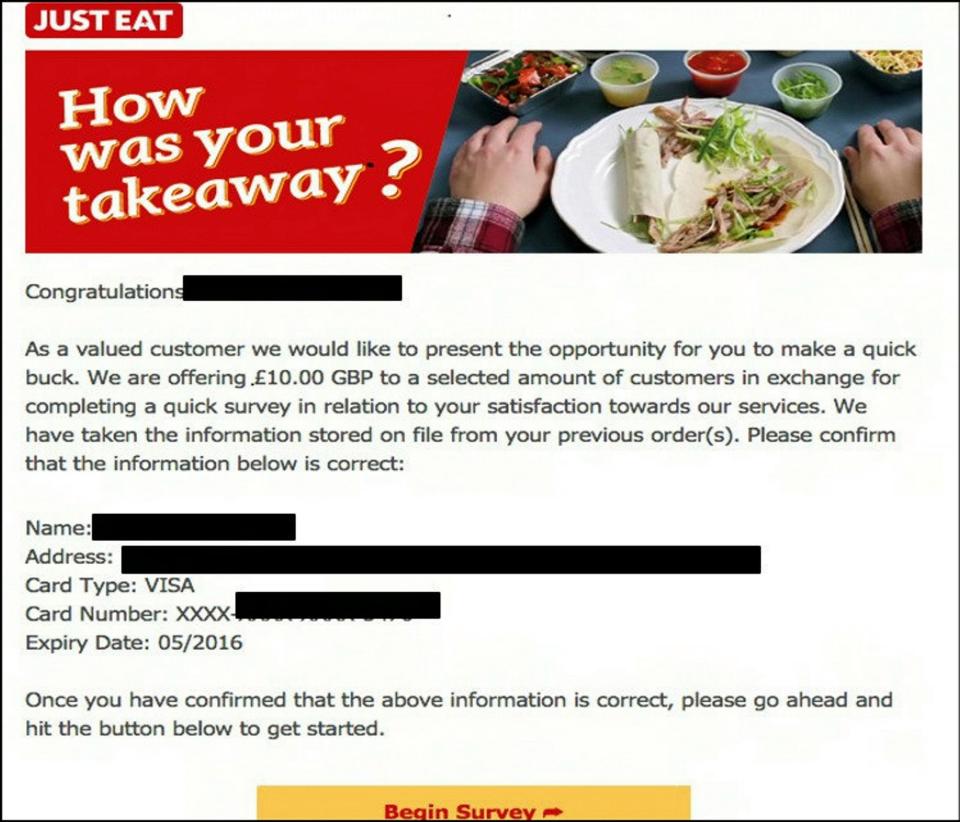
London police seize £500,000 in bitcoin from “cyber crime wave” hacker

West also directly targeted over 100 other companies including major firms like Barclay’s, Asda, Ladbrokes, Uber, and British Airways, hacking them for more customer data to sell. His Barclay’s attacks resulted in West’s clients fraudulently removing £84,000 or $110,000 from customer accounts and costing the bank £300,000 or $400,000 to remedy through new security measures. Similarly, West cost British Airways £400,000 or $530,000 after he hacked Avios accounts.

He reportedly used the money to pay for a new Audi worth £40,000 or $53,000 and several trips to Las Vegas among other luxuries.

West was arrested in 2017 on a first-class train to London in September 2017. Detectives from the Scotland Yard cybercrime unit chose the moment to end their two-year investigation carefully, making sure Grant was logged into his computer so and grabbing his arms before he could log out of his heavily encrypted cryptocurrency wallets and dark web accounts, which otherwise would be very difficult to link to him legally.

On the laptop, which belonged to West’s girlfriend, police found the financial information of 100,000 people. A subsequent raid on his home revealed an SD card with the details of 63,000 credit and debit cards as well as 7 million email addresses and passwords, along with £25,000 or $33,000 in cash and half a kilogram of cannabis, which West was also selling on the dark web.

West went by the username Courvoisier, after the top-shelf brandy, selling stolen information and drugs on the now-defunct site Alpha Bay. He pled guilty to conspiracy to commit fraud, computer misuse, and drug offenses on 2 May and on Friday May 25 Judge Michael Gledhill sentenced West to 10 years and eight months in prison.

Police accessed and seized over £500,000 or $667,000 worth of ill-gotten bitcoin from West’s girlfriend’s device, and she was sentenced to community service for unauthorised access of computer material – however, according to Judge Gledhill, over £1.6 million or $2.13 million worth of West’s cryptocurrency is still unaccounted for.

Featured image from Shutterstock.

Follow us on Telegram.
Advertisement

Published at Mon, 28 May 2018 17:30:42 +0000

bitcoin Crime

Previous Article

Comparative thinking, paradigms, and Veritaseum – questions and answers

Next Article

Lodis Accessories Capitola Lea Coin Pouch SKU:#8308994

You might be interested in …

Op Ed: Launching an ICO? Follow This Advice from the SEC

Op Ed: Launching an ICO? Follow This Advice from the SEC

Lost in the headlines over the SEC’s recent pronouncements on cryptocurrency was important practical advice for both promoters of and participants in initial coin offerings (ICOs).

Most coverage was rightfully garnered from the Report by the SEC’s enforcement division which deemed that DAO Tokens are securities, after subjecting the offering to the Howey test. However, the simultaneously issued Investor Bulletin should also be closely read by issuers of ICOs and their counsel.

Advice for Issuers and Counsel

Even though the bulletin was prepared as a cautionary statement to investors, it contains at least one disclaimer (in boldface type) that attorneys advising ICOs should add the following language to any offering document or white paper:

Investing in an ICO may limit your recovery in the event of fraud or theft. While you may have rights under the federal securities laws, your ability to recover may be significantly limited.

We have previously discussed the importance of these disclaimers and risk factors. By discussing the vulnerabilities of cryptocurrency exchanges and the potential difficulties associated with any recovery of invested or stolen funds, the SEC signals at least some of the risk factors counsel should consider adding to ICO offering materials.  

In fact, prudent attorneys advising their ICO clients would be wise to employ the cut-and-paste function, adding the above caveat to all their documents.

This additional wording is significant in that it spells out three key characteristics of ICOs:

(i) the difficulty of tracing or securing virtual currency;

(ii) the international scope of ICOs; and

(iii) the fact that lack of any central authority may limit an investor’s remedies against an issuer.

Practical Advice for Investors

Besides the usual bromides about being wary of any offer that sounds “too good to be true,” the SEC demonstrated an appreciation for the unique due diligence required in carefully evaluating an ICO.

According to the bulletin, investors should “ask whether the blockchain is open and public, whether the code has been published, and whether there has been an independent cybersecurity audit.” The SEC is communicating that those factors are indicative of companies whose products are verifiably real and secure.

Given the importance the SEC placed on these three items, rather than await questions, such points should be clearly addressed by an issuer in its ICO materials distributed to potential investors. Issuers of ICOs should include those factors and other “good facts” that can help to demonstrate their product’s value, security and legitimacy.

While the recent flurry of documents emanating from the SEC likely has given issuers of ICOs and their counsel pause (and caused them to walk each token through the Howey test), it does not appear to have stifled these transactions.

However, where the report reiterates the conceptual framework under which any potential token offering be evaluated to determine whether it constitutes a securities offering, the bulletin provides practical advice, and investors should expect to see some of the SEC’s language repeated in ICO offering documents going forward.

This is a guest post by Gray Sasser and Joshua Rosenblatt. The views expressed do not necessarily reflect those of bitcoin Magazine or BTC Media.

The post Op Ed: Launching an ICO? Follow This Advice from the SEC appeared first on Bitcoin Magazine.