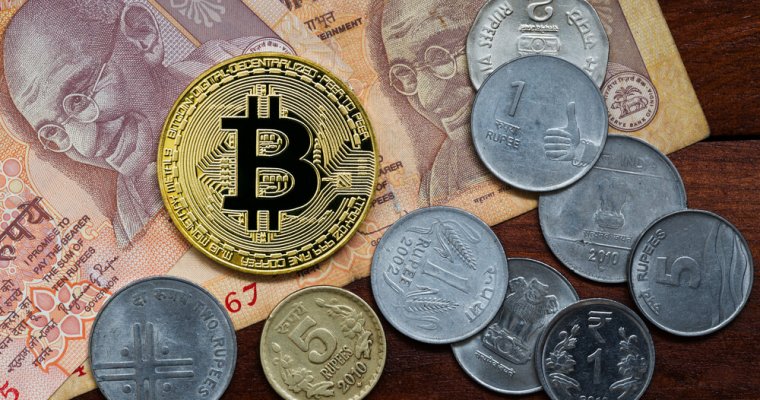
According to Coindelta co-founder Shubham Yadav, cryptocurrency exchanges in India can no longer process fiat-to-crypto trades and have shifted their business model to crypto-to-crypto trading.
Central Bank’s Ban on Crypto Stands
In April, reported that the Reserve Bank of India, the country’s central bank, first imposed its ban on cryptocurrency trading, effectively disallowing local banks from providing banking services to crypto exchanges. On July 3, the Supreme Court of India refused to lift RBI’s cryptocurrency trading ban, reaffirming that banks cannot deal with cryptocurrency exchanges in India.
While the Supreme Court of India is expected to conduct a hearing to consider the case of the cryptocurrency industry against the RBI’s ban, until the court officially reverses the existing ban cryptocurrency trading, local exchanges will not be able to support fiat-to-crypto trades.
In an interview with Quartz, Yadav, the founder of a local cryptocurrency trading platform Coindelta, said that local exchanges have moved on from fiat-to-cryptocurrency trades to crypto-only trades, and are currently competing against major exchanges like Binance.
Consequently, for investors in India to trade digital assets, they are required to rely on peer-to-peer platforms like to acquire bitcoin first and then trade other cryptocurrencies on crypto-only exchanges.
Yadav expressed his concerns over the dependence on peer-to-peer marketplaces and the danger of using such platforms that have unknown investors and individuals.
“Earlier, a lot of these transactions were taken offline and completed, which led to a possibility of being robbed. Or even when it was online, you didn’t know who you were dealing with and there were chances that the deal could go awry,” Yadav .

More importantly, without having support for the Indian rupee, local investors have no motive or incentive to utilize exchanges in India over major platforms such as Binance, Bittrex, and Huobi. Initially, exchanges in India served the local market and process fiat-to-crypto trades. Within months, local exchanges were forced to pivot their businesses to compete with multi-billion dollar platforms with significant reach, influence, resources, and capital.
Praveen Kumar, the CEO of Malaysian cryptocurrency exchange Belfrics that have operations in India, said that without fiat trading pairs, the cryptocurrency industry in India will struggle to survive and prosper, falling behind neighboring markets that have already imposed practical regulatory frameworks and policies to facilitate the growth of local crypto and blockchain businesses.
“There are measures that we are taking in the meantime, but for the industry to survive and thrive, fiat transactions need to be allowed. Else, we end up competing with all the other global exchanges that also offer crypto-to-crypto or P2P trade,” Kumar said.
Overly Strict Regulations Kill Markets
Major economies including the U.S., Japan, and South Korea have started to implement more practical and efficient regulations to ensure cryptocurrency exchanges, blockchain projects, and base layers can grow without being negatively impacted by overly strict policies.
While major countries have acknowledged the potential of crypto and blockchain, the government of India has decided to leave its country behind in the blockchain race and the fourth industrial revolution, which in the long run, could be costly.
Images from Shutterstock
Follow us on or subscribe to our newsletter .
•
•
•
Published at Mon, 09 Jul 2018 02:13:10 +0000
bitcoin Analysis