May 19, 2026

Capitalizations Index – B ∞/21M

Legal Experts Conclude Bitcoin May Not Be Legally Possible to ‘Possess’

Legal experts conclude bitcoin may not be legally possible to ‘possess’

Legal Experts Conclude Bitcoin May Not Be Legally Possible to ‘Possess’


Legal experts conclude bitcoin may not be legally possible to ‘possess’
Advertisement


In bitcoin’s cryptographic design, the holder of the key (or keys in the case of multi-signature transactions), whoever holds the key to coins is the decision-maker when it comes to spending them. The fraudulent actions at Mt. Gox and other exchanges were ultimately due to this fact. People made deposits, essentially giving control of their funds to the exchanges. This is no different, of course, than putting one’s money into a bank. In the case of Mt. Gox, the government got involved and saw that fraud had obviously occurred.

Despite assertions by some legal scholars, we know that bitcoin is recognized as legal property in the United States and China, at least. In fact, a Chinese case recently brought fleshed out in court deemed them legal property – as in, not only are they personal property, but they are property that Chinese are allowed to possess rather than contraband, while some things surrounding bitcoin remain illegal and/or banned.

The assertions we speak of come in the form of a research paper published in the Journal of Law and Technology (JOLT) at the University of Richmond (USA). In the paper Johan David Michels and three other legal scholars examine the possibility that cryptographic tokens may not be legally enforceable property in some jurisdictions, with a focus on courts in England and Wales.

According to an article Michels wrote in reference to the paper:

So what about digital tokens such as crypto-currencies? Tokens don’t physically exist. They are entries on a virtual ledger. And case law in England and Wales has established that a thing which exists only in electronic form cannot be the subject of possession. So digital tokens aren’t things in possession.

It bears noting that the case law Michels cites to make the assertion that England and Wales do not recognize digital property surrounded a very different animal from bitcoin or digital assets: carbon emission credits. As such, while they are tradable assets, they don’t have the same properties as cryptocurrencies – they cannot, for instance, be easily used for the purchase of goods and services.

It would seem that in cases where defendants tried to claim that they hadn’t stolen anything since the property wasn’t legally defined (or like the Chinese case, where the defendant said the property wasn’t legal to have and was proven wrong), laws applying to money, rather than legally intangible assets like carbon credits, would be brought to bear.

All the same, the researchers present interesting findings, and they do not roundly dismiss tokens or cryptos as property.

It seems likely that many tokens on blockchain-based applications will also satisfy this test.427 They can be defined as the right to control the token; are identifiable through entries on the blockchain; can be transferred by submitting transactions; and are registered with a high degree of permanence and stability.428 This suggests that holders of digital tokens could have a property interest under common law.

However, classifying that property interest is more difficult.429 Common law distinguishes between real property (land) and personal property (all other property).430 Personal property is traditionally further split into choses in possession and choses in action.431 Patents are granted a separate property status by law as a form of personal property without being a chose in action.

To date, most courts have recognized bitcoin as a valuable asset of the parties involved. Wherever a theft occurs, a court is designed to seek justice on behalf of the people within its jurisdiction. The fact that there is a gray area surrounding digital ownership of assets should not come as a surprise: the whole industry is relatively new, especially in the ancient canons of law. All things being equal, there just haven’t been enough cases yet. At the same time, it would take a rare level of brashness for a defendant to say that he had not stolen coins simply because they were not legally property. It would seem a safer defense to deny ever possessing the coins at all, as Charlie Shrem recently did.

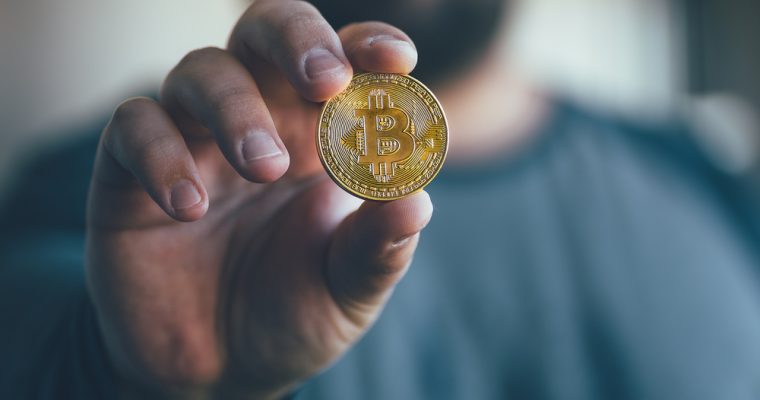
Featured image from Shutterstock.

Get Exclusive Crypto Analysis by Professional Traders and Investors on Hacked.com. Sign up now and get the first month for free. Click here.

Advertisement


Published at Sun, 25 Nov 2018 15:07:33 +0000

Previous Article

BTC Environment

Next Article

Senior Frontend Engineer Top Cryptocurrency Custodian

You might be interested in …

Bitkan Experiment Shows Japan is No Bitcoin Mecca on the Ground

Bitkan has said the consumer bitcoin scene in Japan is still “difficult to use” after staff conducted an investigation in Tokyo.


Bitkan: Japan bitcoin Payments Still ‘Difficult’

The decentralized trading platform, which is headquartered in China but looking to expand into the Japanese market, also released a documentary film about using bitcoin in the country in 2017.

Last month, Bitkan organized a Tokyo Bitcoin meetup which saw some of the largest ever audiences debate the local scene as well as current technological issues facing the bitcoin ecosystem. Roger Ver and Jihan Wu were among the attendees.

“We used Coinmap to search advertisements of businesses accepting bitcoin,” operations director Sandy Liang told Bitcoinist in emailed comments about the research.

“These places had a ‘bitcoin accepted’ sticker, and where it was possible to use it to pay, staff appeared familiar with the payment process.”

bitcoin’s Mixed Fortunes Evident In Payment Landscape

Japan hit the headlines in February following the temporary moratorium on Chinese bitcoin trading, becoming the world’s largest bitcoin exchange market.

As reports heralded a total of 4500 outlets accepting the virtual currency, reactions from users on the ground struck a decidedly different note, stating that in reality bitcoin payments were almost unnoticeable.

Liang shared this view following Bitkan marketing director Ruby Chen’s attempt to live off Bitcoin for 72 hours in Tokyo but remained positive about the future.

“We have to say that it’s not very convenient to use bitcoin in Tokyo for covering all expenses, compared with fiat. For now, it’s really hard to live only on bitcoin,” she said.

“However, it’s getting easier and easier. The growing number of bitcoin ATMs, for instance, allows the option of converting BTC to yen as an alternative.”

She added that the depth of incentives for consumers to pay using the virtual currency was also lacking. Discounts and other marketing schemes were not in evidence at all, making the idea of transitioning to a notionally more convenient, empowering payment method appear daunting.

Big Business Paving Way For Change

Meanwhile, the country’s cryptocurrency exchanges are busy laying the foundations for what could be a seismic shift in attitudes in the coming years.

BitFlyer and Coincheck, both major market players in Japan, have recently announced partnerships with big business specifically with the aim of expanding the number of merchants with whom consumers may pay using bitcoin.

The former is working with Japanese economics giant Bic Camera to roll out bitcoin payments across its empire, with a trial initially limited to two flagship stores in Tokyo. Customers are able to pay up to 10,000 yen ($900) in bitcoin.

Coincheck meanwhile is seeking to expand the merchant base even further – by up to 260,000 – through allowing merchants using PoS app AirRegi to also accept bitcoin.

Such an expansion would place bitcoin on par with extant fiat payment app acceptance numbers, the most popular being Suica and Edy with up to 470,000 locations.

[Note: This is a sponsored article]

What do you think about Japan’s bitcoin journey? Let us know in the comments below!


Images courtesy of Shutterstock. BitKan

The post Bitkan Experiment Shows Japan is No Bitcoin Mecca on the Ground appeared first on Bitcoinist.com.

Two of the Dumbest Market Myths About to Go Up in Smoke…

gainspainscapital.com / Graham Summers / March 28, 2017

Everywhere I look I see talk of a major $USD bull market being underway. I see this coming from CNBC as well as so-called “investment gurus.”

This is odd… because the $USD is DOWN against every major currency thus far in 2017.

I’m not making this up. The $USD is DOWN against the Yen, the Euro, the Swiss Franc, even the British pound.

READ MORE

The post Two of the Dumbest Market Myths About to Go Up in Smoke… appeared first on Silver For The People.