Ledger and Nomura’s Crypto Custody Launch May Be Delayed to 2020
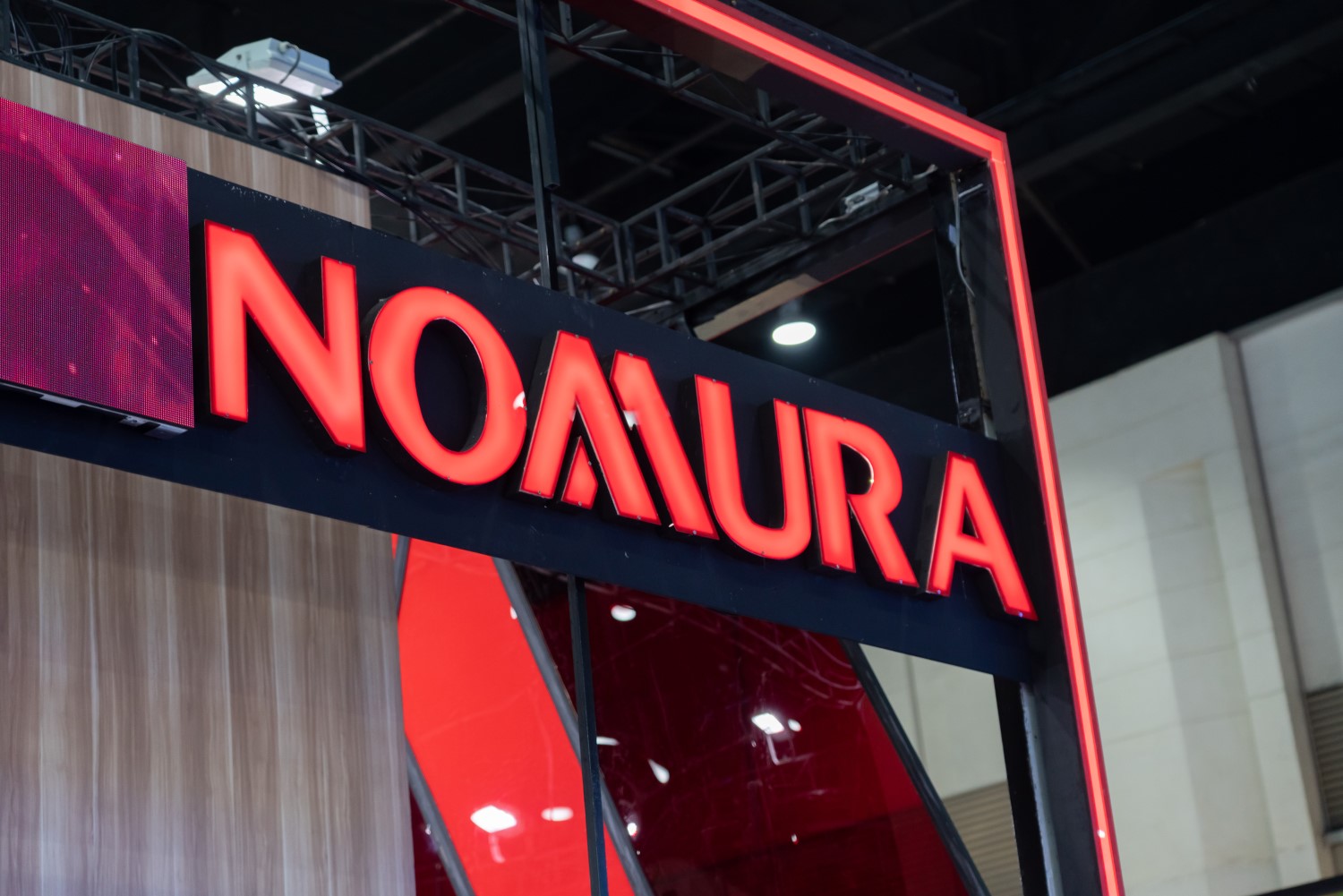
Ledger’s partnership with Japanese bank Nomura is still in full swing, but launching the institutional-grade custody solution for digital assets may take longer than expected, the crypto startup’s president said.
Speaking to CoinDesk on Wednesday, Pascal Gauthier preemptively scotched rumors that the partnership was off.
Without prompting, he said:
“There is a fake rumor in the market that Nomura has ditched Ledger from the joint venture and now is considering other options with other technology companies. So that is not true. That is a false rumour.”
, a joint venture between Nomura, security specialist Ledger and investment house Global Advisors was established to bring secure and regulatorily-compliant custody of digital assets to institutional investors.
Dubbed Komainu, the three-way crypto custody partnership was previously thought to be coming to market by the end of Q2 this year. But Gauthier suggested it could now take until 2020.
While he hopes to be able to say something to the market “at some time soon,” Gauthier cautioned:
“I just know that the day we will say something is because we have something ready, whether that is this year, next year. It’s complex. What I can say is custodianship is more complex than people sometimes think.”
Nomura did not answer requests for comment by press time, but Jean-Marie Mognetti, co-principal of Global Advisors Holdings, told CoinDesk: “The partnership is still working steadily.”
It’s tricky
Anyone who assumes that key management is all there is to custodianship in this context is forgetting that the goal Komainu has set includes insurance, regulation, certification and a number of other time-consuming processes, noted Gauthier.
He also said the partners in the project have “a very transparent relationship and if at some point Nomura was disappointed in the relationship with Ledger they would tell us very quickly and we would be having very different conversations right now.”
The Ledger executive said he has “no idea” where the rumors of Nomura breaking it off had come from.
Komainu is “an amazing project” and “we are still on track,” but “we don’t want to be in a position of announcing for the sake of making an announcement,” he said.
All in all, it has thus far been “a truly interesting experience,” said Gauthier, to bring together a large financial institution like Nomura with crypto hedge fund professionals such as Global Advisors with security experts in the form of Ledger’s Vault solution for business users.
He concluded:
“Building this thing together has been something we could write a book about one day.”
Saint Petersburg, Russia-based CREDO have developed what is being dubbed a “next generation payment system” that makes everyday shopping easier for both buyer and seller alike.
[Note: This is a sponsored article.]
What is CREDO?
CREDO is a multi-functional payment system based on a financial algorithm that involves the participation of an independent agent in the transactions of purchase and sale of goods or services. Also called a derivative, the Electronic Certificate enables the parties (buyer and seller) to assume the right or obligation to perform certain actions with respect to the underlying asset.
Some of the features of CREDO include:
Innovative multi-brand loyalty program
Ultra-high discounts for all types of goods and services
Electronic certificates sold for crypto-currency
Electronic card linked to a personal bank card
Internal processing system independent of any banks
High-speed payment system using NFC technology
POS-terminals and EMV Java Cards
Created to work everywhere in the world just like VISA or MasterCard
CREDO’s primary competitive advantage is its internationality. Users of CREDO can buy and sell with any currency and from any country in the world. The payment model is extremely efficient and applicable not only to goods and services but intangible and tangible assets as well. It allows credit and payment operations not only through classic financial markets but through cryptocurrency as well.
Oksana Evseeva, an expert on international investments certified IFRS by the Institute of Financial Accountants in London, weighed in on the potential of CREDO in the global marketplace:
CREDO could be comparative and competitive as Visa and MasterCard using its model on B2B and C2C markets. […] It could work as on B2C as on B2B and C2C markets combining current financial and new crypto-currency markets.
B2C Payment Platform
CREDO’s B2C model works similar to a but gives more opportunities for market coverage. Customers can buy goods and/or services at a discount from any participating merchant around the world.
The basic mechanism of transactions in CREDO in B2C sector is as follows:
The Retailer issues emission of Electronic certificates (Derivatives) for future sales of its goods/services
The Operator works with the Retailer, providing payments for Derivatives, and also with Clients, providing sales of Derivatives, with a discount in case of rising clients’ base and loyalty
Clients buy Certificates for goods and services.
The end result is a win-win for all participants. Retailers get more customers and increased working capital, Operators get an increased client base and profit margin, and customers end up paying less for the goods and services they purchase.
CREDO is Real World Tested
Unlike many ICO projects that seek to raise capital to fund the development of their service or platform, CREDO is already being used in real world scenarios, having undergone rigorous testing to ensure full compliance and adaptability for both domestic and international cross-border transactions.
Konstantin Galibus, CEO & Founder of CREDO, describes some of their earlier tests:
We carried out a transaction in Europe through Deutsche Bank and VTB Bank in Russia executed a cross-border transfer for purchase liabilities of one of our Spanish counterparties. While Deutsche Bank, which acted as a correspondent bank, suspended the transfer of funds until the transaction structure was explained, when the processing model CREDO was presented to Deutsche Bank and the economic feasibility was proved, the funds were released and the transaction was concluded with success.
This example demonstrates not only the adaptability of our system to the strictest requirements of international banks but also our willingness to ensure cross-border transactions using an absolutely independent financial instrument.
Since then, CREDO has been used by over 1000 customers throughout China, UAE, Spain, and . Over 9000 transactions have been completed totaling over 16,120,000 EURO. In a recent tweet, CREDO announced that additional pilot projects are in the works:
We are under negotiations about launching the pilot-project of CREDO with retailing companies in the USA, China and UAE at the moment.
CREDO has a patent for the designed system. The functional of the business model of CREDO has already been provided with all the necessary software and hardware and confirmed by positive test results in Europe. CREDO is a real financial project with its own technical processing, POS terminals, and EMV Smart Cards.
CREDO Pre-ICO in Progress
Launched on June 25, 2017, CREDO’s first round Pre-ICO is already under way. The ICO seeks to raise $5.5 million USD. Funds raised during the ICO will be used to:
Fund the cash turnover and create a new Operator in the system needed for the Cash-Forward payment model of CREDO’s B2C platform
Overall system improvements
Marketing
The Pre-ICO ends on July 10, 2017, after which it will transition into the main ICO. Investments in the ICO can be made with bitcoin, Litecoin, or Ethereum.
For more information about CREDO please visit their or download their . CREDO’s is being hosted at .
Does CREDO have the potential to take its place alongside Visa and Mastercard? How will it affect mainstream adoption of cryptocurrency? Let us know what you think in the comments below.
Trump Bans Petro, a Pacquiao ICO and the Caribbean Goes Crypto: Week in Review Advertisement Join our community of 10 000 traders on Hacked.com for just $39 per month. What happened in crypto this week? […]