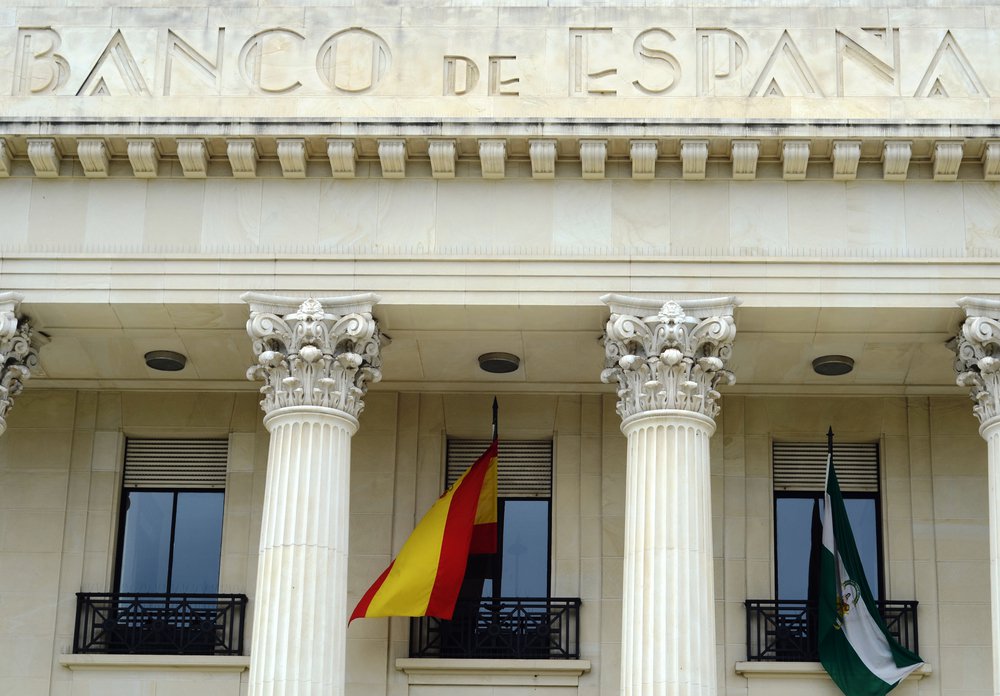
The National Bank of Kazakhstan, the country’s central bank, is currently planning to ban cryptocurrencies like bitcoin, or at the very least take a “very conservative approach” towards them, according to a report published by Russian government news outlet .
Per the report, National Bank of Kazakhstan chairman Daniyar Akishev revealed the financial institution doesn’t favor cryptocurrencies, and is even looking to impose “extremely tough restrictions” on crypto markets.
Akishev added that the central bank wants to “ban the exchange of digital currencies for the national currency,” and prohibit cryptocurrency exchanges and miners from operating inside the country’s borders. His reasoning was that cryptocurrencies lead to problems relating to the protection of their users’ rights.
The financial institution’s chairman noted:
“We minimize the risks related to the national market. However, no central bank has all the instruments to control this market in the cross-border market. Therefore, at least, we must prevent this risk via the national currency.”
He added that one of the risks of cryptocurrencies is their potential to be used in illegal activities. Per the bank – and other state bodies – cryptocurrencies are “an ideal instrument for money laundering and tax evasion.”
At present, there are apparently no regulations, laws or bills that aim to stifle the use of cryptocurrencies in the country. Kazakhstan’s take may be somewhat surprising, given that at the G20 summit the world’s economic leaders seemingly preferred to go with a regulatory approach that wouldn’t harm innovation.
The move comes at a time in which bitcoin drops below the $7,500 mark and approaches a crucial period. Some analysts point out the market is extremely oversold and all its waiting for is a trigger to get a bullish period going, while others claim bitcoin may keep falling.
While Kazakhstan is taking a tough approach to cryptocurrencies, Belarus and the German Tourist board are now , as both have seemingly legalized crypto related businesses and are positioning themselves on the vanguard of the cryptocurrency revolution.
Earlier this year, a Kazakhs’ interest in cryptocurrencies grew 15-fold in 2018. The study conducted by the Russian search engine showed search terms like “bitcoin” surged, and that some of the most popular crypto-related queries included initial coin offerings (ICOs), blockchain technology, and cryptocurrency mining.
Yandex further revealed Kazakh users asked specific questions, as they wanted to know if a “student can work for bitcoin,” or “what is blockchain in simple words for dummies.” Mining-related search queries seemed to show users were looking to start their own operations.
The post appeared first on .
Our crowdsale is over: we raised more than $2 500 000 and we are grateful for your support and trust. With your support, we have the opportunity to create an innovative advertising platform for cryptocommunity!
Below is the information about what will happen next.
On which exchanges will RTB token be trading?
RTB token is already listed on IDEX . We are also negotiating with OpenLedger DEX, BitFlip, Stocks.Exchange, GetBTC, C2CX, RightBTC. We will notify you when RTB token is traded on new exchanges!
We ask all investors and community to be patient and hold the tokens. We also ask you to keep calm in case there are short-term drawdowns. Just as any other new token RTB token may show increased volatility.
When will the platform be launched?
Our advertising platform is already launched on and now with the raised funds, we have the possibility to continue its development. We have a growing network of publishers and already tested first advertising campaigns and we welcome you to join!
What are the plans for AB-CHAIN development?
Now as the crowdsale is over we will be focusing on implementing our smart-contract and developing Artificial Intelligence and Machine Learning for the platform.
Thank you all and stay tuned!

was originally published in on Medium, where people are continuing the conversation by highlighting and responding to this story.
What if we unite the first form of payment system with blockchain technology to be accepted by macro-economies?
HireGo will position itself as the first private car rental application in the emerging decentralised sector. It is our goal to set the technological and usability standards for the car hire industry, providing a professional, secure platform to connect like-minded individuals, and to lead the way for others to follow.
With the advent of the sharing economy, there has been a sudden and dramatic rise in the popularity of private rental. The Airbnb and Uber platforms, the two most-cited examples of this economic shift, allow millions of users to lease their property or services to others in exchange for a fee. The private rental industry, a subset of the sharing economy concerned solely with the lease of property, is a fast-growing sector. This growth has spawned the creation of platforms that facilitate the lease of tools, cars, drones, photographic equipment and construction plant, to name but a few. Vehicle rental makes up a large proportion of the private rental sector and is mostly dominated by a small number of platforms. Turo is a market-leading application that boasts a user base of over 2 million2 . This platform, not unusually, charges an enormous 25% fee for transactions — with some platforms raising this as high as 35%. There is a distinct lack of choice and competition within this arena.HireGo is building a decentralised, peer-to-peer marketplace that allows its users to lease their vehicles in a trustless and secure environment. The marketplace leverages the Ethereum blockchain as both a public ledger for lease transactions, and for conducting the transactions themselves, using a smart contract framework. The HireGo marketplace provides a directory of vehicles available for hire. Users are able to select an appropriate vehicle, secure it for their desired period and settle the payment, inapp, using the HGO token — an ERC20-compatible cryptocurrency built for the purpose (see HGO Token). Vehicles listed on the marketplace are crowdsourced from HireGo users and can be easily added in-app; additional tools are available for “power-users” making larger numbers of vehicles available. HireGo has been designed with simplicity and security as a first priority. Payment is made, in advance, and held in an escrow contract on the Ethereum blockchain; in the event of a dispute between users, a trusted party, such as the dedicated HireGo resolutions team, will be able to make the final judgement. Reviews and comments made by users will also be stored on the blockchain, creating an indisputable, trustworthy record of a user’s conduct. These technologies are handled natively by the HireGo application and all technical complexity is hidden from the user.
To provide additional peace-of-mind, the marketplace will also offer various insurance options for users. These insurance packages, provided by a trusted industrial partner, will ensure that vehicle owners are protected from unexpected collision or damage. As with payment and review, the rental transactions and vehicle listings are conducted via the Ethereum blockchain. The HireGo applications provide a gateway for accessing this data in an intuitive manner and will create and send the necessary transactions, eliminating any potential friction for the user — no knowledge of the blockchain is needed to use the marketplace. When a user enters into a rental contract the application will interact with the appropriate smart contract on the user’s behalf, parsing responses and interacting with the system using a pre-defined and public protocol. Importantly, users retain control of their private keys and, at no time, is this broadcast to HireGo or any third-parties.