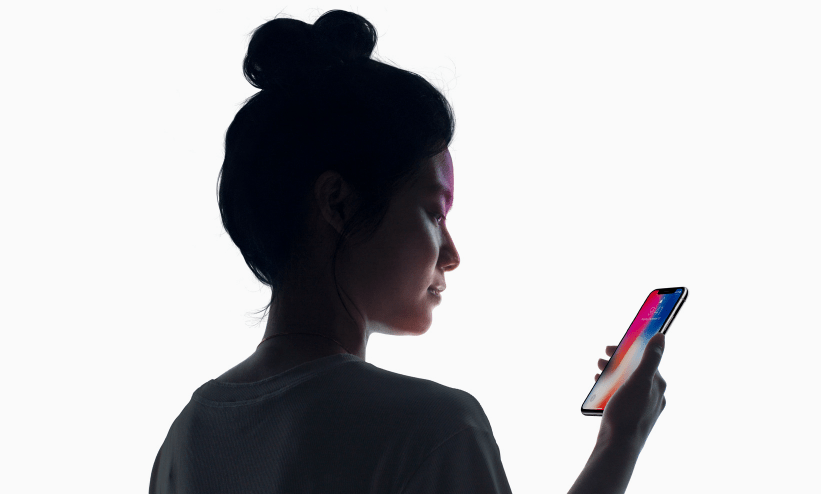
A new ruling by a California judge could make it harder for law enforcement to unlock suspects’ mobile devices. According to the ruling, law enforcement officials can’t force users to unlock their phone using their face, fingerprint or other biometric features.
Order to unlock phone using face, fingerprint is illegal
The came last week from Judge Kandis Westmore from a court in northern California. It was a result of an Oakland investigation into possible Facebook extortion. In this particular case, law enforcement officials asked the court for permission to confiscate multiple devices and then force the suspects to unlock their devices using their biometric features.
The judge initially agreed that a search warrant could be granted in the case, but eventually denied it. According to the judge, the request was “overbroad” because it was “neither limited to a particular person nor a particular device.”
Further, the court ruled that forcing users to unlock their phones using their face, fingerprint or other biometric authentication “runs afoul of the Fourth and Fifth Amendments.” The court viewed biometric authentication as similar to a passcode.
Moreover, the judge noted that investigators have other ways to solve the case. For example, they could ask Facebook to grant them access to Messenger communications. In the case in question, two people are accused of using Facebook Messenger to pressure a into paying money in exchange for not releasing an “embarrassing video” of them.
Forbes noted that Facebook had helped authorities previously, and thus, it will likely help again. Law enforcement officials can also take help from third parties to break into the devices. Many private contractors offer such services to law enforcement agencies for modest fees.
Biometric features are same as passcodes
It has been established previously that a suspect can’t be forced to provide the passcode to their device, based on the Fifth Amendment. Passcodes are protected because they are deemed to be a “testimony.” Now the latest court ruling states that Touch ID, Face ID and other biometric features offer the same functionality as the passcode, which is securing the owner’s content. The ruling implies that body parts are also testimony.
Biometric authentication features have been a topic of discussion in the past as well. Some earlier rulings have stated that Touch ID and Face ID are not the same as a passcode. However, most of these rulings have only referred to Touch ID, as Face ID has gained popularity only recently.
Based on previous rulings, law enforcement officials have forced users to unlock their phones and other devices using biometric authentication. For instance, in October, a man accused of child abuse was compelled by the FBI to unlock his iPhone.
It must be noted that a previous ruling allowed to unlock a device using biometric data, but not the user’s passcode. Thus, this latest ruling from the California judge could prove to be a landmark case for protecting the privacy of smartphone users. On other hand, the ruling is expected to spark much discussion because it will make the job of law enforcement officials much more difficult when it comes to unlocking phones.
What’s next?
Since the adoption of biometric security in iPhones and other phones has grown, there have been multiple reports of law enforcement officials using the technology to get into mobile devices. For instance, in 2016, a woman was forced to unlock her iPhone using her fingerprint. The iPhone was confiscated from an Armenian Power gang member who was in prison at the time.
There have also been several instances in which law enforcement officials have used the fingers of corpses to access victims’ iPhones to get information on their case. However, in most of the cases, officials had little success due to the amount of time elapsed since the last successful unlock.
With the latest ruling on unlocking a phone using a face, finger or other biometric feature, such instances are expected to come down. Although the latest ruling can still be overturned, Electronic Frontier Foundation Senior Staff Attorney Andrew Crocker told Forbes that courts are now starting to “look at these issues on their own terms.”
The Fourth Amendment states that citizens have the right to be safe inside their houses from unreasonable searches and seizures, and the Fifth Amendment says that no one should be forced to be a witness against themselves in a criminal case.
The post appeared first on .
Published at Wed, 16 Jan 2019 14:03:46 +0000