Ever since the $500 million hack of Japan’s Coincheck cryptocurrency exchange came to light earlier this year in January, Japan’s financial watchdog The Financial Services Agency (FSA) has been seen cracking down the whip on local cryptocurrency exchanges. The FSA has been performing surprise visits and checks to crypto exchanges to make sure that the exchanges have taken necessary security measures in order to protect the investor’s money.
On Thursday, Japan’s Financial Service Agency (FSA) has issued a month-long suspension order to cryptocurrency exchanges – Bit Station and FSHO. As reported by the , the FSA discovered that a senior staff member of Bit Station had diverted customer’s Bitcoins for personal use.
Five other cryptocurrency exchanges – Bicrements, GMO Coin, Mr. Exchange Coincheck and Tech Bureau have been all affected by the business improvement orders passed by the FSA. All of these exchanges have been warned and asked to improve their system security measures and submit a written plan of improvement by 22nd of March, this month.
Moreover, the FSA’s recent crackdown has also uncovered how the digital currency exchanges fail to comply with the anti-money laundering procedures set by the agency while employing ill-trained staff at their places. Currently, there are a total of 32 digital currency exchanges operating in Japan of which 16 have received official licenses by the government agencies last year.
However, due to the crypto-friendly nature of the government, the rest of the exchanges, which includes Coincheck, have been allowed to function on the provisional authorization as they existed before the passing of the law that required registration, and were allowed to trade until their applications are being processed.
The FSA said that these unregistered cryptocurrency exchanges have been majorly problematic. The FSA says that all those who have been currently penalized have either the choice to obey the agency’s requirements and complete the registrations or withdraw their applications which indirectly means moving out of the crypto business.
In addition to the announcement, the FSA has also created a cryptocurrency exchange industry study group which aims at examining institutional issues relating to cryptocurrencies. According to the FSA, members of this study group will come from several established academic institutions, crypto exchanges as well as government agencies as observers. According to the statements, the FSA itself will play the role of the secretariat.
It seems that the FSA is taking every measure to ensure that no more security lapses, at the end of the exchanges, appear in times to come ahead.
The post appeared first on .

The Japanese financial regulator has punished seven cryptocurrency exchanges in the country, suspending the operation of two of them. “The agency fears another Coincheck-style hack,” it stated after recent inspections of all crypto exchanges in Japan revealed inadequate measures for customer protection.
Also read:
FSA Punishes Seven Exchanges
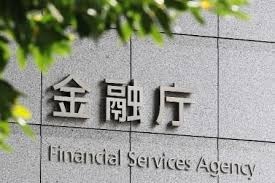 The Japanese Financial Services Agency (FSA) announced on Thursday that it had “punished seven cryptocurrency exchanges, ordering two of them to suspend business, in an effort to shore up consumer protection,” Reuters .
Bit Station and FSHO were ordered to suspend business from March 8 to April 7. The two are quasi-operators, meaning they are allowed to operate crypto exchanges while their registrations with the FSA are pending review. The agency has also asked the two exchanges to submit work improvement plans by March 22, the Mainichi reported.
 In addition, Tech Bureau, GMO Coin, Lemuria bitcoin Exchange (Bitcrements), Mister Exchange, and Coincheck also received improvement orders from the FSA, the news outlet detailed. The former two are fully licensed exchanges while the latter three are quasi-operators.
Since the revised payment services act went into effect in April of last year, cryptocurrency exchanges are required to register with the FSA. Sixteen crypto exchange operators have been licensed so far. In addition, sixteen more are permitted to operate crypto exchanges as quasi-operators. Moreover, there are reportedly over 100 companies seeking to enter the space and operate their own crypto exchanges.
The “FSA said a senior employee at Bit Station was found to have used customers’ bitcoin for the person’s own purposes,” Reuters detailed, adding that the exchange has ”dropped its application to become an authorized exchange.”
Issues Found During the Inspections
After Coincheck was hacked in January, the FSA started inspecting all crypto exchanges in the country. “The inspections target several of the country’s 16 licensed exchange operators and all 16 operators not yet officially registered with authorities,” Nikkei commented, adding:
While not yet complete, the FSA inspections have apparently found enough issues with customer protections and anti-money-laundering measures that the agency fears another Coincheck-style hack.
According to the news outlet, the FSA found the five aforementioned unregistered crypto exchange operators to be “particularly problematic,” adding that they will have to either “meet the agency’s requirements and complete registration or withdraw their applications.”
FSA Says Coincheck Has Enough Funds
 When Coincheck was hacked in January, 58 billion yen (~USD$550 million) worth of the cryptocurrency NEM was stolen and the greater cryptocurrency market took a significant tumble.
Following the incident, the FSA issued the exchange a business improvement order and demanded that “the company strengthen oversight and management of systems implicated in the NEM hack,” Nikkei explained.
Coincheck promised to repay its customers a portion of their lost funds but many questioned whether the exchange had enough money to do so. The FSA announced on Thursday that it has verified that Coincheck has enough funds to repay its customers as promised.
What do you think of the FSA punishing seven crypto exchanges? Let us know in the comments section below.
Images courtesy of Shutterstock and Nikkei.
Need to calculate your bitcoin holdings? Check our section.
The post appeared first on .