Ahead of next month’s G20 summit, host looks to tighten money laundering regulations, specifically targeting and exchanges.
The Financial Action Task Force (FATF) is also due to inspect ’s anti-money laundering regime in the Autumn.
International Spotlight Prompts Japanese Action
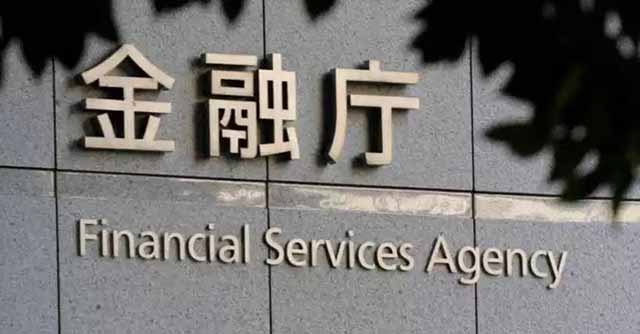
to media outlet Nikkei, the Japanese Financial Services Agency (FSA) is desperate for a good review from the FATF. received the lowest possible rating for Know Your Customer (KYC) procedures during the last FATF inspection in 2008. Although, of course, was little more than an idea at this point.
In the hope of redemption, is stepping up its on-site inspections of all financial institutions, though Nikkei suggests a focus on exchanges.
The -hosted G20 summit is also likely to discuss international regulations for digital currency, and potentially ICOs. The hosts certainly don’t want to appear behind the curve on implementing policies.
Japan’s Usual Hands-Off Approach To bitcoin Regulation
was the first country to introduce registration for crypto-exchanges in April 2017, but has traditionally been fairly hands-off. While following the 2018 Coincheck hack, the FSA has stated that it does not intend to ‘‘.
Instead, it seems happy to let the industry , stating:
It’s a very fast-moving industry. It’s better for experts to make rules in a timely manner than bureaucrats do.
The FSA is not afraid to step in where necessary though, introducing bills to earlier this year.
G20 And FATF Looking In The Wrong Direction?
At last year’s G20 summit in Buenos Aires, nations decided that should for anti-money laundering. Following this FATF called for even of Virtual Asset Service Providers (VASP).
But is this focus on really the most beneficial way to combat money laundering?
The Japanese Yen recently overtook the dollar as the for . However, is still not the tool of choice in the vast majority of money laundering cases.
According to , despite crypto-linked cases going up 900% in 2018, this still comprised only 1.7% of total investigations.
A massive 98.3% of money laundering cases in had nothing to do with at all.
Will ’s new anti-money laudnering initiative be effective? Share your thoughts below!
Images via Shutterstock
Published at Thu, 23 May 2019 09:24:06 +0000