
Israel Securities Authority (ISA) Committee for the Examination and Regulation of Initial Coin Offerings (ICOs) issued a series of “recommendations designed to dispel uncertainty and strike a balance between technological innovation and the protection of the investors.” Included in their findings were whether cryptocurrencies such as bitcoin are considered securities – a decision carrying major implications for future regulation.
Also read:
Israel’s ISA Declares bitcoin Is Not a Security
“As a general rule,” the ISA Committee revealed, “cryptocurrencies that are designed to be used exclusively as a medium of payment, clearing, or exchange and are not limited to a specific venture; that do not confer additional rights; and are not controlled by a central entity — will not be deemed securities.”
Analysts are convinced this could be a precedent-setting decision, as developed economies all over the globe struggle with how to classify cryptocurrencies. Israel has been a leader of sorts, with a rather hands-off approach when it comes to regulation of crypto. bitcoin ATMs in the country, as opposed to those in the United States for example, do not ask for basic know your customer identification. Put in fiat, receive bitcoin.
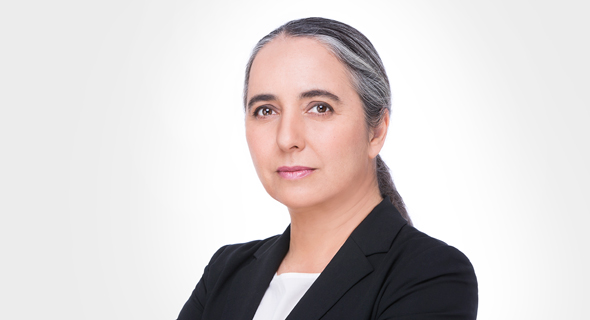 Ms. Anat Guetta
“The question of whether a cryptocurrency should be considered a security will be decided on the totality of the circumstances and features of each case in accordance with the purposes of the law,” detailed. “As a general rule, cryptocurrencies that confer rights similar to the rights conferred by traditional securities such as shares, bonds, and participation units, will be deemed securities. In contrast, cryptocurrencies that represent rights to a product or service and are acquired solely for the purpose of consumption and use and not for investment purposes, will not be considered securities.”
Recommendations were given to ISA Chair Ms. Anat Guetta. The newly appointed Chairwoman, so far, has been somewhat hostile to bitcoin, announcing earlier this month how her agency would ban it from the nation’s . “We have decided to prevent the exposure of passive investors to companies whose main activity involves cryptocurrencies. Investment in these companies is high risk, speculative and volatile. We also published a detailed warning to investors about the dangers of investing in cryptocurrency,” Ms. Guetta stressed.
A Delicate Balance
Summer of last year, the ISA set up the ICO committee. It exists to “examine the application of the Securities Law to public offerings and issuances in Israel based on distributed ledger technology (DLT). The committee was assigned to study and analyze these ventures, draft a comparative international review of the relevant law, and outline a recommended regulatory policy in areas related to the Securities Law, with the overarching aim of striking a balance between promoting technological innovation and protecting the investors,” the ISA release explained.

A key litmus test for whether a crypto is a security basically comes down to “if the token cannot be used when it is issued or if it can be traded on a secondary market, these may be indications that its acquisition was made for investment rather than for consumption purposes.”
It is clear from the document that regulators are attempting a delicate balance as they face realities brought about by cryptocurrencies and their spawn, ICOs. For the crowdfunding mechanism, the committee urged, “The use and extension of specific existing and future capital raising tracks for ICOs should be considered, including an examination of the following issues: lenient regulation for small-scale ICOs; raising capital through ICOs on crowdfunding platforms; defining a provisional framework for ICOs pilots, in the form of a regulatory sandbox, including oversight of the cryptocurrency developers, and; examining the option of relying on foreign regulation that applies to cryptocurrencies.”
Do you think this ruling bodes well for cryptocurrency adoption in Israel? Let us know in the comments!
Images via Pixabay, ISA.
At we do not censor any comment content based on politics or personal opinions. So, please be patient. Your comment will be published.
The post appeared first on .

The Saga Foundation has announced its mission to create (SGA), a non-anonymous blockchain-based digital currency. The currency is designed with a tamed volatility mechanism and, in addition to the non-anonymous nature, aims to set grounds for the currency to become a store of value and a medium of exchange. Saga is designed to address legitimate concerns expressed by policy makers, regulators and market participants regarding cryptocurrencies; mainly their anonymity, lack of underlying value and high volatility.
Saga holders must satisfy full KYC and AML requirements under Swiss law. With such disclosures, Saga resolves concerns about participant accountability, an issue that is generally raised regarding cryptographic currencies. Saga aims to promote a low-volatility environment, combining the virtues of blockchain technologies with algorithmic representations of financial tools. For this reason, Saga is backed by a variable fractional reserve that is anchored to the IMF’s SDR. These reserves will be deposited with regulated banks through algorithms in the underlying smart contract system.
Dr. Jacob Frenkel stated: “While Blockchain technologies have gained growing acceptance, encryptic currencies have raised public policy concerns, since they are anonymous, unbacked, and are highly volatile. I share these concerns and see great value in Saga’s vision to address them properly.”
CEO at Mangrove Capital Partners, Mark Tluszcz remarked: “Saga represents a step change in maturity for digital currencies. The first that combines material benefits to the existing financial system with the potential and needs of the digital world. It’s the strongest team in the space and we are delighted to be backing the project.”
Prof. Myron Scholes commented: “Blockchain technologies will change financial infrastructure, from a current focus on transactions processing to transactions analysing. This facilitates more efficient client solutions to their financial problems. The Saga project aims to develop a sustainable and efficient blockchain-based cryptocurrency that I support through becoming a member of its advisory council.”
Saga Foundation’s Founder & President, Ido Sadeh Man said: “The creation of Saga is based on interdisciplinary knowledge, permitting to implement monetary models to tame volatility and allow regulatory access to participants’ identity. We are fortunate to have the involvement and insights of global leaders, who along with the other members of our Advisory Council, are helping us to design the first non-anonymous blockchain-based digital currency.”
Additional members of the Advisory Council include Prof. Dan Galai, Co-Developer of the Chicago Board Options Exchange’s Volatility Index (VIX); Prof. Emin Gün Sirer, Professor & Co-Director at the Initiative for Cryptocurrencies and Smart Contracts at Cornell University; and Prof. Raz Chen-Morris, Humanities Department Chair at the Hebrew University of Jerusalem.
The Saga Foundation is not conducting an ICO. Instead it leverages accredited investors, VCs and hedge funds, amongst which are Mangrove Capital Partners, Lightspeed Venture Partners, The Singulariteam Technology Group and Initial Capital.
, the cryptocurrency start-up that is going to revolutionize financial services in the developing world, has just increased prices in Pre-ICO by 9%. The increase made up $0.001, which means the price jumped from $0.011 to $0.012 per BitMinute (BMT).
This Monday, March 26, the price of a BitMinute (BMT) will rise to $0.012.
[The exact time: Midnight between March 25 and 26, 2018 in Atlanta, GA, U.S. Eastern Time Zone] Read the full release here
— BitMinutes (@BitMinutes)
Based in Roswell, Ga., BitMinutes is a start-up fintech company selling BitMinutes, a cryptocurrency backed by prepaid airtime minutes, a real asset already traded informally globally. BitMinutes makes the delivery of financial services in developing economies far more affordable. Its key innovation is combining the ubiquity of prepaid airtime with blockchain technology in order to create an innovative new form of cryptocurrency for mobile financial services.
BitMinutes tokens(BMTs) are powered by a proprietary Smart Token technology. BMTs create secure interoperability between disparate global financial networks, mobile network carriers, and emerging blockchains. This enables the frictionless exchange of value between the different networks.
The BitMinutes team seeks to expand liquidity in markets that already rely on prepaid airtime minutes. Consumers there can use a BitMinutes mobile wallet to formalize transactions, which lays the groundwork for building credit histories and offering affordable micro- and nanoloans that can kickstart local business ventures.
“We are excited about our financial inclusion mission,” stated BitMinutes CEO Tom Meredith. “People have been buying BitMinutes during the Pre-ICO as much to join that mission as to simple purchase an asset that could grow in value.”
Backing up the BitMinutes tagline “Better that bitcoin for Billions,” BitMinutes tokens allow peer-to-peer cash transactions to over 2 billion bank accounts in 70 countries and prepaid top-up to over 4 billion mobile accounts in over 200 countries.
BitMinutes aims at the expansion of micro-credit lending in communities where lending is rare and too expensive for most individual borrowers. BitMinutes ownership and transactional records will establish a new type of consumer credit score for emerging market consumers who currently struggle with limited access to capital and a lack of traditional banking services.
One of the BitMinutes is David Drake, the Chairman of Park Avenue Vision, LLC and LDJ Capital LLC. He is quite positive about BitMinites.
“I see huge potential in this particular cryptocurrency. It is backed by a hard asset, the prepaid airtime minute, that is already traded actively, if informally, in emerging markets around the word,” said Drake.
The post appeared first on .

