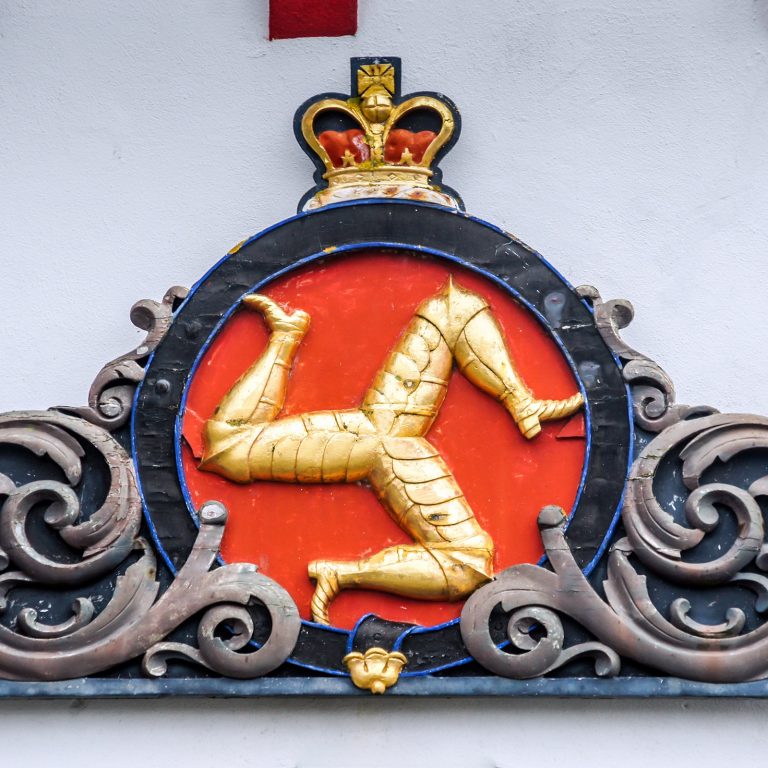
The financial regulator of the Isle of Man recently introduced changes to its policy governing the registration of companies in the cryptocurrency industry. The British Crown dependency in the Irish Sea is also tightening rules applicable to projects that conduct initial coin offerings (ICOs).
Also read:
Financial Authority Adopts Stricter Requirements
Cryptocurrency companies filing for registration under the the self-governing territory’s Designated Businesses Act 2015 will be required to meet two new criteria. The updated policy states that companies must have at least two directors who are residents of the island. In addition, registered entities must be managed and controlled from the Isle of Man.
The new rules are designed to improve the oversight of businesses involved in cryptocurrency-related activities, Mondaq reported. The Isle of Man Financial Services Authority (Iomfsa) believes that companies that are managed outside its jurisdiction or those that do not maintain a sufficient presence in the territory pose an “unacceptably high risk” of illegal activities such as money laundering or terrorist financing.

“In order for the Iomfsa to be able to successfully undertake its statutory duty of overseeing compliance of designated businesses with the AML/CFT legislation, designated businesses must have sufficient real presence to facilitate oversight,” the regulator further explained.
The updated registration policy, which has been enforced since early October, also concerns the issuers of digital tokens. Iomfsa has made it clear that it would refuse to register businesses conducting ICOs unless they provide investors with a benefit other than the token itself. However, the regulator has not clearly defined the term “benefit,” nor has it clarified when the buyers of a token should receive it.
Europe’s Crypto-Friendly Destinations
The Isle of Man is among a growing number of European jurisdictions that are developing and implementing crypto-friendly legal frameworks. In September of last year, the British dependency “permissive” regulations tailored to encourage ICO projects and foster the growth of the industry built around them, as news.bitcoin.com . The island authorities have also expressed their positive attitude toward other cryptocurrency and blockchain businesses.
 Gibraltar, a British Overseas Territory located on the southern tip of the Iberian Peninsula, is another good example. Over the last few years, the local authorities have been trying to tap into crypto incomes and profits. In order to do that, they have legislation designed to attract crypto companies. Gibraltar, which is known as a financial services and online gaming hub, became the first jurisdiction on the Old Continent to comprehensively ICOs and digital ledger technologies, while protecting digital asset investors. A number of businesses in the space have already operations there.
Many cryptocurrency companies, including well-known names such as Binance and Okex, have also established offices in Malta. This year, the EU member state new laws designed to introduce clear regulations for the island nation’s growing crypto industry. such as Switzerland, home of the “Crypto Valley” in Zug, and neighboring Liechtenstein — where banks are readily providing services to fintech businesses — are also considered among the leading crypto-friendly destinations in Europe and beyond.
What are your thoughts about the updated cryptocurrency regulations on the Isle of Man? Tells us in the comments section below.
Images courtesy of Shutterstock.
Make sure you do not miss any important bitcoin-related news! Follow our news feed any which way you prefer; via Twitter, Facebook, Telegram, RSS or email (scroll down to the bottom of this page to subscribe). We’ve got daily, weekly and quarterly summaries in newsletter form. bitcoin never sleeps. Neither do we.
The post appeared first on .
On Tuesday, Mike McDonald, the creator of MKR.tools, an interactive dashboard to track CDPs and the overall system, published an interesting post on his Twitter. He showed that almost 1 percent of the total supply (or 1 million Ethereum) is currently locked in MakerDAO smart contracts.
There is now 1,000,000 ETH locked in smart contracts as of this morning 🎉. A slight rounding error away from 1% of the total ETH supply.
— Mike McDonald (@mikeraymcdonald)
Ethereum is an open software platform based on blockchain technology that enables developers to build and deploy decentralized applications. Since its launch in 2015, a total of just over 103 million Ethereum have been generated. This amount includes the initial 72 million coins issued as a part of the Ethereum ICO funding conducted the year before.
As the Ethereum blockchain shows, about 1 million Ethereum is locked up in Maker smart contracts, but the DAI token’s market capitalization is actually around 1/3rd of that figure.
About MakerDAO
MakerDAO is the project behind Dai, a stablecoin offering that automatically reacts to changing market conditions in order to stabilize its value against the major world currencies. It is a crypto-collateralized stablecoin pegged to the USD but entirely backed by Ethereum. MakerDAO leverages smart contracts where the stablecoin Dai is pegged to the USD 1:1 and functions as a decentralized autonomous organization.
The system of MakerDAO is not sophisticated, users are not required to be expert economists or Ethereum developers to grasp the mechanism. Its creator, Gregory DiPrisco, explains the difference between Dai and, for instance, Tether:
“You’re most likely familiar with stablecoins that hold USD in bank accounts and issue tokens on a blockchain that are ‘backed’ by these dollars. I call this legally-backed crypto, or an IOU coin, because if those bank accounts should ever be frozen or if the accountants defrauded token holders, the stablecoin now becomes an IOU on whatever’s left when they eventually get the bank accounts back (if they ever regain the bank accounts). Relying on the legal system to maintain crypto-tokens inserts an unreliable middle-man into the blockchain.”
MakerDao heavily relies on complex and novel technology. The way the Maker system works is as follows: users pool Ethereum (referred to as PETH) together and get Dai tokens collateralized by the deposited Ethereum and stabilized at $1. Another term widely used among users is WETH — “wrapped Ethereum”. WETH is more of a concept than a product of the MakerDAO – PETH and Dai are respectively tokens issued by Maker.
It is notable that the project has been supported by such a prominent figure as Andreessen Horowitz who a total of $15 million to MakerDAO. According to Rune Christensen, CEO and co-founder of MakerDAO, thanks to funds received from Horowitz and operational support from his a16z crypto fund, the project will get a chance to boost the development, evolution and adoption of the Dai Credit System.

![Re: [2017-03-13]an interview with the founders of bitcoin exchange bitmex](https://ohiobitcoin.com/wp-content/uploads/2017/03/apm4TU.jpg "Re: [2017-03-13]an interview with the founders of bitcoin exchange bitmex")