More than a decade after its creation, bitcoin still divides opinion.Supporters hail it as “digital gold,” a revolutionary asset that can protect wealth from inflation adn government control. Critics argue it is little more than speculative hype, driven by volatility, online sentiment, and fear of missing out. As bitcoin has moved from niche forums into mainstream portfolios, the question has become harder to ignore: is it a sound long-term investment, or a high-risk bet with uncertain fundamentals?
Understanding this debate requires more than tracking bitcoin’s dramatic price swings.It involves examining how the technology works, why investors are drawn to it, and how it fits within broader strategies for building and protecting wealth. From the basics of blockchain and wallets to the practical realities of buying, storing, and securing bitcoin, informed decisions depend on clear, factual analysis rather than buzzwords or alarmism .
This article examines bitcoin through an investment lens: its potential role in a diversified portfolio,the risks posed by extreme volatility,regulatory uncertainty,and security threats,and the evolving strategies investors use to manage those risks .By separating measurable facts from speculation, it aims to help readers decide whether bitcoin belongs in their investment plan-or whether its risks outweigh its promise.
Understanding bitcoin As An Asset Class Beyond The Hype
To move past headlines and speculation, bitcoin needs to be examined like any other asset: through its fundamentals, use cases, and risk profile. At its core, bitcoin is a digitally native, scarce asset with a predetermined supply cap of 21 million coins, secured by a decentralized network of miners.This scarcity and predictable issuance schedule give it some characteristics similar to a long-term store of value, which is why many individuals, corporations, and even institutions are increasingly treating it as a strategic holding rather than a passing trend . Its value proposition does not rely on hype alone, but on a obvious monetary policy and a global, censorship-resistant settlement layer.
From a portfolio viewpoint, bitcoin behaves differently from conventional assets, which is why some investors classify it as a distinct “digital commodity” or “monetary asset” rather than mere speculative tech. While volatility remains high, diversification theory is increasingly being applied to crypto allocations, with investors using small bitcoin positions to complement stocks, bonds, and other alternatives . This approach recognizes that bitcoin can sometimes move independently of traditional markets, perhaps offering risk-return profiles that differ from conventional asset classes when position sizes are carefully managed.
| Attribute | bitcoin | Traditional Assets |
|---|---|---|
| supply Policy | Fixed cap,algorithmic | Elastic,policy-driven |
| Trading Hours | 24/7 global markets | Exchange-specific sessions |
| Custody | Self or exchange-based | Banks,brokers,custodians |
| Primary Narrative | Digital store of value | Income,growth,or hedging |
Understanding bitcoin as an asset also means looking at the infrastructure around it. Liquidity, custody solutions, and regulatory clarity have all improved as large, security-focused exchanges and platforms have matured, giving investors more professional options for buying and holding bitcoin . Many of these platforms emphasize security, compliance, and user protection, which can reduce operational risk compared with the early days of informal, lightly regulated trading. This more institutional-grade environment supports the view of bitcoin as a legitimate, investable asset rather than an informal experiment.
Still, treating bitcoin as an asset class does not erase its risks; it simply frames them more clearly.Investors evaluating whether it fits their strategy often consider:
- Volatility risk: Large price swings that can amplify both gains and losses.
- Regulatory risk: Changing rules across jurisdictions that may affect access and usage.
- Technology and custody risk: Security of private keys, exchanges, and wallets.
- Adoption risk: The possibility that demand growth slows, plateaus, or reverses.
By analyzing these factors alongside its unique properties-scarcity, decentralization, and global accessibility-investors can place bitcoin on the same analytical footing as other assets, deciding whether it serves as a long-term allocation, a tactical trade, or a risk they prefer to avoid.
Assessing Bitcoins Historical Performance Volatility And risk Profile
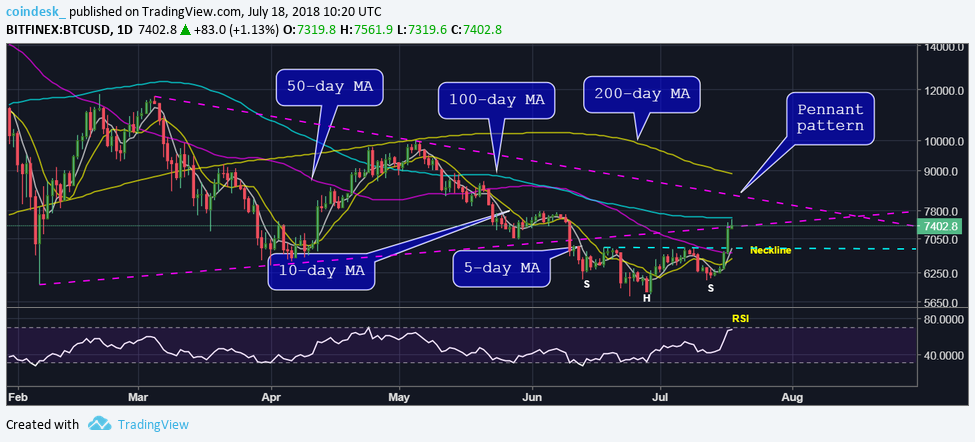
Looking back at bitcoin’s price history reveals an asset that has delivered unusual long-term returns alongside equally extraordinary drawdowns. From being virtually worthless in its early years to trading in the tens of thousands of dollars per coin, bitcoin’s multi-cycle rallies have dramatically outpaced most traditional asset classes over comparable periods, but these gains have come with frequent declines of 50-80% from peak levels. Even in recent years, bitcoin has shown that it can surge in powerful bull runs and then retreat sharply as macro conditions, regulatory headlines, and shifts in market sentiment trigger rapid re-pricing in both directions.
To understand risk, it helps to break down bitcoin’s volatility drivers rather than treating price swings as random chaos. Historically, major moves have aligned with events such as halving cycles (which reduce new supply), shifts in monetary policy, and regulatory signals from large economies. Periods of heightened volatility often coincide with:
- Liquidity shocks in broader crypto or traditional markets
- Regulatory announcements that alter perceived adoption odds
- Leverage unwinds as traders are forced to exit positions
- Macro data releases that reset expectations for interest rates and inflation
For example, market commentary has linked recent retreats below psychologically vital levels (such as the $90,000 region) to fading risk appetite ahead of key U.S.inflation prints and central-bank decisions, underscoring bitcoin’s growing entanglement with macro cycles.
From a portfolio-construction perspective, bitcoin’s historical profile looks less like a conventional “store of value” and more like a high-beta, macro-sensitive asset. Correlations with equities-especially growth and tech stocks-have tended to rise during stressed markets, reducing diversification benefits exactly when investors want them most. Yet over longer horizons,bitcoin has at times displayed low correlation to bonds and certain commodities,creating potential,but not guaranteed,diversification benefits. Investors evaluating risk therefore need to consider not only annualized volatility, which is typically several multiples higher than major stock indices, but also how bitcoin behaves during liquidity crunches and risk-off events.
| Aspect | bitcoin | Typical Blue-Chip Stock |
|---|---|---|
| Volatility | Very high; large weekly swings | Moderate; smaller weekly moves |
| Drawdowns | 50-80% common in cycles | 20-40% in severe markets |
| Return Potential | Historically outsized,but uncertain | Steady,earnings-driven |
| Risk Profile | Speculative,macro- and sentiment-driven | Business fundamentals plus macro |
Ultimately,classifying bitcoin’s risk profile means weighing its asymmetric return potential against the probability and depth of severe capital losses. Historically, investors who bought at or near cycle peaks have endured long recovery times, while those who allocated smaller portions of their portfolio and rebalanced periodically have sometimes managed volatility more effectively. A factual reading of the data suggests that bitcoin behaves more like a venture-style bet in liquid form than a traditional defensive asset: suitable, if at all, as a high-risk satellite allocation rather than a core holding, and only for investors who can tolerate sharp price shocks and extended periods of underperformance.
Evaluating Fundamental Drivers Adoption Regulation And Technology
At its core, bitcoin’s long‑term investment case rests on whether real‑world usage continues to deepen beyond speculation. Adoption has grown from early hobbyist circles into a global network of exchanges, payment processors and wallets that allow individuals to buy, hold and transfer BTC with relative ease. Today, people and institutions use bitcoin for cross‑border transfers, as a hedge against local currency instability and, increasingly, as a portfolio diversifier. Key adoption drivers include:
- Retail usage via apps, debit cards and online merchants
- Institutional interest from funds, companies and family offices
- Global access in regions with capital controls or weak banking
Regulation is the other major pillar shaping whether this growth translates into sustainable value or fades under legal pressure. Many jurisdictions now treat bitcoin as a taxable asset and require exchanges to follow Know Your Customer (KYC) and Anti‑Money Laundering (AML) rules. This trend has pushed leading exchanges to emphasize security, transparency and compliance, which makes bitcoin easier to access for mainstream investors but also reduces the anonymity that originally attracted some users. The balance regulators strike between consumer protection and innovation will strongly influence volatility, liquidity and institutional participation.
Technological progress in and around bitcoin is another fundamental driver that can either unlock new use cases or expose critical weaknesses. The underlying blockchain enables a transparent,verifiable ledger of transactions, and layers such as the Lightning network aim to improve speed and cost for smaller payments. Meanwhile, advances in wallet design, hardware security modules and user‑friendly interfaces have lowered the barrier to safe self‑custody for beginners. Together, these developments determine whether bitcoin remains primarily a “digital gold” store of value or matures into an efficient medium of exchange as well.
| Driver | Potential Upside | Key Risk |
|---|---|---|
| Adoption | More users and merchants can support higher, more stable valuations | Stalling usage could expose BTC as primarily speculative |
| Regulation | Clear rules attract institutions and long‑term capital | Restrictive laws may limit access or increase compliance costs |
| Technology | Scalability and security upgrades broaden real‑world use | Technical flaws or slow innovation could erode confidence |
Comparing bitcoin To Stocks Gold And Other Alternative Investments
Compared with traditional stocks, bitcoin functions more like a high-volatility, high-conviction bet than a claim on company profits. When you buy equities, you are buying a slice of a business with cash flows, dividends, and regulatory disclosures; analysts can model earnings, value future growth, and benchmark performance against indexes like the S&P 500. With bitcoin, there is no balance sheet or earnings report-its value is driven primarily by market demand, scarcity hard‑coded into its protocol, and investor sentiment, as explained in beginner overviews of how bitcoin and its blockchain work. that makes it more comparable to a digital commodity than a traditional security, and also means price swings can be far more abrupt than in most blue‑chip stocks.
Gold, by contrast, has centuries of history as a store of value, physical utility in jewellery and industry, and a well-established market structure with relatively lower day‑to‑day volatility. bitcoin is sometimes described as “digital gold” as its supply is capped and new coins are issued through mining on a predictable schedule. Yet their risk profiles diverge: gold tends to respond to macro uncertainty and inflation in a gradual way, while bitcoin can surge or crash on regulatory news, liquidity shocks, or shifts in speculative appetite.For investors used to gold’s slow,defensive character,bitcoin’s rapid cycles can feel more like a leveraged macro trade than a conservative hedge.
compared with other alternative assets-such as real estate, private equity, or art-bitcoin offers unique attributes: 24/7 liquidity on global exchanges, low minimum entry amounts, and self‑custody via digital wallets. It lacks, however, the income streams (rent, distributions) and tangible collateral associated with many alternatives, making total return entirely dependent on future resale prices. As many crypto investing guides emphasize,the ease of access can obscure the need for disciplined risk controls,research,and secure storage practices.In practice, investors often treat bitcoin as a satellite position-small relative to core stock and bond holdings-within a broader alternatives bucket.
When assessing where bitcoin fits among these choices, investors typically compare it across a few practical dimensions:
- Return potential: Historically high but extremely unstable.
- Volatility: Significantly above most stocks and commodities.
- Correlation: sometimes diverges from stocks and gold,but relationships can shift quickly.
- Liquidity & access: Easy to buy and sell via major exchanges and apps.
- Regulatory and operational risk: Higher than for regulated securities and established commodities, requiring careful platform selection and storage.
| Asset | Main Role | Income | Volatility |
|---|---|---|---|
| bitcoin | Speculative growth / digital store of value | None | Very high |
| Stocks | Growth & dividends | Dividends possible | Moderate-high |
| Gold | Inflation hedge & wealth preservation | None | Low-moderate |
| Other alternatives | Diversification & niche opportunities | Often yes | Varies |
Identifying Common Investment Strategies For bitcoin And Their Trade Offs
Most approaches to gaining exposure to bitcoin fall into a few recognizable patterns, each with its own balance of risk, time commitment, and psychological stress. A classic method is the long-term “buy and hold” strategy (HODL), where investors accumulate BTC on reputable exchanges and transfer it to secure wallets, then ignore short-term volatility in favor of multi‑year horizons . The upside is simplicity and lower trading costs; the downside is enduring severe price swings and the real possibility of long drawdowns. This approach also assumes that bitcoin’s long‑term adoption and scarcity narrative will ultimately outweigh interim regulatory and technological risks.
More active investors often turn to short‑term trading strategies such as swing trading, day trading, or using derivatives on established platforms like Binance, Bybit or Coinbase, which emphasize liquidity and advanced order types . These methods aim to profit from volatility rather than merely endure it, relying on chart patterns, momentum indicators, and strict risk management rules. The trade‑off is that trading demands constant monitoring, emotional discipline, and a tolerance for frequent small losses, with transaction fees and potential tax complexity eroding returns if not carefully managed.For beginners, the learning curve and risk of over‑leveraging can be particularly hazardous.
For those wary of managing private keys or navigating trading interfaces, indirect exposure strategies-such as bitcoin ETFs, trusts, and bitcoin‑focused retirement accounts (IRAs)-offer a more conventional investment wrapper . These products simplify custody and reporting, often integrating neatly with traditional brokerages and tax‑advantaged accounts. Though, investors pay for that convenience through management fees, possible tracking errors versus the underlying BTC price, and, in some structures, limitations on when and how they can trade. In practice, this means potentially lower net returns compared to holding bitcoin directly, especially over longer periods.
Beyond time horizon and structure, each strategy carries distinct operational and behavioral trade‑offs that many new investors underestimate. Consider the comparison below:
| Strategy | Main Benefit | Key Trade‑Off |
|---|---|---|
| HODL (Buy & Hold) | Simple, low activity | High volatility, long drawdowns |
| Active Trading | Can exploit price swings | Time‑intensive, higher skill required |
| ETFs / IRAs | Familiar, regulated wrapper | Fees and possible tracking gap |
- Security burden: Direct holders must manage wallets and avoid scams, while ETF/IRA users outsource that risk to custodians .
- Psychological pressure: Active traders face constant decision fatigue; long‑term holders must tolerate seeing large unrealized gains and losses.
- Access and regulation: Some U.S. investors may find ETFs and regulated exchanges more accessible than offshore trading platforms, but with stricter compliance requirements .
Recognizing Key Risks Security Regulation Market Manipulation And Scams
Behind bitcoin’s dramatic price moves lies a complex risk landscape that starts with basic security. bitcoin itself, as a protocol, has proven resilient, but the weak points are often human and platform errors. Investors frequently store coins on centralized exchanges, which can be hacked or mismanaged, wiping out funds despite bitcoin’s global liquidity and coverage on major platforms like Investing.com and Yahoo Finance. Best practice is to use hardware wallets, strong private key management, and multi-factor authentication. Even then,losing your seed phrase can mean permanent loss,with no bank or support desk to reverse the damage.
Regulation adds another layer of uncertainty. While bitcoin is traded globally with transparent spot prices and deep markets, its legal treatment varies by jurisdiction and can change quickly. Governments may tighten rules on exchanges, impose strict KYC/AML requirements, or restrict derivatives and leverage. This can:
- Impact liquidity by pushing volume offshore or into unregulated venues
- Trigger volatility when new laws or tax rules are announced
- Limit access for retail investors in certain countries
For long‑term holders, regulatory clarity can be positive, but the transition period frequently enough brings sharp, policy-driven price swings that have nothing to do with bitcoin’s underlying technology.
Another underappreciated risk is market structure. bitcoin trades 24/7 across hundreds of venues, leading to fragmented liquidity and price gaps between platforms. Thin order books during off-peak hours or in smaller markets create openings for:
- Whale-driven moves, where large holders can move the market with a single order
- Pump-and-dump cycles in illiquid pairs or smaller exchanges
- excessive leverage cascades, where mass liquidations amplify price crashes
Even though blue-chip exchanges provide more depth, cross-exchange arbitrage, derivatives, and algorithmic trading can turn news or rumors into sudden, exaggerated price spikes or crashes.
Scams and fraudulent schemes remain pervasive around bitcoin, frequently enough disguising themselves as “too good to miss” opportunities. Common red flags include guaranteed returns,unsolicited trading tips,and platforms that make withdrawal arduous. Typical examples include fake investment funds, Ponzi-like yield products, and phishing sites mimicking reputable exchanges that list bitcoin prices and charts. The table below summarizes key pitfalls and simple countermeasures:
| Risk Type | What it Looks Like | Basic Protection |
|---|---|---|
| Security Breach | Exchange hack, lost keys | Cold storage, backup seed |
| Regulatory Shift | New bans, tax changes | Diversify venues, track news |
| Market Manipulation | sudden spikes, crash wicks | Use limit orders, avoid high leverage |
| Scams | Guaranteed profits, fake sites | Verify URLs, distrust “risk-free” claims |
Practical Guidelines For Allocating To bitcoin In A diversified Portfolio
For most long-term investors, bitcoin is best approached as a high-risk satellite holding, not a core position. Because bitcoin operates as a decentralized, open-source network without central bank backing and has a strictly limited supply, its price can swing dramatically in short periods .A common starting framework is to keep exposure in a low single-digit percentage of your total portfolio (e.g., 1-5%), gradually adjusting only after you have experienced a full market cycle.This allows you to participate in potential upside while limiting the damage if bitcoin’s volatility or regulatory shocks cut prices deeply.
Position sizing should be determined by your risk tolerance,time horizon,and liquidity needs,not by headlines or social media sentiment.Since bitcoin transactions are peer-to-peer and irreversible, and the market trades 24/7 with no central authority to stabilize prices , you should only allocate capital you can afford to leave untouched for several years. Consider segmenting your assets into “essential capital” (bills, emergency fund, retirement base) and “risk capital,” and allow bitcoin to live only in that higher-risk bucket. This mindset reduces pressure to sell in panic during drawdowns or to chase short-term spikes.
Implementation also matters. You can gain exposure by holding spot bitcoin directly, using regulated brokerage products, or via companies that derive a meaningful share of their value from bitcoin’s ecosystem . When holding coins yourself, prioritize secure wallets and backup procedures because there is no bank to reverse mistakes or recover lost keys . To keep your portfolio aligned with your risk profile, use a simple, rules-based rebalancing process-such as trimming back to your target weight after large rallies and topping up cautiously after substantial corrections-so that emotion does not dictate allocation decisions.
integrate bitcoin into a broader diversification and risk-management framework rather than treating it as an isolated bet. Combine it with traditional assets like stocks, bonds, and cash so that no single holding can determine your financial future. A concise example of allocation ranges many investors explore is shown below:
| Risk Profile | Typical BTC Range | Key Objective |
|---|---|---|
| Conservative | 0-2% | Preserve capital, test exposure |
| Balanced | 2-5% | Add growth with controlled risk |
| Aggressive | 5-10% | Seek higher upside, accept steep drawdowns |
- Start small and scale only after gaining experience with volatility.
- Automate contributions (e.g., monthly buys) to reduce timing risk.
- Rebalance regularly to your target weight, not to your emotions.
- Document your rules for buying, holding, and selling before you allocate.
When bitcoin Might Make Sense In Your Investment Plan And When To Avoid It
Allocating a small slice of your portfolio to bitcoin can be reasonable when you already have a solid financial foundation. This typically means you have an emergency fund, manageable debt, and a diversified core portfolio of stocks, bonds, and cash-like instruments. in that context, bitcoin can function as a speculative satellite holding, similar to venture capital or early-stage tech plays, with a long-term horizon that can withstand the asset’s extreme volatility and multi-year drawdowns . For investors who understand the underlying blockchain technology, are comfortable with self-custody or reputable exchanges, and intend to hold through full market cycles, a modest allocation may align with a high-risk, high-reward strategy .
It may also be appropriate if you are seeking uncorrelated or asymmetric exposure alongside traditional assets and can tolerate periods where bitcoin massively underperforms equities or sits in a prolonged bear market. Long-term proponents argue that as a digitally scarce asset with a capped supply, bitcoin could continue attracting capital as more institutions, companies, and even some governments recognize its monetary characteristics .In such cases, bitcoin isn’t treated as a guaranteed hedge or inflation shield, but as a speculative bet on the maturation of a new monetary network and store-of-value narrative. A clear thesis, defined allocation (often in the low single digits of total investable assets), and explicit holding period are critical to avoid emotionally driven decisions.
On the other hand, bitcoin is often a poor fit when your financial situation or temperament cannot absorb sudden and deep losses. If you are saving for short-term goals like a home down payment or tuition, the asset’s price swings, regulatory uncertainty, and technological risks can quickly derail your plans . It is generally wise to stay away if your investment decisions are driven primarily by social media hype, fear of missing out, or the expectation of quick, life-changing gains. Similarly,if you’re uncomfortable managing private keys,evaluating exchange security,or navigating phishing and scam risks that are prevalent in the crypto ecosystem,the operational complexity may outweigh any potential upside . In these cases, traditional, regulated financial products with clearer protections might potentially be more appropriate.
To clarify when bitcoin could be additive versus harmful to your plan, consider the following simple comparison:
| Favors Owning bitcoin | Favors Avoiding bitcoin |
| Emergency fund fully funded | No savings buffer or high-interest debt |
| Long-term horizon (7-10+ years) | Short-term goals in next 1-3 years |
| Comfortable with high volatility | Lose sleep over market swings |
| Portfolio already diversified | bitcoin would be your main investment |
| Willing to learn custody & security | Not prepared to manage digital assets |
- Include bitcoin only as a small, high-risk satellite allocation.
- Avoid or minimize exposure if it jeopardizes essential goals or stability.
- Reassess regularly as your risk tolerance, knowledge, and regulations evolve.
Q&A
Q1. What is bitcoin, in simple terms?
bitcoin is a digital currency that exists only electronically and runs on a decentralized network called blockchain. Instead of being issued or controlled by a government or central bank, bitcoin is maintained by a global network of computers that validate and record transactions on a public ledger. This design aims to allow peer‑to‑peer payments without intermediaries like banks.
Q2. Why do some people consider bitcoin a good investment?
Supporters argue that bitcoin has several attractive features:
- Limited supply: only 21 million bitcoins can ever exist, which some see as “digital gold” with built‑in scarcity.
- Decentralization: No central authority can arbitrarily print more or freeze balances.
- Historical growth: Over the long term, bitcoin’s price has increased dramatically as its creation, despite large swings.
- global, borderless asset: It’s accessible 24/7 worldwide and can be sent across borders without traditional banking rails.
These characteristics lead some investors to view bitcoin as a potential store of value or hedge against inflation and currency debasement, although this role is still debated.
Q3. Why do others see bitcoin as high‑risk hype?
Critics point to several major risks:
- Extreme volatility: bitcoin’s price can rise or fall by double‑digit percentages in a single day.
- Speculation over fundamentals: much of the demand appears driven by speculation and momentum rather than clear, traditional valuation metrics.
- Regulatory uncertainty: Governments may impose stricter rules, taxes, or even bans that could hurt adoption or price.
- Technology and security risks: While the bitcoin network itself is robust, users can still lose funds through hacks, phishing, or poor wallet security.
Because of this, many professionals classify bitcoin as a high‑risk, speculative asset, not a conventional investment.
Q4. How has bitcoin performed financially so far?
bitcoin has delivered very high long‑term returns but with extreme volatility:
- As of late 2025, a single bitcoin trades at a very high dollar value, and its total market capitalization has grown into the trillions, reflecting massive appreciation since its early days.
- However, its history includes multiple crashes of 50-80% or more from prior peaks.
This combination of huge upside and severe drawdowns is why bitcoin is often described as “high risk, high reward.” Past performance does not guarantee future results.
Q5. What are the main risks of investing in bitcoin?
Key risks include:
- Price volatility:
- Rapid, large price moves can lead to meaningful short‑term losses.
- Regulatory changes:
- New laws,taxes,or restrictions on crypto exchanges and custody can affect liquidity and demand.
- Security and custody:
- If you hold your own coins, you must secure private keys; loss or theft is usually irreversible.
- If you use centralized platforms, you face counterparty risk (exchange hacks, insolvency).
- Technological and market risk:
- Potential protocol bugs, shifting user preferences, or competition from other digital assets.
- Scams and fraud:
- Fake exchanges, phishing, and Ponzi‑style schemes targeting new investors.
Q6. How does bitcoin compare to traditional investments like stocks or bonds?
- Return profile: Historically, bitcoin has outperformed many assets over long periods but with far higher volatility and deeper drawdowns.
- Income: bitcoin does not pay dividends or interest. Returns depend entirely on price appreciation.
- Valuation: Stocks and bonds can be analyzed using earnings, cash flows, or interest rates. bitcoin lacks widely accepted valuation models, making “fair value” hard to define.
- Correlation: at times, bitcoin trades independently of stocks and bonds, but in periods of market stress it can move in the same direction as risk assets.
As of these differences, many treat bitcoin as a speculative alternative asset, not a replacement for core holdings like diversified stock and bond funds.
Q7. Is bitcoin suitable for beginners?
bitcoin can be accessible to beginners, but “suitable” depends on the person:
- It may be unsuitable if:
- You cannot tolerate large price swings or the possibility of losing a substantial part of your capital.
- You need the money in the near term (e.g., for rent, emergencies, or tuition).
- It may be considered (in moderation) if:
- You already have an emergency fund, are contributing to retirement, and can afford to take risk with a small portion of your portfolio.
Beginners should first understand how bitcoin works, common scams, and basic wallet security before investing.
Q8. What are the common ways to invest in bitcoin?
For U.S. and many global investors, options include:
- Buying bitcoin directly on a crypto exchange:
- open an account on a regulated exchange, deposit funds, and buy BTC.
- You can then keep it on the exchange or withdraw to a private wallet.
- using bitcoin ETFs or other regulated vehicles (where available):
- Some markets offer exchange‑traded funds or trusts that track bitcoin’s price, allowing exposure through a brokerage account.
- bitcoin exposure in retirement accounts (e.g., IRAs in the U.S.):
- Certain providers allow crypto holdings or bitcoin‑focused products in tax‑advantaged accounts.
Each method has different fees, risks, and custody implications.
Q9. How critically important is wallet security if I invest directly in bitcoin?
Wallet security is critical:
- Self‑custody (you hold your own keys):
- Requires strong password practices, backups, and frequently enough hardware wallets to protect against hacks and physical damage.
- Custodial solutions (exchange or third‑party holds your coins):
- Simpler to use but introduces dependence on the provider’s security and solvency.
Losing your private keys generally means losing your bitcoins permanently. New investors are advised to study wallet types and best practices before holding significant amounts.
Q10. Are there safer ways to gain exposure to bitcoin’s potential upside?
“Safer” is relative, but some approaches may reduce certain risks:
- Small allocation within a diversified portfolio:
- Limiting bitcoin to a modest percentage (for example, 1-5% of investable assets) can cap downside if it fails, while allowing participation if it grows.
- Regulated products (e.g., ETFs) and reputable platforms:
- These can mitigate some custody and operational risks, though they do not remove price risk.
- Dollar‑cost averaging:
- Investing a fixed amount at regular intervals can reduce the impact of timing the market poorly.
None of these strategies eliminate the core volatility and regulatory risks.
Q11. What are common bitcoin investing mistakes to avoid?
- Investing money you cannot afford to lose (emergency funds, rent, or high‑interest debt repayment).
- Buying purely on hype or fear of missing out (FOMO) without understanding the asset.
- Using excessive leverage or margin trading, which can magnify losses.
- Neglecting basic security, such as enabling two‑factor authentication, using strong passwords, and avoiding suspicious links.
- Falling for guaranteed‑return schemes or “too good to be true” offers, which are common in the crypto space.
Q12. So, is bitcoin a good investment or just high‑risk hype?
bitcoin is neither purely a solid, traditional investment nor mere hype. It is a high‑risk, speculative asset with:
- Real innovations (decentralized, scarce, borderless digital value transfer).
- Substantial uncertainty about long‑term adoption, regulation, and competition.
For some investors, a small, carefully sized allocation within a diversified portfolio may be reasonable, provided they accept the possibility of large losses and understand the risks.For others-especially those with low risk tolerance or short time horizons-bitcoin may be inappropriate.
ultimately, whether bitcoin is a “good investment” depends on your financial goals, risk tolerance, time frame, and how carefully you approach security and education.
In Summary
bitcoin is neither a guaranteed ticket to wealth nor a baseless bubble-it is a speculative, highly volatile asset with unique characteristics that make it fundamentally different from traditional investments. Its fixed supply, global accessibility, and growing institutional interest have led some analysts to view it as a potential long-term store of value or “digital gold,” especially as more individuals and institutions explore it as part of a diversified portfolio . At the same time, its price remains driven largely by market sentiment, regulatory developments, and adoption trends, which can result in sharp and unpredictable price swings .
Whether bitcoin is a “good” investment depends less on the asset itself and more on your goals, risk tolerance, and time horizon. Conservative investors may see it as too unstable, while others may accept the downside risk in exchange for asymmetric upside potential. If you do choose to invest,most experts recommend treating bitcoin as a small,high-risk slice of a broader portfolio,using reputable platforms,secure wallets,and only capital you can afford to lose .Ultimately, the question is not just “Is bitcoin a good investment?” but “Is bitcoin an appropriate investment for you?” Answering that requires clear-eyed assessment, careful research, and a realistic view of both the potential rewards and the very real risks.