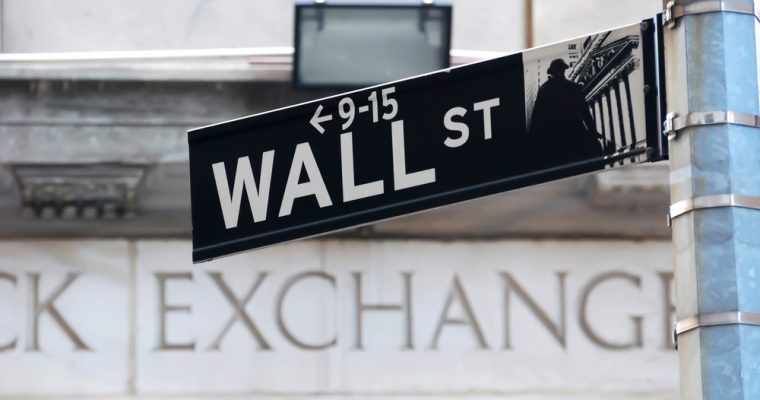
Caitlin Long is a Wall Street professional with 22 years of experience including running Morgan Stanley’s pension solutions business. Recently, Long wrote an about the financialization of cryptocurrency by Wall Street entities, describing the new initiative by ICE (owner of the New York Stock Exchange) to launch a as a “double-edged sword.”
Long spoke with CCN on financialization in crypto, describing two forms of financialization, one of which improves liquidity through new investors like institutional investors and is beneficial to the space.
“In the good context, liquidity is improving because an asset’s investor base is growing—new investors are coming in, especially institutional investors.”
Cryptocurrency pundits have long been awaiting the arrival of institutional investors with the deep pockets required to bolster the market cap, and with custodianship and other traditional financial infrastructure being put in place that seems to draw ever nearer.
There is, however, a second type of financialization.
Leverage Financialization Mirrors Fractional Reserve Banking
Leverage financialization also improves liquidity, but it does so artificially.
“In the negative context, it means liquidity is improving but it’s coming from the bad kind of leverage—paper claims to an asset that aren’t backed by the asset itself, or “circulation credit” as economist Ludwig von Mises calls it,” says Long.
She goes on to describe a method of creating value out of thin air that since the 2008 financial crisis has become all too familiar.
“The problem is that there’s really no theoretical limit on how much “paper bitcoin” can be created, and paper bitcoin can offset bitcoin’s scarcity—we’ve watched that happen in commodities markets and credit derivatives markets, where paper versions of the asset can suppress the underlying asset’s price by offsetting the real-world scarcity of the asset, such as gold and silver.”
“bitcoin’s biggest defense is that most bitcoins are stored off the Internet, which will make it hard for Wall Street to source the actual bitcoins and consequently keep a practical lid on how much leverage-based financialization can happen to bitcoin,” she adds.
About ICE's news, when CEO says "bringing transparency & trust to previously unregulated markets" it means he doesn't understand bitcoin, which is the epitome of . It doesn't need a centralized institution to bring it trust & transparency!
— Caitlin Long (@CaitlinLong_)
Long points to a with the Hong Kong-based exchange OKEx as a perfect example of how introducing what equates to fractional reserve banking to crypto can go wrong.
“Exhibit A is what happened with Hong Kong-based OKEx this week, where a large futures contract (worth more than $400 million) ended up with such a big loss that it threatened the exchange’s solvency because the loss consumed all of OKEx’s guarantee fund, so the exchange haircut its other customers’ gains in order to stay in business (a “bail-in”),” she said, continuing:
“It’s clear that OKEx was creating unbacked claims to bitcoin, or this could not have happened. A financial institution would only ever need a guarantee fund if it’s creating fractionally-reserved assets. In other words, a financial institution that is fully collateralized—fully backed by the asset against which it creates a paper claim—would never need a guarantee fund. Interestingly, ICE’s press release noted that Bakkt would be starting a guarantee fund as well. So there it is, in plain sight.”
The Wall Street exec went on to point out that fractional reserve banking doesn’t only occur where the Federal Reserve creates money from nothing, explaining how most of the credit created since the 1980s has been created in securities markets, not in the traditional banking system. Securities market credit is in the form of paper to assets, usually piled on top of other paper claims to assets, just as banking system credit is.
“And this is what I worry will happen to bitcoin—paper claims, piled upon paper claims, piled upon paper claims to the actual bitcoin.”
ICE CEO Doesn’t Understand bitcoin

Long fears that ICE, the owner of the New York Stock Exchange, will be a key player in the financialization of bitcoin and other cryptocurrencies, and that the results may not be pretty. ICE will be launching a physically-backed bitcoin futures contract, as well as a full-featured “bitcoin market.”
She didn’t mince words when it came to the statements made by ICE CEO Jeffrey Sprecher, stating that he doesn’t have a good understanding of the cryptocurrency.
“It was odd for the CEO to talk about bringing trust and transparency to bitcoin, when bitcoin doesn’t need either because it has already achieved both.”
Long went on to explain that through the Bakkt startup, ICE would try to create liquidity by building exchanges for financial instruments and then collect fees and lend out client collateral in securities lending/repo markets.
“Clearinghouses rehypothecate—lend out—client collateral multiple times, forming long collateral chains in which multiple parties report that they own the very same, single asset. This is one of the ways securities markets engage in a form of fractional reserve banking, and you can’t detect it by reading a clearinghouse’s financial statements because repo accounting allows every party to report that they own the asset—but there’s only one asset!
So, it’s subtle. The devil is always in the details of clearinghouse collateral arrangements, but almost all clearinghouses rehypothecate collateral and I’ll be interested to see if Bakkt plans to do this for its bitcoin collateral,” she concluded. “Net-net, bitcoin holders have real reason to cheer ICE’s entry but also real reason to be concerned about it.”
Images from Shutterstock
Follow us on or subscribe to our newsletter .
•
•
•
Published at Sun, 05 Aug 2018 20:45:22 +0000
Exchanges[wpr5_ebay kw=”bitcoin” num=”1″ ebcat=”” cid=”5338043562″ lang=”en-US” country=”0″ sort=”bestmatch”]