Interview: UK Exchange Crypto Facilities Launches Litecoin Futures Trading
Advertisement
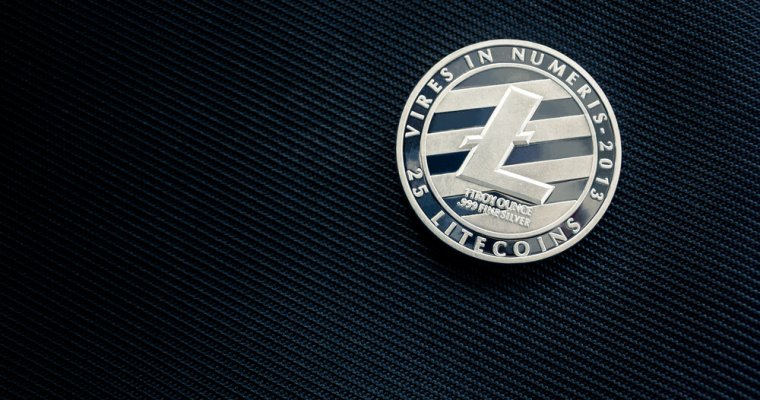
A cryptocurrency futures trading platform based in the UK called Crypto Facilities is launching a new futures product allowing traders to take positions on Litecoin futures.
Crypto Facilities CEO Timo Schlaefer spoke to CCN about the project.
“We have seen extremely strong growth in futures trading volumes, up 84% in Q1 2018 on Q4 2017, and we expect this to be at around 100% in Q2 vs Q1. Monthly XRP volumes are at around $125mm (up from $30mm in February).
We launched ETH in May and have seen significant adoption of the product and expect around $150mm in volume this quarter, which is approximately a 10% share of our total volume which is excellent for a newly launched product.”
Crypto Facilities’ current derivates offering includes bitcoin, Ripple, and Ethereum futures, with Litecoin being the newest addition.
Mr. Schlaefer stated that Litecoin’s liquidity was a factor in choosing to offer futures contracts on the currency rated at 6 in the top ten list of cryptocurrencies by market capitalisation with a total value of $5.5 billion a24-hour hour trading volume of $263 million.
He stated:
“Litecoin is one of the most liquid cryptocurrencies and there was significant client demand for a futures product referencing Litecoin.”
“These are the first regulated Litecoin futures, authorised by the UK’s Financial Conduct Authority.”
Crypto Facilities enables 24/7 trading and provides CME Group, the largest derivatives exchange in the world, with the CME CF bitcoin Reference Rate that powers CME Group’s bitcoin futures as well as the CME CF Ether-Dollar Reference Rate and Real Time Index.
The exchange will launch their Litecoin futures on Friday, June 22 and will enable traders to take long and short positions on futures contracts collateralized with Litecoin with weeekly, monthly, and quarterly maturities. Litecoin creator Charlie Lee commented on the exchange’s saying: “Litecoin futures will open up LTC trading to more institutional investors. This will add to the liquidity of Litecoin and make it easier for people to get in and out of Litecoin.”
CEO Timo Schlaefer further revealed that the exchange may be expanding their derivatives offering to other digital assets soon, saying:
“We will continue to respond to client demand for new contracts on the most liquid cryptocurrencies.”
Literally millions of people have joined the world of cryptocurrencies recently. For example, , one of the biggest cryptocurrency exchanges, has added around 2 million new clients within two months. , the major electronic wallet, found its client base increase by 1.8 million during the same time frame.
Most of these people are newbies, unacquainted with security issues and risks that surround complex but currently profitable cryptocurrency realm. This makes them easy targets for cybercriminals and thieves.
One popular crime which is conducted on cryptocurrency traders is the phone-porting attack. Crooks monitor social media in search of cryptocurrency discussions wherein people publish their emails and phone numbers for quick connection. After that, hackers use various social engineering techniques and posing as a victim, call the telephone provider and trick the customer support rep into transferring the telephone number to a phone they control. As soon as hackers take charge of the telephone number, they log in to the victim’s wallet or exchange account, reset the password and subsequently snatch all funds from the account.
A phone number is not the only . Hackers may get hold of your home PC too. , , are all widespread forms of cryptocurrency fraud and theft. Nothing teaches a person about security quicker than cybercriminals hacking his account and running off with $5,000 worth of Bitcoins. Once this happens, people tend to get really serious about their security.
So, what is the best method to safeguard your cryptocurrency assets from hacks? We must confess there is no ideal approach to the problem. In this digital age, hard drives, laptops, and phones are becoming the brand new bank vaults. Real-world experience and understanding of how to protect money from thieves are not sufficient for the virtual money.
How to Secure Your Crypto Wallet Like a Boss
The following tips can be used as a security guide for new cryptocurrency aficionados:
Securing your software wallet is similar to protecting any data on your computer. You have to be a little more paranoid while browsing the Internet, clicking on links and email attachments.
Mobile users may take advantage of with a single IP in its whitelist, which should be the VPN to access the online exchange.
It is important to select an exchange that is not only flexible and easy to use but also reputable and secure. Try to follow the news. If industry leaders disengage from a project it should be a worrying signal. Repeated technical problems and strange policies are additional points of concern. bitcoin withdrawal difficulties will always be a red flag also.
Do create backups. Kept in a secure place, a backup of your cryptocurrency wallet may save you from hardware failures and a lot of human slipups. It will also let you restore your wallet in case your PC or telephone gets stolen.
Encrypting the wallet or your hole device enables you to create a password for those attempting to take out any money.
Although passwords and encryption can protect from thieves, it is not able to put a stop to key-loggers or another malware. It is important to install and keep up-to-date leading antivirus and antimalware solutions. Many of them are free to use.
Prior to creating an account on any exchange, set up a new email box that you will be using for that specific exchange account.
Be sure to choose a very difficult and lengthy password, desirably a passphrase. Write it down on paper and store that piece of paper in a secret place.
Turn on two-factor-authorization not only for login but for any transaction procedures.
While on social media or forums, do not mention what cryptocurrency exchange or wallet you use.
Contact your phone carrier and order all possible levels of security they can offer. Add passcodes, secret questions, pins, etc. Additionally, enable the “do not port” option for any new SIM card.
Web exchanges and wallets all claim they treat security very seriously and implement all necessary protection technologies to prevent breaches and unauthorized transactions. Do not trust these words. Such companies are not banks; they often do not have the same level of security. And even banks get robbed often.
Do not store all Bitcoins in one wallet or exchange. Diversify your risks. It is extremely difficult to steal money from several wallets at once, particularly when you set different email accounts and passphrases for each of them.
Consider keeping big cryptocurrency sums in cold wallets off the Internet. The is a technology of keeping Bitcoins offline on hard drives or even paper. Hackers will not be able to reach your funds. On the contrary, the is linked to the Internet. It should be used for everyday transactions and is like a checking account, whereas cold wallet may represent your savings account.
Consider examining decentralized exchanges. The difference between decentralized and centralized exchanges is that decentralized exchange does not store your funds. Nobody can gain access to your money except you.
Tell your peers and especially close friends and relatives to embrace the same attitude and mindset. Ecosystems, where all participants treat security seriously, are less attractive to cybercriminals.
Try to always help beginners to buy and sell with security. This territory is new and we should assist people who are trying to find their way. Fortunately, you do not have to be a cryptography professional to make the first security steps which will save you from most of the problems.
Do you take any additional wallet security measures that are not on this list? Let us know in the comments below.
CryptoWorldX Token (CWXT) Price Alert, Chart & News on BitScreener.com More detail: https://bitscreener.com/coins/cryptoworldx-token CryptoWorldX Token (Symbol: CWXT) is a cryptocurrency which utilizes cryptography on a distributed peer-to-peer system. CryptoWorldX Token is particularly created for the […]
Stellar Lumens [XLM]: Payments depend really heavily on network effects, says Jed McCaleb Stellar Lumens [XLM], the eighth largest cryptocurrency by market cap, and Stellar.org, has made headlines over the past couple of days. Additionally, […]