June 10, 2026

Capitalizations Index – B ∞/21M

In the Daily: Riotx Exchange, Monacoin Hacker, Coinflex Investors

In the daily: riotx exchange, monacoin hacker, coinflex investors

In the Daily: Riotx Exchange, Monacoin Hacker, Coinflex Investors

In the daily: riotx exchange, monacoin hacker, coinflex investors

In this edition of The Daily we cover a planned U.S. regulated cryptocurrency exchange from Riot Blockchain, the arrest of a hacker in Japan who allegedly stole 15 million yen of monacoin, and a couple of new investors in Coinflex.

Also Read: US Sanctions Moscow’s Evrofinance Bank Over Involvement With Petro

Riotx Exchange Details

Riot Blockchain, Inc. (NASDAQ: RIOT) has filed with the Securities and Exchange Commission (SEC) regarding its planned U.S.-based digital currency exchange, Riotx. The document shows that the company intends to launch trading on the exchange with bitcoin core (BTC), bitcoin cash (BCH), litecoin (LTC), and ethereum (ETH), paired with one another and also for U.S. dollars. Riot Blockchain explained it has selected these coins based on internal and external reviews, and will only include currencies for which it has full regulatory and legal authorization to list.

The upcoming exchange will be comprised of three core services and Riot intends to acquire each of these by engaging third party vendors. Banking services will be provided by Synapse Financial Technologies, Inc. (Synapsefi); a trading engine will be provided by Shift Markets; and a provider of digital wallet services is still unannounced. The company anticipates launching its Riotx digital currency exchange by the end of the second quarter of 2019.

Before October 2017, Riot was a biotechnology company known as Bioptix, Inc. that specialized in the development of veterinary diagnostic tools. On October 4, 2017 Bioptix announced it was changing its name to Riot Blockchain and shifting its business focus to investing in blockchain technologies. In February 2018 it was hit with a class action lawsuit in the Southern District of Florida related to the move.

Monacoin Hacker Arrested

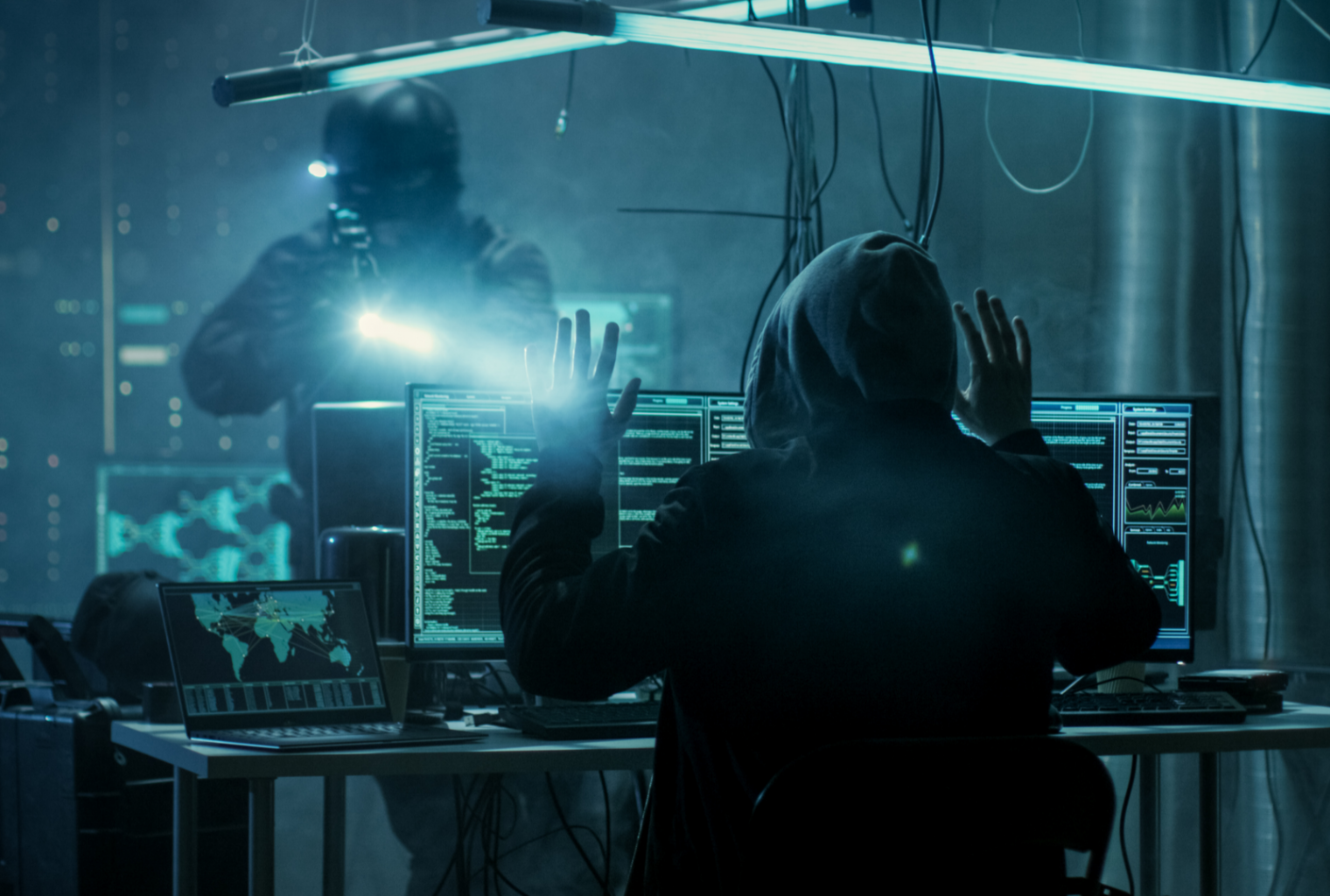
According to media reports from Japan, police forces have caught an 18-year-old man who allegedly stole a total of 15 million yen (about $134.5K) worth of monacoin. The young hacker is accused of committing fraud using computers, among other allegations. He reportedly took advantage of vulnerabilities in an online wallet called Monappy to steal the funds of about 7,700 people. Mona is a cryptocurrency based on a cat meme popular in Japan that was created as a fork of litecoin.

According to Japanese police, this is the first time a crypto hacker has been exposed in the country. This is despite the fact that he used Tor to hide his online identity and stored the stolen coins in an anonymous exchange abroad. The police claims to have identified him by analyzing blockchain transaction records.

New Coinflex Investors

Coinflex, a physically delivered crypto futures exchange, has announced the addition of investment firm Digital Currency Group and blockchain investment company Polychain Capital to its lineup of investors. Olaf Carson-Wee, CEO of Polychain, commented, “As a physically-settled futures exchange, Coinflex will be well positioned to capture significant order flow from speculators, institutional traders and Proof of Work miners seeking to hedge against crypto price volatility and hash rate volatility.”

The exchange also announced the creation of its own token, called flex coin, to encourage liquidity and reward members who trade on the platform. This is a practice that has spread among exchanges, with the seventh most valuable crypto asset by market cap in the world today – Binance coin – one such exchange token.

Based in Hong Kong and incorporated in the Republic of Seychelles, Coinflex is owned by a consortium that includes Trading Technologies International Inc., crypto trader Mike Komaransky, and Dragonfly Capital Partners. Market markers B2C2, Global Advisors, Alameda Research, Amber AI, Grapefruit Trading, Coinfloor and its subsidiary companies also have partial ownership of Coinflex.

What do you think about today’s news tidbits? Share your thoughts in the comments section below.


Images courtesy of Shutterstock.


Verify and track bitcoin cash transactions on our BCH Block Explorer, the best of its kind anywhere in the world. Also, keep up with your holdings, BCH and other coins, on our market charts at Satoshi’s Pulse, another original and free service from Bitcoin.com.

Avi Mizrahi

Avi Mizrahi is an economist and entrepreneur who has been covering Bitcoin as a journalist since 2013. He has spoken about the promise of cryptocurrency and blockchain technology at numerous financial conferences around the world, from London to Hong-Kong.

Published at Sun, 17 Mar 2019 12:04:09 +0000
Previous Article

Bitcoin Rallying Above $4,000 Could be Due to Bitmex Futures: Analyst

Next Article

In the Daily: Riotx Exchange, Monacoin Hacker, Coinflex Investors

You might be interested in …

A Buyers Guide To HDMI Cables

With High Definition devices becoming increasingly popular, it’s important to select the correct cable. But what exactly is HDMI and what do all the numbers mean.

HDMI
(High-Definition Multimedia Interface) is an audio video interface for transmitting uncompressed digital data between high definition devices such as HD DVD players, HD satellite boxes and High Definition Televisions. It offers crystal clear, all-digital, audio and video signal in a single cable.

Versions
There are various versions of HDMI cable, v1.0, v1.2, v1.3a, v1.3b. The versions of 1.3 (a & b) relate to the testing specification to which the cable has been certified and do not necessarily offer increased functionality.

All newer versions are fully backwards compatible with older versions. The HDMI licensing authority is currently working with manufacturers to focus on features and de-emphasize version numbers to help reduce customer confusion. The features fall into three categories:

Standard and High Speed refer to the two types of HDMI cables and can be used with 1080i and 780p devices. High Speed HDMI cables can be used for 1080p devices such as Blu -ray players and PS3 gaming consoles.
Deep Colour, this refers to Television and monitors that can display more colours than standard .
X.V Colour, this offers an expanded, or wider range of colours which can not usually be displayed on a TV.

What to Look For.
When buying HDMI cables there are certain things to look out for. Ferrite EMI Suppressors are important for reducing electro magnetical interference, they are round barrel shaped coils usually found on either end of the cable. Shielded or even double and triple shielded cables improve quality. Gold plated connectors don not have a massive effect on image quality, but they do reduce oxidization.

Cable length
HDMI cable specification does not define a maximum cable length, but due to attenuation there is a limit as to how long a HDMI lead can successfully transmit the signal. Build quality and the material greatly affect the overall length an HDMI cable can be used without losing quality. A safe limit for no loss of quality would be around 7.5M. Higher quality cables can be used up to 20M. Amplifiers are available to increase the distance a signal can travel without deteriorating.

How Much To Spend
Most equipment manufacturers will supply a basic cable in the box; this cable is intended to get you up and running. The most cost effective upgrade you can make is to spend a few pounds on a good quality HDMI cable. It is pointless spending 1500 pounds on a 42 inch TV and then 5 pounds on a cable. Budget cables are fine, but generally the more you spend the better quality you can expect. A good rule of thumb would be to spend around 5% of the cost of your TV.

The post A Buyers Guide To HDMI Cables appeared first on Mokey International.