For those who remember how the first computing devices looked like it may difficult to believe but in its ‘Five-for-Five’ report IBM has the world’s smallest computer that is smaller than a grain of salt. The computer is so tiny that it is difficult to see it with the naked eye without the help of a microscope.
But in this case the size really doesn’t matter: the device has the computing power of the x86 chip from 1990. Maybe it doesn’t sound very impressive in comparison with what we have today. Nevertheless, don’t forget how tiny this new computer is.
The company says that manufacturing of such a computer will cost less than 10 cents. Having up to 1 million transistors, along with a small amount of static random access memory, a light-emitting diode (LED) and photo-detector this cutting-edge device can be used for monitoring, analyzing, communicating, and even acting on data.
In line with modern tendencies, this IBM computer will work on blockchain, acting as a data source of blockchain applications. That will help the device fulfill the basic AI tasks such as sorting the data it’s given, for example. The computer can be used for tracking the shipment of goods and detecting theft, fraud, and non-compliance.
to IBM’s head of research Arvind Krishna, “within the next five years, cryptographic anchors — such as ink dots or tiny computers smaller than a grain of salt — will be embedded in everyday objects and devices”.
IBM expects that their tiny computers are cheap and small enough to find a place in everyday electronic devices comparatively soon. Nevertheless, at the moment there is still no information when this device will be released as IBM researchers are still testing its first prototype.
But this small computer is not the only one amazing technological advance that will have a real impact on our lives in the next half decade, according to IBM.
Among other developments are AI-powered robot microscopes that will be used for cleaning the world’s water supplies. These devices will help to monitor the behavior of microscopic plankton in more details than it has been possible earlier and to get more understanding of factors that affect water quality in our rivers and oceans.
IBM researchers have also paid their attention to the issue of data security. Thanks to a post-quantum encryption method called lattice cryptography even quantum-powered hackers will be disarmed.
Another technological advance is explained by researchers’ desire to create AI software which accurately reflects reality without bias. According to IBM experts, only AI systems providing an unbiased, objective model of the world will have a chance to be the most successful.
And the last but not the least innovation that is going to change our lives within 5 years is quantum computing that will be actively used in solving problems once considered unsolvable.
The post appeared first on .

When you are an entrenched player deep within a certain system, especially one as complex and inflexible as the banking industry, it can be hard to implement changes, even when there is a critical need to adapt to emerging technologies. If a company wants to appear as if it is keeping up with the times, it can simply announce that it is piloting the new technology. Such appears to be the case with Mastercard and cryptocurrency transactions right now.
Also Read:
Master Govcoin Card
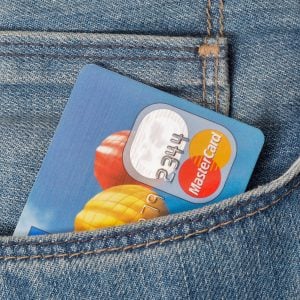 Credit cards giant Mastercard (NYSE: MA) is said to be keeping its options open on adopting the use of cryptocurrencies, under a just few caveats. The company reportedly wants to facilitate only fully-regulated, central bank-issued, non-anonymous coins. While such instruments are arguably not cryptocurrencies at all by definition, they also do not exist yet.
Although some central bankers have floated the idea of issuing their own digital currencies, either to help create a “cashless society” or to try and combat the popularity of bitcoin among young people, the plans have never gotten off the drawing board, assuming they weren’t just all talk to begin with. The closest attempt at implementation right now is the Marshall Islands’ govcoin which is promised to come out later this year. And as the Russian Ministry of Finance President Vladimir Putin, the creation of a centrally-controlled decentralized coin is probably technically impossible.
“If governments look to create national digital currency we’d be very happy to look at those in a more favourable way,” Ari Sarker, co-president of Mastercard’s Asia-Pacific business, told the . “So long as it’s backed by a regulator and the value . . . it is not anonymous, it is meeting all the regulatory requirements, I think that would be of greater interest for us to explore.”
Just a Toe in the bitcoin Ocean
 The company’s senior executive also said that Mastercard is running a cryptocurrency pilot program in Singapore and Japan, allowing some clients to “cash out” of bitcoin onto a card. However, this test is not “of scale” yet and the company has no exposure to bitcoin’s price.
“We are not operating trading of bitcoin through the MasterCard network,” Mr Sarker said. “The pilot is a toe in the water, we’re fully cognisant of the reputational risk.” There were strict KYC/AML (know your customer and anti-money laundering) controls, he added.
When should we expect to see national central banks actually issuing cryptocurrencies that Mastercard can use? Share your thoughts in the comments section below!
Images courtesy of Shutterstock.
Do you like to research and read about bitcoin technology? Check out ’s page for an in-depth look at bitcoin’s innovative technology and interesting history.
The post appeared first on .

Coinbase has revealed that it has obtained a bank account with major U.K-based multinational financial services company, Barclays. The partnership comprises the first agreement reached between a leading U.K bank and a cryptocurrency exchange.
Also Read:
Coinbase Opens Account With Barclays
 The opening of an account with Barclays has been hailed as a major accomplishment by Coinbase, who have described the deal as comprising the first partnership between a major U.K bank and a cryptocurrency exchange.
The U.K chief executive officer of Coinbase, Zeeshan Feroz, that “Having domestic GBP payments with Barclays reduces the cost, improves the customer experience…and makes the transaction faster,” adding “We believe that this is an important step towards our commitment to making cryptocurrency accessible to everyone.”
Mr. Feroz has indicated that coming to an agreement with a UK bank has been a lengthy process, with Barclays wishing to see evidence of robust anti-money laundering processes. “It’s a completely brand new industry. There’s a lot of understanding and risk management that’s needed,” Mr. Feroz said.
Coinbase Simplifies Fiat Deposits and Withdrawals for U.K Customers
 The announcement comes shortly after Coinbase was granted an license by the UK Financial Conduct Authority. The license grants Coinbase access to the Faster Payments Scheme, which will streamline the processing withdrawing and depositing fiat currency with Coinbase for the company’s U.K customers.
Mr. Feroz has indicated that Coinbase will gradually introduce the new banking services to U.K traders, stating that “U.K. customers will benefit from faster, safer and seamless bank transfers. We will start with a pilot, giving a small number of institutional users access to Faster Payments. In the coming weeks, we will begin rolling out to all U.K. customers, making the Coinbase experience increasingly easier.”
Whilst the partnership signals growing acceptance of leading cryptocurrency companies on the part of mainstream banking institutions in the U.K, the announcement comes weeks after Britain’s Treasury Select Committee it would launch an inquiry into cryptocurrencies and distributed ledger technologies. The chair of the Treasury Committee, Nicky Morgan, stated that “People are becoming increasingly aware of cryptocurrencies such as bitcoin, but they may not be aware that they are currently unregulated in the UK, and that there is no protection for individual investors.”
Do you think that more leading banks will begin to partner with cryptocurrency exchanges? Share your thoughts in the comments section below!
Images courtesy of Shutterstock
Need to calculate your bitcoin holdings? Check our section.
The post appeared first on .

![Sec commissioner says [btc] etf will be approved ‘eventually’](https://ohiobitcoin.com/wp-content/uploads/2019/02/hx7dVW.png "Sec commissioner says [btc] etf will be approved ‘eventually’")