
February 22, 2026

Capitalizations Index – B ∞/21M

How to Identify and Mitigate a Bitcoin Dust Attack

How to identify and mitigate a bitcoin dust attack

How to Identify and Mitigate a Bitcoin Dust Attack

How to identify and mitigate a bitcoin dust attack

bitcoin transactions are not anonymous but users can still add a layer of privacy by using different addresses and other techniques to confuse blockchain surveillance. However, a de-anonymization method known as a dust attack is on the rise. If the microtransactions that characterize a dust attack go unnoticed, they can potentially be used to identify cryptocurrency users.

Also read: The Long Relationship Between In-Game Gold and Bitcoin Continues to Thrive

Peppering Crypto Networks With Dust to Deanonymize Users

Cryptocurrencies like bitcoin cash (BCH) and bitcoin core (BTC) are not private by default. In fact, both digital ledgers are completely transparent for the entire world to see and this means bitcoin users have to add their own degrees of privacy to give themselves a better form of anonymity. Privacy techniques used by bitcoiners include shuffling coins, using Tor or a VPN, and completely avoiding address re-use. Despite taking these measures, however, there’s a way in which people can be identified by blockchain analysis known as a dust attack, an invasive act that could easily go unnoticed.

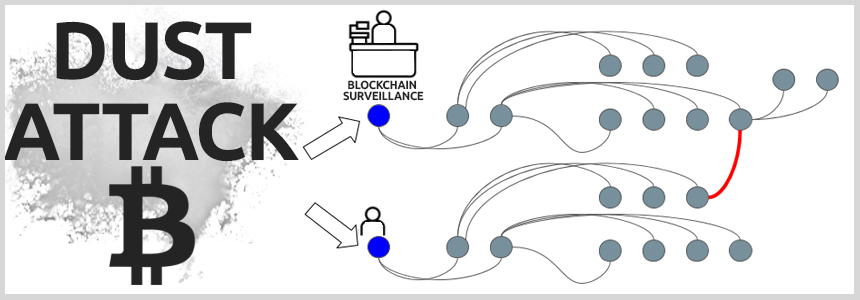
In the world of bitcoin, the term ‘dust’ is used to describe a very small fraction of bitcoin, often times referred to as satoshis. In order to track further transactions, large quantities of dust are peppered across the network targeting a large swathe of addresses. The attacker hopes that the tiny amount of funds mixes together with an unspent transaction output (UTXO) so that when it is spent as an input in a new transaction it can be tracked.
How to identify and mitigate a bitcoin dust attack

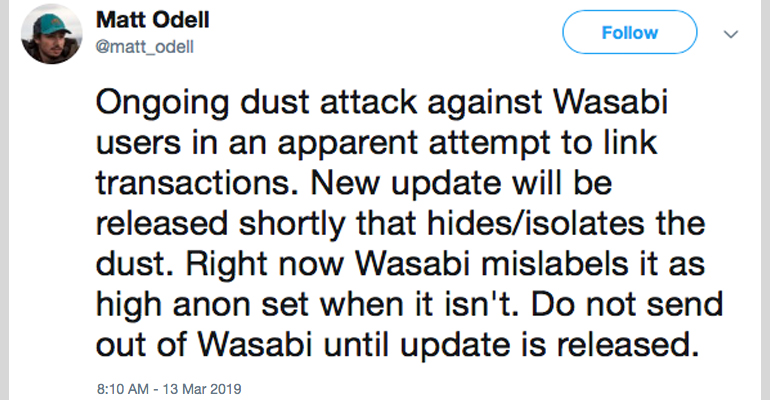
Some users might not even notice the small fraction of dust they received and could spend the tainted coins at a later date. Of course, some users religiously check their transaction log every time their wallets receive bitcoin but they might not do anything about it and still spend the dust. Those funds can be used to deanonymize users and there are scripts that can be written that can send a ton of dust to thousands of addresses at once.
How to identify and mitigate a bitcoin dust attack

Dust Attack Mitigation

There are ways users can avoid spending the dust and one very important privacy tactic is using a different address for every transaction. When people look at their balances on a mobile wallet they may not be aware that their wallet’s total is the sum of inputs and UTXOs. This means your 2 BCH could be represented in incremental amounts like 1, 0.5, 0.25, and 0.25 to get the total sum.

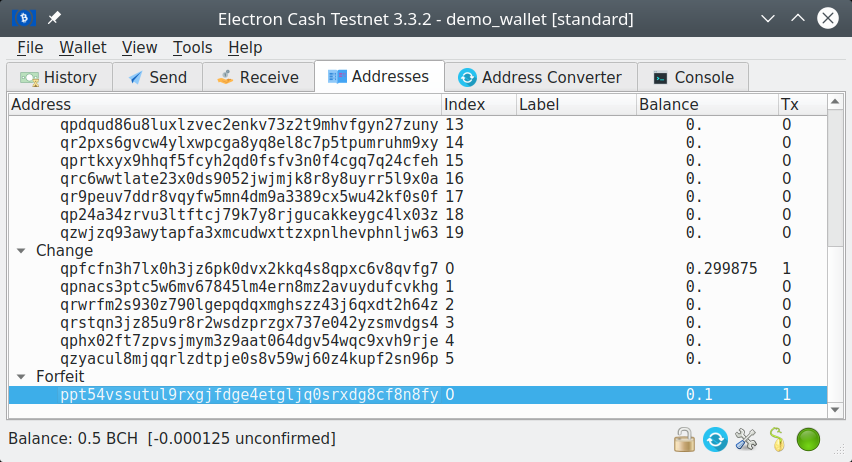
If you don’t really care about privacy, you can forget about the dust and go on with your day. Or you can choose to never spend the dust and only spend the untainted funds going forward. This means you may have to meticulously scan for the dust transaction, figure out the address the funds sit in and then choose to leave it alone. Fortunately, there are some wallets that let you see addresses that have fractions of UTXOs in them and you can parse the funds this way.
How to identify and mitigate a bitcoin dust attack
A wallet like Electron Cash will allow a user to see which addresses contain funds and from there elect to leave the dust alone. For wallets that do not display this information to the end user, the seed must be imported to a wallet that allows this functionality.

Some wallets also allow you to add a description or a ‘flag’ to the fraction of satoshis that were randomly sent, so you can identify the attack easily. Unfortunately, not all wallets let you select UTXOs in a manual fashion, so users with these kinds of wallets will need to import them to a client that does in order to mitigate against the dust attack. Further, there is no way people can stop dust attacks, as a good portion of blockchain networks are permissionless.

A few satoshis sent to your wallet may not be an ‘attack’ in the malicious sense of the word, as someone may have sent the small amount of bitcoin by accident. People who appreciate a higher form of privacy, though, will always regard these types of transactions as invasive and will take robust measures to circumvent them.

What do you think about dust attacks? Let us know what you think about this subject in the comments section below.


Image credits: Shutterstock, Pixabay, Twitter, and Electron Cash Demo Wallet.


Need to calculate your bitcoin holdings? Check our tools section.

Tags in this story
Anonymity, Anonymous, BCH, bitcoin cash, Bitcoin Core, Blockchain, Blockchain Analysis, Blockchain Surveillance, BTC, Cryptocurrency, Digital Assets, Dust, Dust Attack, Monitoring, N-Featured, Privacy, satoshis, Small Fractions, Tracking, transactions

How to identify and mitigate a bitcoin dust attack
Jamie Redman

Jamie Redman is a financial tech journalist living in Florida. Redman has been an active member of the cryptocurrency community since 2011. He has a passion for bitcoin, open source code, and decentralized applications. Redman has written thousands of articles for news.bitcoin.com about the disruptive protocols emerging today.

Published at Fri, 15 Mar 2019 01:45:24 +0000

Previous Article

Bitcoin SV’s [BSV] Calvin Ayre faces backlash after posting photos of ‘young’ women

Next Article

Hacker Involved in 15 Mln Yen Crypto Theft Referred to Prosecutors

You might be interested in …

Bitkan Experiment Shows Japan is No Bitcoin Mecca on the Ground

Bitkan has said the consumer bitcoin scene in Japan is still “difficult to use” after staff conducted an investigation in Tokyo.


Bitkan: Japan bitcoin Payments Still ‘Difficult’

The decentralized trading platform, which is headquartered in China but looking to expand into the Japanese market, also released a documentary film about using bitcoin in the country in 2017.

Last month, Bitkan organized a Tokyo Bitcoin meetup which saw some of the largest ever audiences debate the local scene as well as current technological issues facing the bitcoin ecosystem. Roger Ver and Jihan Wu were among the attendees.

“We used Coinmap to search advertisements of businesses accepting bitcoin,” operations director Sandy Liang told Bitcoinist in emailed comments about the research.

“These places had a ‘bitcoin accepted’ sticker, and where it was possible to use it to pay, staff appeared familiar with the payment process.”

bitcoin’s Mixed Fortunes Evident In Payment Landscape

Japan hit the headlines in February following the temporary moratorium on Chinese bitcoin trading, becoming the world’s largest bitcoin exchange market.

As reports heralded a total of 4500 outlets accepting the virtual currency, reactions from users on the ground struck a decidedly different note, stating that in reality bitcoin payments were almost unnoticeable.

Liang shared this view following Bitkan marketing director Ruby Chen’s attempt to live off Bitcoin for 72 hours in Tokyo but remained positive about the future.

“We have to say that it’s not very convenient to use bitcoin in Tokyo for covering all expenses, compared with fiat. For now, it’s really hard to live only on bitcoin,” she said.

“However, it’s getting easier and easier. The growing number of bitcoin ATMs, for instance, allows the option of converting BTC to yen as an alternative.”

She added that the depth of incentives for consumers to pay using the virtual currency was also lacking. Discounts and other marketing schemes were not in evidence at all, making the idea of transitioning to a notionally more convenient, empowering payment method appear daunting.

Big Business Paving Way For Change

Meanwhile, the country’s cryptocurrency exchanges are busy laying the foundations for what could be a seismic shift in attitudes in the coming years.

BitFlyer and Coincheck, both major market players in Japan, have recently announced partnerships with big business specifically with the aim of expanding the number of merchants with whom consumers may pay using bitcoin.

The former is working with Japanese economics giant Bic Camera to roll out bitcoin payments across its empire, with a trial initially limited to two flagship stores in Tokyo. Customers are able to pay up to 10,000 yen ($900) in bitcoin.

Coincheck meanwhile is seeking to expand the merchant base even further – by up to 260,000 – through allowing merchants using PoS app AirRegi to also accept bitcoin.

Such an expansion would place bitcoin on par with extant fiat payment app acceptance numbers, the most popular being Suica and Edy with up to 470,000 locations.

[Note: This is a sponsored article]

What do you think about Japan’s bitcoin journey? Let us know in the comments below!


Images courtesy of Shutterstock. BitKan

The post Bitkan Experiment Shows Japan is No Bitcoin Mecca on the Ground appeared first on Bitcoinist.com.