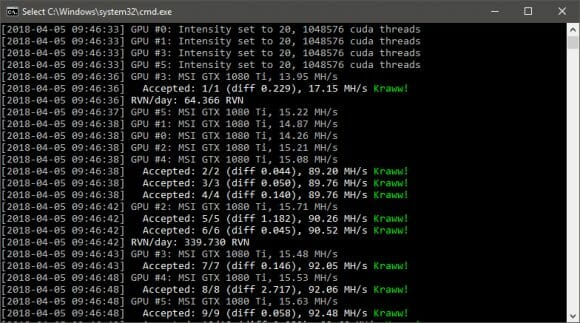
bitcoin transactions are verified through a process known as mining, where miners solve complex cryptographic puzzles to validate and add transactions to the blockchain ledger. This method ensures the integrity and security of the bitcoin network without relying on a central authority or trusted third party. Miners compete to solve these mathematical problems, and the first to succeed earns the right to add a new block of confirmed transactions to the blockchain, receiving a mining reward in return. This intricate system not only maintains the decentralized nature of bitcoin but also keeps the entire network functioning and thriving securely [[1]](https://bitcoinmagazine.com/guides/bitcoin-mining) [[2]](https://www.webopedia.com/crypto/learn/how-dose-mining-work/).
Understanding the Role of Miners in bitcoin Transaction Verification
bitcoin miners serve a critical function by validating and confirming transactions on the blockchain. When a user initiates a transaction, miners collect these pending transactions into a candidate block.They then compete to solve a complex cryptographic puzzle, known as proof-of-work, which requires significant computational power and energy. This mechanism ensures that each verified block is legitimate and resistant to tampering.
Once a miner successfully solves the puzzle, it broadcasts the solution and the new block to the network. Other miners and nodes verify the correctness of the solution and the included transactions. If consensus is reached, the block is added to the blockchain, rendering the recorded transactions immutable. This process enforces network security by making it computationally expensive to alter any prior transaction history.
Key functions miners perform during transaction verification include:
- Validating the authenticity of transaction details
- Ensuring no double-spending by checking previous transaction outputs
- Packaging multiple transactions into a single block
- Securing the blockchain with proof-of-work computations
| Step | Miner’s Action | Result |
|---|---|---|
| 1 | Collect pending transactions | Creates block candidate |
| 2 | Solve cryptographic puzzle | Proof-of-work attained |
| 3 | Broadcast block to network | Consensus verification |
| 4 | Add block to blockchain | Transactions finalized |

The Mechanics of Cryptographic Puzzles in Mining
At the core of bitcoin mining lies a cryptographic challenge known as the Proof of Work puzzle. Miners compete to find a specific value called a nonce that, when combined with transaction data and passed through a hashing function, produces a hash output below a predetermined target. This target difficulty adjusts periodically to maintain consistent block times despite fluctuations in total network computational power.
The puzzle-solving process hinges on the properties of cryptographic hash functions, primarily SHA-256 in bitcoin’s case. These functions are deterministic yet unpredictable, ensuring that even a small change in the input drastically alters the output hash. This unpredictability means miners must attempt countless nonce values in a trial-and-error fashion, consuming significant computational resources.
- Nonce exploration: Miners systematically adjust the nonce value.
- Hash calculation: Each nonce is hashed along with block data.
- Target comparison: Resulting hash is checked against the difficulty target.
- Proof validation: Successful miners broadcast their solution for network verification.
| Step | Description | Result |
|---|---|---|
| Hashing | Compute SHA-256 with nonce and block header | 256-bit hash output |
| Comparison | Check if hash < target difficulty | Pass/Fail |
| Solution Found | Broadcast block to network | New block added |
This rigorous puzzle mechanism ensures the security and integrity of the bitcoin blockchain. By requiring miners to invest real computational effort,it mitigates risks like double-spending and network manipulation. Successful miners are rewarded with newly minted bitcoins and transaction fees, incentivizing continued participation and decentralized consensus.
How Proof of Work Ensures Transaction Integrity
at the core of bitcoin’s security model lies the Proof of Work (PoW) mechanism, which compels miners to solve complex cryptographic puzzles before validating transactions. This process ensures that only legitimate transactions are added to the blockchain,as altering any part of the transaction history would require an impractical amount of computational power. By dedicating resources to solve these puzzles, miners provide uncompromising evidence that the transaction block is valid and trustworthy.
The PoW system enforces a high cost on malicious actors attempting to tamper with transaction data. Since each block references the cryptographic hash of the previous one, changing even a single transaction would force recalculating the puzzle solution for all subsequent blocks. This creates a financial and computational barrier against double-spending or rewriting transaction history, thereby preserving the integrity of every confirmed bitcoin transaction.
- Computational difficulty: Adjusted dynamically to maintain consistent block times
- Verifiable results: Puzzle solutions are easy to verify but hard to find
- Decentralized consensus: Miners compete fairly to add valid blocks
- Security reinforcement: Ensures tamper-resistance and network trust
| Feature | Impact |
|---|---|
| Energy expenditure | Discourages manipulation |
| Puzzle complexity | Keeps block addition rate steady |
| Hash linking | Secures chain immutability |
| Consensus protocol | Validates transaction legitimacy |
Challenges Faced by Miners in Puzzle Solving and Verification
bitcoin miners engage in an intense computational race to solve complex cryptographic puzzles, and this process is far from straightforward. One primary challenge they face is the sheer difficulty of these puzzles, which are deliberately designed to require substantial computational power and energy. Miners must constantly iterate through a massive number of potential solutions, a process that demands specialized hardware known as ASICs (Application-Specific Integrated Circuits) to remain competitive. This requirement not only raises the barrier to entry but also places immense operational costs on miners.
Another significant challenge lies in the verification of solutions.Once a miner proposes a solution, it must be validated by the rest of the network to ensure its correctness and compliance with consensus rules. This verification process involves confirming that the hash value meets the target difficulty, which dynamically adjusts to maintain a consistent block creation time of approximately 10 minutes. Any discrepancy or error during verification can lead to rejected blocks and wasted resources, affecting the miner’s potential rewards.
Network latency and propagation delay also introduce obstacles for miners. After solving a puzzle,a miner must broadcast the newly mined block to the entire bitcoin network. Given the decentralized nature of the blockchain and varying connectivity speeds, some miners might receive the new block slightly later than others, causing temporary forks or orphaned blocks. This race against time to propagate blocks swiftly influences miner rewards and network stability.
Key challenges can be summarized as:
- High computational and energy demand requiring state-of-the-art hardware
- Stringent validation protocols to maintain network consensus
- Dynamic difficulty adjustment that constantly shifts puzzle complexity
- Network propagation delays impacting block acceptance and chain stability
| Challenge | Impact on Miners |
|---|---|
| Computational Difficulty | High energy consumption and costly hardware |
| Verification Accuracy | Potential block rejection and wasted effort |
| Difficulty Adjustment | Constant evolution of puzzle complexity |
| Propagation Latency | Risk of orphaned blocks and reduced rewards |
Best practices for Efficient and Secure bitcoin Mining Operations
Effective bitcoin mining demands a balanced approach combining powerful hardware, stable connectivity, and robust security. Miners should invest in high-performance ASIC miners, which provide the computational efficiency necessary to solve cryptographic puzzles rapidly. Additionally, securing a consistent and high-speed internet connection ensures continuous participation in the network without interruptions, crucial for timely block verification and reward acquisition.
Security protocols must be proactive and multilayered. Operators are advised to utilize firewalls, VPNs, and regularly updated firmware to safeguard mining rigs from external threats.Implementing two-factor authentication (2FA) for wallet access and pool dashboards further fortifies defenses against unauthorized intrusions. Physical security, such as locked access to mining facilities and surveillance, plays an essential role in protecting hardware from theft or tampering.
Energy efficiency is another cornerstone of lasting mining operations. Utilizing renewable energy sources or optimizing power settings on mining equipment can drastically reduce operational costs. Miners should consider deploying cooling solutions, such as liquid cooling or efficient ventilation systems, to prevent overheating, which can degrade hardware performance and longevity. Regular maintenance schedules help maintain optimal machinery performance and avoid unexpected downtime.
| Practice | Benefit | Tip |
|---|---|---|
| Hardware Optimization | Faster hashes per second | Choose latest ASIC models |
| Network Stability | Uninterrupted mining process | Use wired connections over Wi-Fi |
| Security Measures | Protection from cyberattacks | Enable 2FA and firewalls |
| Energy Management | Lower operational costs | Integrate renewable power sources |
- Monitor mining pools to ensure fair share distribution.
- Backup wallet keys offline to protect assets.
- Keep software updated to benefit from performance and security patches.
- Track energy consumption to identify inefficiencies promptly.
Q&A
Q: How are bitcoin transactions verified by miners?
A: bitcoin transactions are verified by miners who collect pending transactions into a block and compete to solve a complex mathematical puzzle. This process ensures that transactions are legitimate and prevents double-spending.
Q: What is the puzzle miners solve during bitcoin transaction verification?
A: The puzzle is based on finding a special number called a nonce that, when combined with the block’s data and passed through a cryptographic hash function, produces a hash output below a certain target value set by the network’s difficulty.
Q: Why is solving this puzzle important for transaction verification?
A: Solving the puzzle requires significant computational power, making it costly and difficult to alter transaction data. Once a miner solves the puzzle, the block is considered valid, and the transactions within are confirmed and added to the blockchain.
Q: How does mining ensure the security of bitcoin transactions?
A: Mining relies on Proof of Work, where solving the puzzle proves that miners have expended real computational effort. This deters fraudulent transactions and attacks because altering any transaction would require redoing the puzzle solution for that block and all subsequent blocks.
Q: What happens after a miner solves the puzzle?
A: The miner broadcasts the newly completed block to the network. Other nodes verify the solution and if valid, add the block to their copy of the blockchain. The miner then receives a block reward and transaction fees.
Q: How does this process affect the speed of bitcoin transactions?
A: The mining verification process generally takes about 10 minutes per block,meaning transactions are confirmed roughly every 10 minutes once included in a block. Multiple confirmations over several blocks increase security.
Q: Are there software tools that simulate bitcoin transactions?
A: yes, there are specialized programs like bitcoin Flash Software that simulate bitcoin transactions across different platforms, but these do not represent actual mining or transaction verification on the real blockchain .
Q: Where can I learn more about bitcoin and its technological protocols?
A: bitcoin forum is a community resource rich in information for developers and enthusiasts seeking to learn more about bitcoin technologies, including mining and transaction standards .
To Wrap It Up
the verification of bitcoin transactions through miners solving complex cryptographic puzzles is a fundamental process that ensures the security and integrity of the bitcoin network. By competing to solve these computational challenges, miners validate and record transactions on the blockchain, preventing double-spending and maintaining a decentralized ledger. This consensus mechanism not only secures the network but also regulates the creation of new bitcoins, highlighting the innovative blend of cryptography, economics, and computer science that underpins the bitcoin system. Understanding this process is crucial to appreciating how bitcoin operates as a reliable and trustless peer-to-peer electronic payment system.