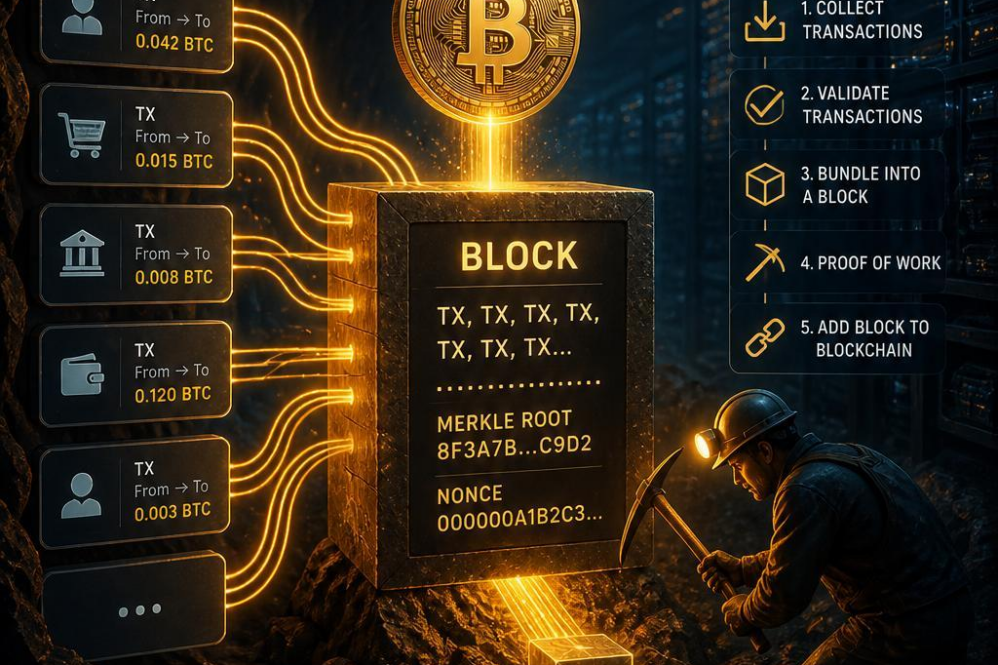
Understanding the Basics of bitcoin Mining and Transaction Bundling
bitcoin mining is a essential process in the blockchain ecosystem that ensures the integrity and security of transactions. Miners use powerful computers to solve complex mathematical puzzles, a process known as hashing, which is essential for verifying transactions and creating new blocks. The blockchain operates on a decentralized ledger system where every transaction must be validated and recorded by a consensus mechanism. In the context of bitcoin, miners act as nodes that listen for incoming transactions and validate them using algorithms designed to maintain the network’s security and integrity.
To bundle transactions into blocks, miners must select and organize these validated transactions according to a specific set of rules. The core principle is to include as many transactions as possible while adhering to the block size limit, which for bitcoin is currently 1 megabyte. This constraint encourages miners to be efficient with the data they include, as larger blocks take more time and resources to process. Miners typically use software tools to optimize the selection process, ensuring that high-priority transactions or those with higher fees are included first. These fees incentivize miners to prioritize certain transactions over others, helping to maintain network efficiency and transaction speed.
The process of mining and transaction bundling involves several stages. First, miners collect transactions from the local mempool, which is a pool of unconfirmed transactions awaiting validation. They then employ specialized software to sort and prioritize these transactions based on factors like fee amount and time of submission. once the block is ready,it is indeed broadcast to the network for further validation and eventual addition to the blockchain. Below is a simple breakdown of how transactions are prioritized and sorted into blocks:
| Transaction Feature | Priority Factor |
|---|---|
| Transaction Fee Percentage | High – Higher fees increase priority |
| Time in Mempool | Moderate - Older transactions can be prioritized |
| Size in Bytes | Low – Smaller transactions are preferred due to block size constraints |
This system ensures that bitcoin’s blockchain remains robust and flexible, accommodating the growing number of transactions while maintaining the essential security features of the network.
The Role of Transaction Fees in Prioritizing Block Inclusions
Transaction fees play a pivotal role in determining which transactions get included in the next block mined by bitcoin’s network. Miners have the power to select which transactions they include based on the fees these transactions carry. This selective process prioritizes transactions that offer higher fees, thereby ensuring that miners are compensated adequately for their computational work and energy costs. When deciding which transactions to include,miners assess the fee per byte of data each transaction occupies,known as a unit of weight. A higher fee per weight unit typically means a higher chance of inclusion.
This prioritization strategy is not without its complexities, especially during periods of high transaction volume. As more users seek to validate their financial activities during times of peak usage, the competition for available space in the next block intensifies. With limited space per block (currently 1 MB approximately before the activation of Taproot), miners must carefully balance the efficiency and profitability of their inclusion criteria. Transactions with lower fees may have to wait longer or be discarded entirely if they don’t meet the current market rate for fee per weight unit, illustrating the direct relationship between transaction fees and the likelihood of a quick confirmation.
To illustrate how transaction prioritization works in practice, consider the following simplified scenario. A miner faces three transactions with differing fee levels and data weights:
| Transaction | Weight (unit) | Fee (BTC) | Fee per Weight |
|---|---|---|---|
| TX1 | 250 | 0.0001 | 0.0000004 |
| TX2 | 500 | 0.0002 | 0.0000004 |
| TX3 | 1000 | 0.0003 | 0.0000003 |
In this case, miner would likely prioritize TX1 and TX2 due to their higher fee per weight, despite TX3 having the highest absolute fee. Though, miners must also respect transaction weight limits to ensure blocks do not exceed the network’s capacity, demonstrating the intricate balance between maximizing income and adhering to protocol constraints.
Mastering the Art of Transaction Selection Algorithms
Transaction selection algorithms are the backbone of bitcoin’s efficiency and security, playing a critical role in determining the order and content of blocks. Miners face a complex decision-making process when choosing which transactions to include in their block templates. They must balance several factors, such as the transaction fee rate, the speed of confirmations, and the risk of orphaning, all while ensuring that the block size does not exceed the protocol’s limits. Understanding these dynamics is crucial for both miners and users aiming to optimize their interactions within the bitcoin network.To effectively manage these constraints, miners frequently enough prioritize transactions that offer higher fees relative to their size. This practice, known as fee prioritization, ensures that the block includes the most valuable transactions for the miner. However, this approach also involves a risk known as transaction malleability, where slight alterations in the transaction format can lead to complications, potentially causing a delay or even an orphaned block. Therefore, miners must weigh these risks against the benefits of higher fees. A well-tuned transaction selection algorithm helps in finding the optimal balance between revenue and block stability.
Moreover, the process of selecting transactions extends beyond mere financial considerations. Miners often employ heuristics and custom weighting schemes to guide their decisions. As a notable example, some may prefer transactions of a certain type or volume, aiming to cater to specific user groups or market trends. This strategic approach can influence the network’s overall transaction flow and, in turn, impact user experience and transaction confirmations. Understanding these nuanced strategies can definitely help individuals and entities navigate the bitcoin ecosystem more effectively, ensuring smoother and more predictable transaction processing.
Optimizing Network Performance with Efficient Block Propagation
To optimize network performance and ensure smooth operation in the bitcoin network, miners must focus on efficient block propagation. This process involves transmitting newly mined blocks to other nodes as quickly and reliably as possible. Effective propagation decreases confirmation times and enhances the overall security of the network. Miners achieve this efficiency through various tactics, such as optimizing the size and structure of transactions and blocks.
One key strategy is to minimize the data volume of transactions during block assembly. By doing so, miners can speed up the block’s spread across the network, reducing the time needed for nodes to reach consensus. Another tactic is to prioritize the inclusion of transactions that provide higher fees, as these are incentivized rewards for the miner. This not only maximizes profitability but also encourages faster propagation, since nodes are more likely to prioritize these block broadcasts for higher rewards.
In practice, miners use elegant software tools to manage their block building and propagation. Table 1 below illustrates a simple example of transaction prioritization within a block by fee rate.
| Transaction ID | Transaction Amount | Fees | Fee Rate (sats/B) | Block Priority |
|---|---|---|---|---|
| Tx012345 | 0.1 BTC | 0.0004 BTC | 400 | 2 |
| Tx678910 | 0.002 BTC | 0.0002 BTC | 1000 | 1 |
| Tx111213 | 2 BTC | 0.0013 BTC | 650 | 3 |
Table 1: Example transaction prioritization based on fee rate for block propagation optimization.
Strategic Recommendations for Miners to Enhance Ecosystem Integrity
bitcoin miners play a crucial role in the network’s stability and security by bundling transactions into blocks. To maintain the integrity of the bitcoin ecosystem, miners must adhere to certain practices that foster health and prevent issues like centralization. Firstly,miners should actively engage in a diverse set of mining pools. This not only spreads the computational load but also decentralizes control over the network. By joining smaller pools or setting up a personal mining rig,miners can contribute to a more balanced and resilient ecosystem.
Another strategic recommendation is to uphold the principle of transaction neutrality. Miners should treat all transactions equally, without giving preferential treatment to large corporations or specific users. This practice is essential for maintaining the trust and fairness of the bitcoin network. Miners should avoid engaging in practices that can be construed as censorship, such as refusing to include transactions from users suspected of regulatory infractions without clear evidence or legal mandates.
miners should prioritize energy efficiency to support the long-term sustainability of bitcoin mining. This means investing in hardware that uses less power and optimizing operational processes. The environmental impact of bitcoin mining is a important concernand adopting greener technologies and practices can help mitigate these issues. As a notable example, miners might consider switching to renewable energy sources or implementing advanced cooling systems to reduce power consumption.By taking these steps, miners not only help to preserve the planet but also contribute to the financial longevity of the mining operation, as energy costs become a smaller portion of the overall expenses.