October 10, 2026

Capitalizations Index – B ∞/21M

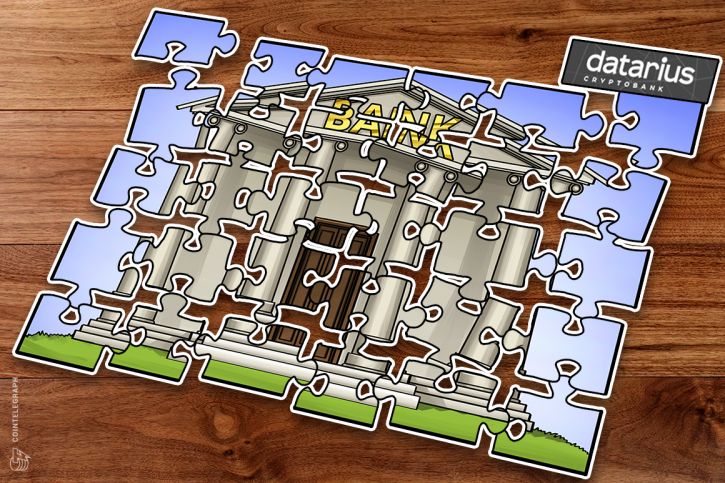
How Banking Institutions Can be Decentralized, Explained

How banking institutions can be decentralized, explained

How Banking Institutions Can be Decentralized, Explained

How banking institutions can be decentralized, explained

How does decentralized banking look?

Decentralized banking is a term that has been construed in the wake of the cryptocurrency boom.

That is because cryptocurrencies are the first intelligent asset that can create such a tool.


And because of this, many are referring to decentralized banking as “crypto banking.” Cryptobanks are decentralized platforms that provide the usual services that centralized banks provide, primarily lending services and credit scoring, but essentially cuts out all of the middlemen that a centralized bank uses. The people needed in a bank to approve loans and structure financial data are replaced in a crypto banking ecosystem bysmart contracts and p2p, peer-to-peer, services.


Currently, most of the network will be online, as all issues can be solved online. The “bank” takes shape in the form of a computer interface, whether on a desktop or a phone, and the currencies dealt with are mostly cryptocurrencies.

How is this different from decentralized exchanges?

Decentralized exchanges or DEX swap currencies, while decentralized banking swaps credit and trust.

DEX, which is also a new concept, utilizes p2p transactions between two users who want each other’s currency. For example, if Alice wants to sell six ETH for five BTC, and Bob wants to sell five BTC for six ETH, the DEX exchange will trade these for them without a middleman. Cryptobanking utilizes decentralized p2p trading in the same way but uses it for lending purposes. While the lending process sounds a lot more complicated, the goal is to make it as automated a possible- making transactions fast like DEX exchanges.

What kind of technologies do crypto banks use?

P2P, Blockchain, cryptocurrencies, Machine Learning, Big Data and smart contracts are used in crypto banking.


P2P. Participants are private users, not banking institutions. The crypto bank links a borrower that meets the correct credentials to a lender. P2P takes away many of the bureaucratic processes that centralized banks need to go through when approving a loan.


Blockchain. All transactions are recorded on the Blockchain. It is a transparent, immutable ledger that will provide data for users and well as AI algorithms to find the right matches for lenders and borrowers.


Machine Learning Big Data.These technologies help to automate the lending process and cut through bureaucracy. AI can work 24/7 and match lenders with borrowers.


Cryptocurrencies. While fiat can be used in decentralized banking, cryptocurrenciesoperate much smoother and will become the sole future of decentralized banking. These decentralized currencies speak the language of the Blockchain and keep perfect track of asset transactions.


Smart Contract. Smart contracts are used for a variety of reasons in crypto banking, such as converting currencies, binding contracts between two parties and automating transference of funds between the borrower and lender.

Do crypto banks have their own native currency?

Yes. Native cryptocurrencies help make the bank global.


Datarius, the first social p2p crypto bank, for instance, uses their own native token DTRC for all transactions. This helps create a standard for a global payment system within the p2p lending process. Tokens are easily transferable to other cryptocurrencies, as well as fiat. The native cryptocurrency speaks the language of the native Blockchain and creates an incentive for the currency to appreciate in value. It gives the token concrete utility; an essential part of the puzzle.

How safe is p2p lending? Can machine learning really find the right borrower for a lender’s standards?

While the process is automated, there are plenty of toggle functions which lets borrowers and lenders control with whom they want to work.


In the company’s model, borrowers are categorized into three different listings, which range from the minimally verified borrower, via verified transactions made by the borrower on, say, the Datarius Blockchain, to fully transparent borrowers who are reviewed by risk management. Less trustworthy individuals can account for higher interest rates and build up credit, and those with high credit can ask for lower interest rates. But these decisions are really up to the lender, which makes p2p wonderful- decentralized banking will see some new interest rates based on people interaction.

What is social lending?

Social lending looks at many aspects of a borrower to determine their score.


Thanks to Big Data and AI, crypto banks can see beyond a borrower’s credit score to identify their level of trust. Listings can include Trust Limit, Trust Management and User Ratings which helps AI decide if the participant is justified in borrowing from a specific lender.  

Particularly, Trust Limit, for instance, gives the possibility to automatically pick up some funds from your wallet by any user according to your requirements, say, ratings, user groups, etc.


It will allow to automate lending with small amounts. Based on this, there will also be the so-called “credit” cards, and when you have insufficient funds, you will automatically pick up some from Trust Limit. And that is one of the main points of socialization – you can “trust” every user of the system.

What other ways does machine learning help?

AI contributes in many ways in a decentralized banking system, including fraud, forecasting, scoring and calculations.


Fight fraud. Tracking suspicious transactions and artificial rating raising; having automated systems for finding unreliable users with high probability. This is what allows Daritus to create a social aspect to their rating system. AI helps stomp out fraudsters and give room for users to be judged on points other than credit.


Forecasting. This will help lenders understand the risks involved with borrowers. AI forecasting can also predict when payments are likely to be made based on the borrower’s data.

Scoring. Risk assessment when granting a loan. This can come from a wide variety of big data from the borrower.

Is the reach larger than that of centralized banks?

Decentralized banking is global.


The advantage to using a universal cryptocurrency, AI automation, and ease of access via cell phone means that users can access all over the world. This will also create a huge market for micro-loans, a service made popular for startup businesses in developing areas by offering small loans to people with zero credit but known in the community as trustworthy. Crypto banks will create a large loan marketplace throughout the globe that traditional banking can never touch. Centralized banks are restricted to brick and mortar locations, bureaucracy and many people to pay. Decentralized banks do not have these strings attached and can easily scale globally. A global economy will be stimulated through global banking.

What are the benefits of decentralized banking?

In today’s world, 2.5 bln people do not have access to banks.


Yet, only one bln don’t have access to cell phones. Decentralized banking has the mobile infrastructure to allow those without access that to at least have a chance at having a decentralized bank. Simple mobile wallets will be used to store cryptocurrencies, and DAppscan give many people an opportunity to take out loans and have a shot at starting something big. These banks can reach places that centralized, traditional banks will never reach, the truth is that centralized banks are becoming too bulky in light of Blockchain and the fall of the middleman.

Published at Thu, 01 Mar 2018 10:05:25 +0000

Blockchain
Previous Article

Monero Hard Forks to MoneroV in Mid-March

Next Article

Bitcoin Ignore the Fud (Fear, Uncertainty, and Doubt) Cryptocurrency Limited Art Poster Print Limited to 100

You might be interested in …

Play2Live – The World’s First Decentralized Streaming Platform for Gamers and eSports Fans

Take a look at websites like Twitch or Youtube, and you will see it: Gamers are everywhere. Occupying a 105 billion dollar market share, and more than 2.2 billion people who play video games worldwide, video games have become so popular, that they have surpassed film to become the world’s number one way to be entertained. Viewership for eSports is surpassing that of many traditional sports.

[Note: This is a press release.]


The way people seek entertainment has changed forever, while, as we all know, the blockchain is changing the way people spend money. The economy is becoming decentralized, and payments are becoming more secure and transparent. The new, blockchain-based and decentralized, video game and eSports streaming platform, Play2Live, is the first game streaming platform which brings eSports together with the cutting-edge of blockchain technology.

In P2L both players AND audience members earn tokens by doing lots of cool things like watching ads because of peer 2 peer cdn, advancing streams, and watching ads if he wants. And there are other intellectual methods. AND THIS IS A REVOLUTION! Thanks to the blockchain.The Play2Live platform with the Level Up Chan and Level Up Coin is taking over the world! Gaming will never be the same!!

Utilizing some of the remarkable innovations of blockchain tech, the team at Play2Live has developed an ecosystem where each participant, including the viewer, will become a full-fledged member of the system. Participants will be able to interact on a peer-to-peer basis with one another and to earn money using many platform features. Audience members and streamers alike have the ability to earn and spend money doing what they love.

The following is a brief overview of the project:

eSports – The Future of Entertainment

Gamers love playing games, but they might like watching them even more. The eSports industry has already seen the rise of a number of gaming celebrities and millionaires, and viewership is already much higher for video game tournaments than for many traditional sports.

Unfortunately, eSports streaming sites, like the ones listed above, have one major fault: They lack an effective platform for interaction between streamers and viewers. Fans are dying to be able to get in touch with their favorite streamers, and take part in the game on a deeper level, but at the moment this is impossible.

Play2Live

That is, until now. A group of experts, with years of experience in eSports, game publishing, and developing high level online gaming services, has come together to find a solution. They have conceptualized the Play2Live (P2L) platform –  the first decentralized streaming platform for gamers and eSports fans.

By integrating the blockchain into video game streaming, P2L is making interaction between gamers and fans easy, and making gaming even more fun and entertaining for everybody. On the business side, P2L is monetizing game streaming and creating an entire infrastructure for fans to spend money in order to interact with their favorite streamers. Due to the use of the blockchain, P2L managed to increase the number of revenue sources on the platform from 5 sources at traditional centralized solutions to 15. Try to think of another blockchain project that allows users to spend tokens inside any project in so many ways!

This will radically and forever change the industry. At the same time, P2L is likely to have a great impact on eSports and gaming, giving new opportunities for the so-called Let’s play streamers that just stream games, and for organizers of eSports tournaments.  Play2Live gives you, and other users all of the world interaction at a whole new level. It is truly a level up in gaming. 

Platform Structure

The key advantage of the Play2Live system is that we are a complete ecosystem and not a service solving only one or a few highly specialized tasks. P2L is an independent generator of gaming and eSports content and a potential partner for other eSports platforms. This means we can continually integrate new products and partners into the service who will be able to interact with the platform’s audience through the “Level Up Chain”  blockchain.

A New Level of Interaction

At its base, P2L is an e-marketplace, operating using a blockchain-based token – the Level Up Coin (LUC), and a streaming platform, enabling access to share video streams.

The marketplace enables the ultimate in interaction between streamers and their audience. Streamers can use the platform to build and maintain a fanbase, and make money doing it and making streams – right from the start without any applications forms or complicated procedures. Viewers can spend LUC to interact with streamers, and earn it by voting for the streams that they like. The more positive votes, the more LUC earned. Sharing streams becomes a way to earn.

This is a revolution for fans. It will be possible to make specific requests or choose from streamers’ custom-made options. For example, if fans want to see a streamer switch from “difficult” to “hard” mode on a game, they could give the streamer LUC in exchange for doing so. They could tell a streamer to “level up” with LUC if they so please. Fans can also get together and form a crowdfund to pay for the content that they want to see. They can earn money by watching ads if they want.

There are lots of the other ways for streamers to earn LUC, such as by selling advertisements or taking donations. Viewers Eventually, the platform will support the placement of bets by viewers of eSport tournaments.

Blockchain Integration

All the innovative features of P2L are made possible by the blockchain, a decentralized technology that renders transactions secure, transparent, and convenient.

P2L uses the custom-built Level Up Chain blockchain. Since it was built using Graphene technology, these transactions will go at light-speed -50,000 TPS – hundreds of times faster than bitcoin and Ethereum transactions.

P2L is able to keep fees low and services functioning at a high level because of its blockchain integration. The Level Up Coin is set to one day become the top currency in the gaming industry.

The Upcoming Crowdsale

The Pre-sale for the LUC token will start on November 20th, and go until November 26th. The token sale will begin December 4th and end December 10th.

Your chance to get in early on the project starts soon! For more information visit  www.play2live.io, or follow us on various bitcoin-oriented media sources.

Contact – Please feel free to get in touch with us on any of our social media accounts!

https://twitter.com/play_2_live

https://www.linkedin.com/company/18255836/

https://t.me/play2live

https://www.facebook.com/Play2Live-504880049864038/

https://medium.com/@play2live.project

The post Play2Live – The World’s First Decentralized Streaming Platform for Gamers and eSports Fans appeared first on Bitcoinist.com.

Сооснователь Reddit: цена Ethereum вырастет до $15 000 в 2018 году

ForkLog Сооснователь Reddit: цена Ethereum вырастет до $15 000 в 2018 году Один из основателей популярного интернет-портала Reddit Алексис Оганян, ранее объявивший, что покидает свою должность на сайте в пользу работы в сфере инвестиций, поделился […]