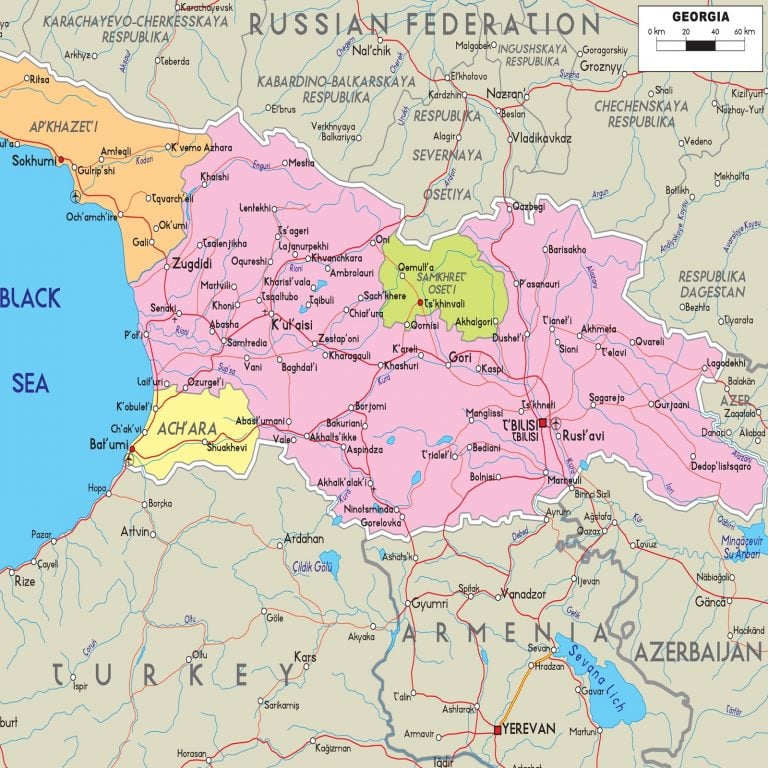
Typically when people think of bitcoin mining operations they look to countries like Iceland and mainland China. However, most people do not know that the small country of Georgia, a region of Eurasia, is ranked the second most profitable area in the world for cryptocurrency mining just below China.
Also read:
Cryptocurrency Miners Are Flocking to the Small Country of Georgia
The country of Georgia is well-known for its wine, but these days the region has also become known for its blossoming cryptocurrency mining hub where entrepreneurs are looking to profit. Georgia is a democratic nation-state located between the crossroads of Eastern Europe and Western Asia. Over the past few years, bitcoin and cryptocurrency miners have been flocking to the Georgian region due to the country’s lack of regulations and inexpensive hydropower. According to a recent the U.S. based firm Bitfury once accounted for most of the Georgian mining facilities, but there are many other smaller operations as well. The company’s Georgian mining facilities existed outside of the Tbilisi region but, according to reports, the company’s main data site was recently sold.
 The country of Georgia once known for its wine country is now becoming a bitcoin mining country.
Many home miners have been setting up shop in Georgia as well, like Bezhani Buzhaidze, a Telavi resident who subsidizes his income by mining bitcoin and zcash. Buzhaidze explains in his recent interview that last year he was raking in roughly $800 USD every thirty days mining zcash, and the electricity costs were only $80 per month. Buzhaidze explains that four of his friends are also participating in the Georgian mining industry. Moreover, cryptocurrencies have also brought Georgians the dream of the technology one day unleashing free markets worldwide without crony capitalism.
“We won’t need banks anymore,” Buzhaidze details. “It will be good for society.”
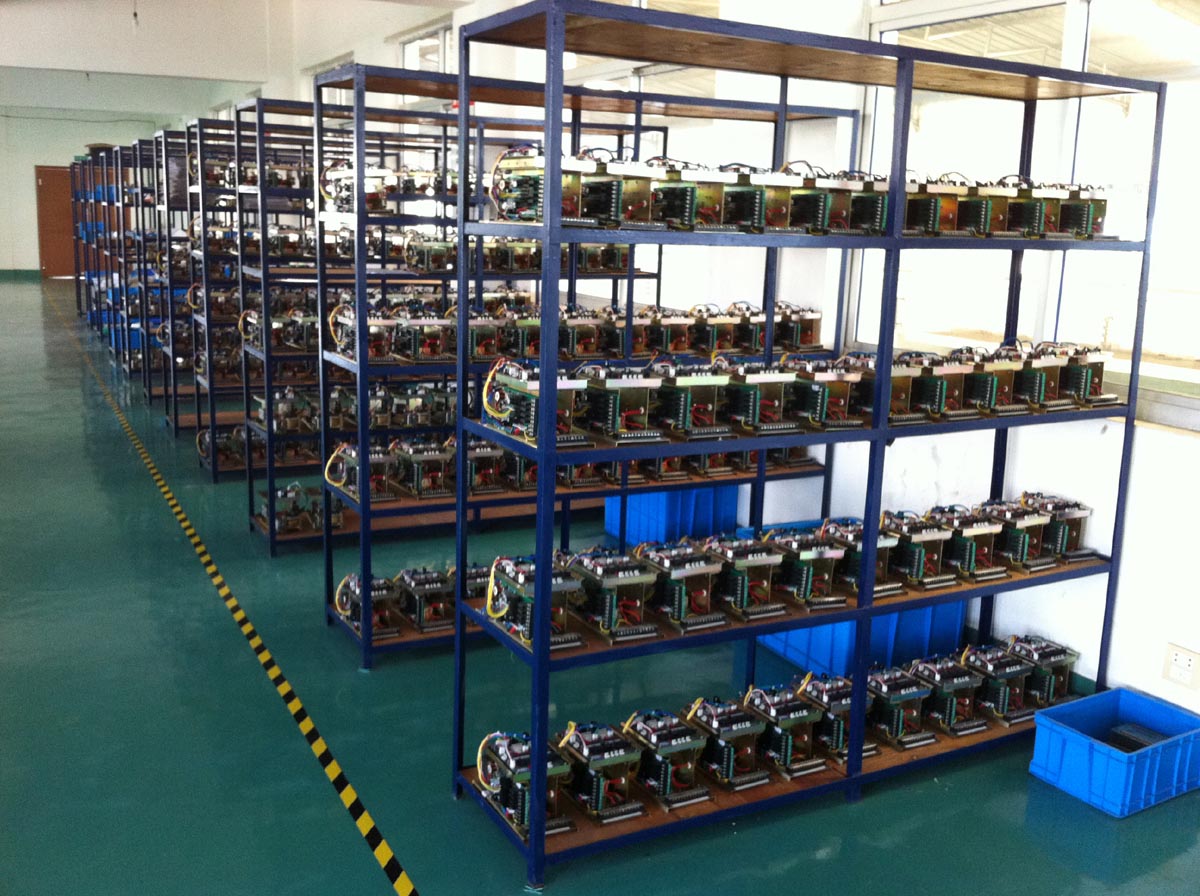 According to reports, as far as mining profitability is concerned.
Georgian Bureaucrats and bitcoin Mining
 Even though regulations are lighter than other countries, the Georgian central bank has issued statements to potential retail investors that cryptocurrencies may be “risky investments.” However, there are a lot of Georgians who want the digital currency industry to thrive in the country, and recently a political party has been mining cryptocurrencies to fund its campaigns. However, Bitfury’s annual electricity estimates state that the firm utilized 28 million kilowatt-hours of power every thirty days in Georgia which has made some political leaders uneasy.
Some oppositional bureaucrats also allege that the former Prime Minister of Georgia, Bidzina Ivanishvili, is secretly partnered with the Bitfury operations. Public records show a fund tied to one of Ivanishvili’s investment arms allowed Bitfury to borrow funds, but according to Bitfury’s attorney the loan was paid in full, and he explains that “no financial ties remain.” Still local news publications like detail that Bitfury’s George Kikvadze is an active member of Ivanishvili’s investment vehicle. Since then the company has sold its main data facility in Georgia but still runs smaller mining operations in the country and rents the land where the data centers reside. Blockchain data reveals this week Bitfury captures 1.8 percent of the BTC global hashrate.
Utilizing Georgia’s energy sector can be very lucrative as prices per wattage in the region can be roughly 4 – 6 U.S. cents/kWh according to Galt & Taggart research. There are 22 hydro plants under construction in Georgia and 72 established hydro plants in the country. Cryptocurrency miners worldwide now see the country as a to set up shop as Georgia is steadily becoming a digital currency mining epicenter.
What do you think about the country of Georgia becoming a prosperous region for bitcoin mining second to China? Let us know what you think about this subject in the comments below.
Images via Pixabay, Geoatlas, Bitfury, and Wiki Commons.
Have you tried our new yet? !
The post appeared first on .
The oldest bitcoin and cryptocurrency exchange ‘Bitstamp’ is up for sale, according to the sources familiar with the matter, reports . The digital publication on Tuesday, April 24 that three people familiar with the matter said that the cryptocurrency exchange is in the middle of the sale deal and a South Korean gaming company is looking to close the acquisition deal.
Two of the three sources said that Nexon can turn out to be a possible buyer of Bitstamp in a deal which is reportedly worth $350 million. The three people familiar with this matter although refused to get identified sighting security concerns as they were not authorized to report about the deal.
Bitstamp which is said to be the oldest crypto exchange was formed back in 2011 and is currently headquartered in Luxemburg after it moved out of China last year after the country introduced a ban on the crypto trading platform. Today, the daily trading volumes on Bitstamp are found around $500 million, making it as the 10th largest exchange.
On the other hand, the Nexon group was formed in 1995 and currently specializes in designing mobile and PC games. The company has been involved in re-making popular titles like FIFA and Counter-Strike in Korean and Japanese versions. This gaming company is also listed on the Tokyo Stock Exchange and is currently valued with a market capitalization of ¥1.3 trillion ($12.7 billion, £9.1 billion).
While talking about the deal, the sources said that it is still in the mid-way and there are also chances that it could fall apart. The sources said that before the Nexon deal, Bitstamp was also involved in another sales process.
A spokesperson for Nexon Japan said: “We can neither confirm nor deny the facts about your inquiry.” While another spokesperson for Bistamp said: “I am not in the position to comment on the matter. We kindly ask you to keep an eye out for any official statement from our side on the topic of your inquiry.”
If the deal happens to be at $350 million as reported, this would mean the Bitstamp is being sold at a $50 million cheaper valuation that Poloneix in spite of the fact that Bitstamp has higher daily trading volumes in comparison to Poloneix and also holds the necessary banking relationships to offer fiat trading pairs, unlike Poloneix.
While talking to Business Insider, Bitstamp CEO Nejc Kodrič told that the exchange business has grown from just a few dozen people at the start, to having a staff of 200 people as of now. Kodrič also told that during the crypto craze at the end of 2017, the exchange was getting nearly 100K sign-ups per day in December 2017. He also said Bitstamp had “more than enough internal cash flow to sustain the growth of the company.”
The latest report from suggests that there has been a growing acceptance for bitcoin and cryptocurrencies within big institutional investors and in the next 3-12 months, many of them are also planning to start trading in these digital assets.
The post appeared first on .