November 3, 2026

Capitalizations Index – B ∞/21M

GDPR Could Hinder Blockchain Innovation, Warns EU Body

Gdpr could hinder blockchain innovation, warns eu body

GDPR Could Hinder Blockchain Innovation, Warns EU Body


Eu blockchain
Advertisement

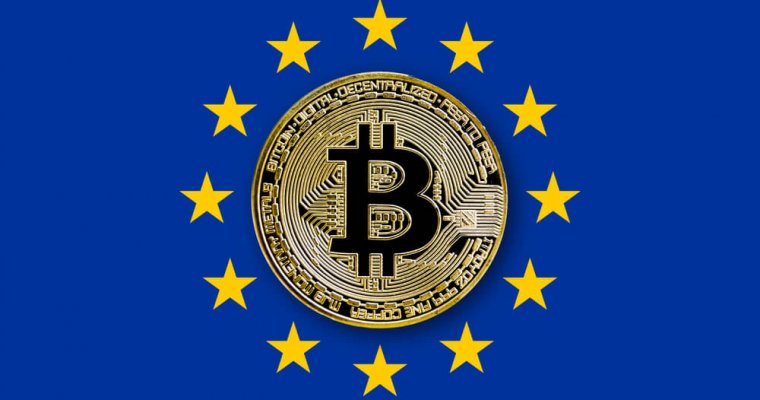
The EU Blockchain Observatory and Forum has warned that the General Data Protection Regulation law that went into effect a little over two months ago could hinder innovation in the blockchain space.

According to the European blockchain body, this is because of the lack of legal clarity between blockchain technology and the GDPR law, whose aim is to protect individual data rights as well as facilitate the free movement of personal data in the single market.

“As long as the legal framework around personal data and blockchain remains unclear, entrepreneurs and those designing and building blockchain-based platforms and applications in Europe face massive uncertainty. That can put a brake on innovation,” notes the report titled ‘Blockchain Innovation in Europe’.

Individual Data Protection Rights

Per the report, one of the points of dissension that are likely to emerge arise out of the fact that GDPR empowers individuals to have their data amended in order to maintain accuracy. In some cases the GDPR also allows individuals to have this data deleted once it is no longer required. Blockchains, on the other hand, are immutable and data can only be added not deleted.

Under the GDPR the key to ensuring that individual data rights are protected is having a central body that can be held accountable when things go wrong. But in the case of open, permissionless blockchain where the information is processed by all the network’s full nodes, a centralized data controller does not exist thus opening another point of conflict.

Gdpr could hinder blockchain innovation, warns eu body
Decentralized blockchain applications are under threat due to uncertain laws, the eu body has warned.

Additionally, it is stipulated in the GDPR law that data can only be transferred to third parties based outside the European Union on condition that the data will be held in a jurisdiction which offers data protection levels that are equivalent to those in the single market. With open permissionless blockchains, however, it is impossible to select where the data ends up since a full copy of the database is replicated on all the full nodes regardless of their geographical location.

Full Replication of Data Set vs Selective Use

The report notes that these conflicts arise due to the fact that GDPR law came into being prior to blockchain technology becoming a buzzword.

“The law was conceived and written before blockchain technology was widely known, and so was fashioned with an implicit assumption that a database is a centralized mechanism for collecting, storing and processing data,” the report authored by Tom Lyons says.

Optimistically, though, the report notes that blockchain is still in its infancy and could evolve to a point where it becomes a tool which helps achieve the ultimate goal of the GDPR – data sovereignty.

“Blockchain could in theory make it easier for platforms and applications to have this compliance ‘baked in’ to the code, supporting data protection by design,” observes the report.

Featured image from Shutterstock.

Follow us on Telegram or subscribe to our newsletter here.
• Join CCN’s crypto community for $9.99 per month, click here.
• Want exclusive analysis and crypto insights from Hacked.com? Click here.
• Open Positions at CCN: Full Time and Part Time Journalists Wanted.

Advertisement


Published at Thu, 02 Aug 2018 11:00:58 +0000

Blockchain News

Previous Article

NEVER DO THIS AT THE ARCADE!! (banned)

Next Article

How to Find Your Purpose | Jay Shetty on Impact Theory

You might be interested in …

Introducing zether: preserving privacy in smart contracts

Introducing Zether: Preserving Privacy in Smart Contracts

Introducing Zether: Preserving Privacy in Smart Contracts A group of academic researchers has unveiled a new first-of-its-kind protocol designed to provide confidentiality and anonymity to account-based smart contract platforms such as Ethereum. The Problem Creating […]

Mastercard Blockchain Now Open for Payment Processing

Mastercard has opened up their own blockchain to allow payment transactions to be carried out between selected banks and merchants, but this process uses fiat currency and not bitcoin or other cryptocurrencies.


Quite a few companies have taken a keen interest in what blockchain technology has to offer, and one of these corporate entities is Mastercard, the massive credit card provider. Mastercard has spent the last few years developing its own blockchain, and now the Mastercard blockchain has been opened up as an alternative method of paying for goods and services. The major difference found in the Mastercard blockchain is that it does not use its own cryptocurrency. Instead, it uses real world money.

Mastercard Blockchain Open for Business

The Mastercard blockchain is now open for specific banks and retailers to use as a payment processing system. So far, participation in this blockchain is by invitation only. The last week has been a busy one for Fortune 500 companies and blockchain technology. IMB opened up their own blockchain earlier in the week. Probably the most intriguing aspect of the Mastercard blockchain is that it does not use its own cryptocurrency, which is something that even the IBM blockchain does.

Justin Pinkham, a senior vice president at Mastercard Labs, says:

We are not using a cryptocurrency, and we are not introducing a new cryptocurrency, because that introduces other challenges—regulatory, legal challenges. If you do a payment, then what we can do is move those funds in the way that we do today in fiat currency.

Why the Mastercard Blockchain Could be Very Successful

Some people may look at the Mastercard blockchain and shrug, but there are some factors in why it could be very successful. The first such reason is that Mastercard is lord and master of a vast financial empire, so to speak. It has a settlement network that counts 22,000 banks and financial institutions from all over the world. Few other entities have such a global reach. Another important factor is that the Mastercard blockchain only uses fiat currency, which reduces costs as there’s no need to convert one form of cryptocurrency into another and then, eventually, cash.

This reduction in cost is also amplified by reducing fees for cross-border payments. Normally, a payment that crosses national borders would have to pass through different sovereign banks, racking up fees with each step. The Mastercard blockchain would remove those steps entirely, thus making the payment less expensive and probably faster. Eventually, Mastercard’s blockchain could be used for other items, such as luxury goods to provide “proof of provenance.”

Overall, this is an interesting development. Could the lack of a cryptocurrency tie-in fire a shot across the bow of other blockchains? One also wonders how the energy use for a single transaction on the Mastercard blockchain compares to current credit card transactions and bitcoin. A Dutch bank recently reported that the average energy cost for a bitcoin transaction was 200kWh, and the cost for an Ethereum transaction was 37kWh. By comparison, a credit card transaction only incurred an energy cost of 0.01kWh.

Do you think the Mastercard blockchain will have a major impact? Does the fact that it does not use a cryptocurrency have long-lasting ramifications? Let us know in the comments below.


Images courtesy of Wikimedia Commons, Pixabay, and Flickr.

The post Mastercard Blockchain Now Open for Payment Processing appeared first on Bitcoinist.com.