September 16, 2026

Capitalizations Index – B ∞/21M

Galaxy Digital Looks to Raise $250 Million for Lending Business

Galaxy Digital Looks to Raise $250 Million for Lending Business

According to a report by South China Morning Post published on January 28, 2019, Galaxy Digital is raising close to $250 million for a credit fund that would offer loans in USD to cryptocurrency businesses. Galaxy Digital is a digital assets bank founded by former Goldman Sachs partner Mike Novogratz.

Novogratz Unfazed by the Bears

Per sources close to the matter, Galaxy Digital will offer fiat loans to firms and ask for collateral in the form of cryptocurrency assets, properties, and crypto mining equipment. Reportedly, Galaxy Digital will close the first round of funding for this new venture in March 2019.

It seems that the free-falling crypto market hasn’t fazed Novogratz in the slightest. In fact, the former Goldman Sachs partner has bet big on crypto this bear market. As previously reported by BTCManager on January 25, 2019, Galaxy Digital was among the VC firms that invested close to $20 million in a blockchain startup named Symbiont.io Inc.

According to people familiar with the matter, demand for loans from crypto businesses has grown exponentially in recent times to the extent that Galaxy now wants to launch their own fund. Notably, the $250 million mammoth fund will be run under Galaxy’s asset management arm.

Market Uneasiness Plays to Lenders’ Benefit

The 2018 bear market seems to be playing to the benefit of crypto lending firms; on January 4, 2019, BTCManager informed its audience on how the crypto lending companies are doing particularly well in this bear market.

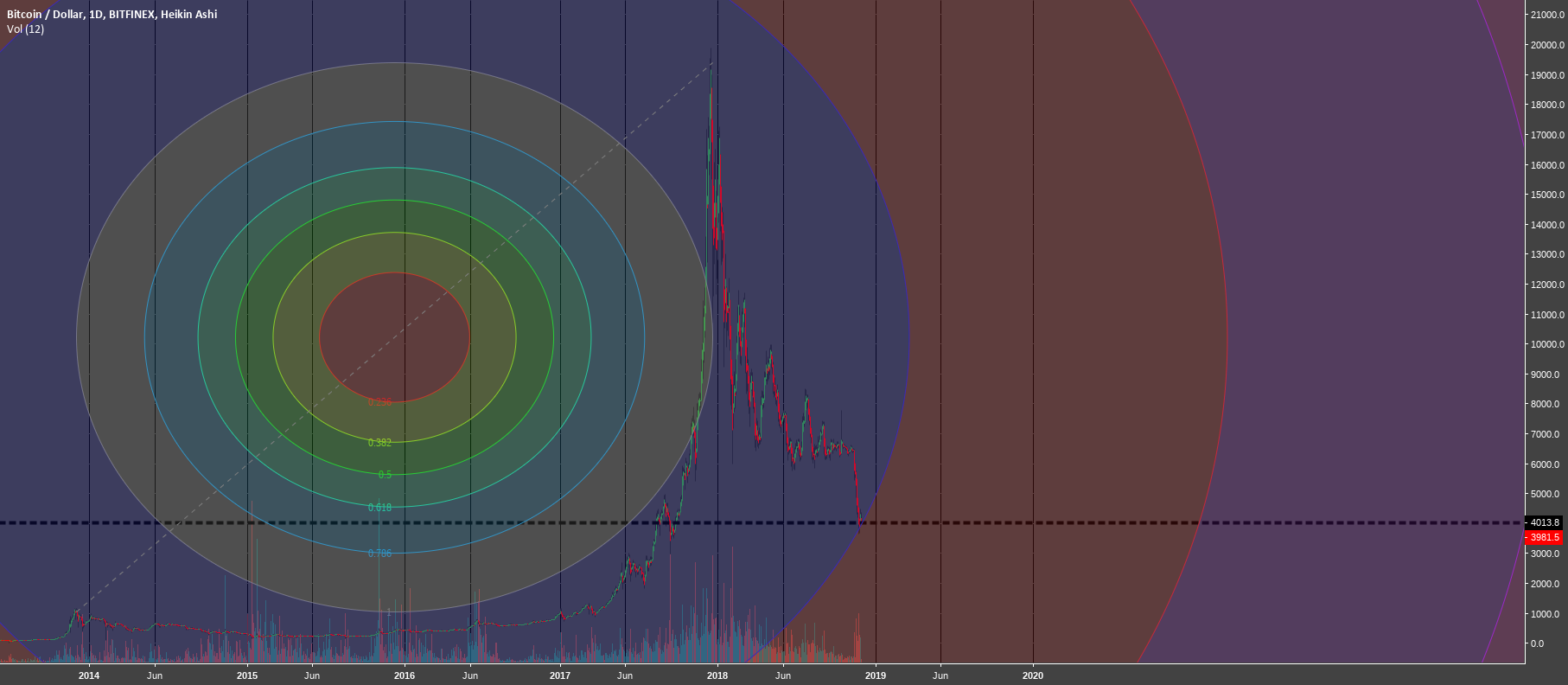
Bitcoin, the number one cryptocurrency by market cap fell more than 80 percent from its all-time high value in 2018. The story was similar for all the other altcoins which saw their price erode in the range of 70 to 90 percent.

The fall in price has vastly razed down the funds available for companies in the industry, and seeing this potential opportunity, many firms have flocked to the business of lending loans to companies in exchange for collateral. By taking collateral assets and margin calls, lending firms mitigate their risk.

To save themselves from the unpredictable fluctuation in the price of digital currencies, lending firms typically lend out only about 50 percent of crypto value as cash loan.

For instance, take the New York-based lending firm BlockFi. The company gives out $10,000 in fiat only if the customer deposits $20,000 worth of cryptocurrencies. Their margin calls are triggered whenever the price falls by 35 to 60 percent from the price at which it was pledged.

Zac Prince, BlockFi’s CEO, recently stated that the company has seen its revenues grow 10x since June 2018. He added that the company is planning to offer more products in 2019, including a savings account where clients can earn interest on their crypto holdings.

Like BTCMANAGER? Send us a tip!

Our Bitcoin Address: 3AbQrAyRsdM5NX5BQh8qWYePEpGjCYLCy4

Published at Wed, 30 Jan 2019 12:07:57 +0000

Previous Article

Galaxy Digital Looks to Raise $250 Million for Lending Business

Next Article

Fidelity’s ₿itcoin Custody Service Set For Launch in March

You might be interested in …

Register #Perucoin Airdrop To Get #PERU Coins Free

Blockchain on Medium Register #Perucoin Airdrop To Get #PERU Coins Free Register #Perucoin Airdrop To Get #PERU Coins Free Continue reading on Medium » more info… Dear friends Continue reading on Medium » more info… […]

Can CREDO Take Its Place Alongside Visa and Mastercard?

Saint Petersburg, Russia-based CREDO have developed what is being dubbed a “next generation payment system” that makes everyday shopping easier for both buyer and seller alike.

[Note: This is a sponsored article.]


What is CREDO?

CREDO is a multi-functional payment system based on a financial algorithm that involves the participation of an independent agent in the transactions of purchase and sale of goods or services. Also called a derivative, the Electronic Certificate enables the parties (buyer and seller) to assume the right or obligation to perform certain actions with respect to the underlying asset.

Some of the features of CREDO include:

  • Innovative multi-brand loyalty program
  • Ultra-high discounts for all types of goods and services
  • Electronic certificates sold for crypto-currency
  • Electronic card linked to a personal bank card
  • Internal processing system independent of any banks
  • High-speed payment system using NFC technology
  • POS-terminals and EMV Java Cards
  • Created to work everywhere in the world just like VISA or MasterCard

CREDO internationality

CREDO’s primary competitive advantage is its internationality. Users of CREDO can buy and sell with any currency and from any country in the world. The payment model is extremely efficient and applicable not only to goods and services but intangible and tangible assets as well. It allows credit and payment operations not only through classic financial markets but through cryptocurrency as well.

Oksana Evseeva, an expert on international investments certified IFRS by the Institute of Financial Accountants in London, weighed in on the potential of CREDO in the global marketplace:

CREDO could be comparative and competitive as Visa and MasterCard using its model on B2B and C2C markets. […] It could work as on B2C as on B2B and C2C markets combining current financial and new crypto-currency markets.

B2C Payment Platform

CREDO’s B2C model works similar to a customer loyalty programs but gives more opportunities for market coverage. Customers can buy goods and/or services at a discount from any participating merchant around the world.

The basic mechanism of transactions in CREDO in B2C sector is as follows:

  1. The Retailer issues emission of Electronic certificates (Derivatives) for future sales of its goods/services
  2. The Operator works with the Retailer, providing payments for Derivatives, and also with Clients, providing sales of Derivatives, with a discount in case of rising clients’ base and loyalty
  3. Clients buy Certificates for goods and services.

The end result is a win-win for all participants. Retailers get more customers and increased working capital, Operators get an increased client base and profit margin, and customers end up paying less for the goods and services they purchase.

CREDO is Real World Tested

Unlike many ICO projects that seek to raise capital to fund the development of their service or platform, CREDO is already being used in real world scenarios, having undergone rigorous testing to ensure full compliance and adaptability for both domestic and international cross-border transactions.

Konstantin Galibus, CEO & Founder of CREDO

Konstantin Galibus, CEO & Founder of CREDO, describes some of their earlier tests:

We carried out a transaction in Europe through Deutsche Bank and VTB Bank in Russia executed a cross-border transfer for purchase liabilities of one of our Spanish counterparties. While Deutsche Bank, which acted as a correspondent bank, suspended the transfer of funds until the transaction structure was explained, when the processing model CREDO was presented to Deutsche Bank and the economic feasibility was proved, the funds were released and the transaction was concluded with success.

This example demonstrates not only the adaptability of our system to the strictest requirements of international banks but also our willingness to ensure cross-border transactions using an absolutely independent financial instrument.

Since then, CREDO has been used by over 1000 customers throughout China, UAE, Spain, and Russia. Over 9000 transactions have been completed totaling over 16,120,000 EURO. In a recent tweet, CREDO announced that additional pilot projects are in the works:

//platform.twitter.com/widgets.js

According to the project whitepaper:

CREDO has a patent for the designed system. The functional of the business model of CREDO has already been provided with all the necessary software and hardware and confirmed by positive test results in Europe. CREDO is a real financial project with its own technical processing, POS terminals, and EMV Smart Cards.

CREDO Pre-ICO in Progress

Launched on June 25, 2017, CREDO’s first round Pre-ICO is already under way. The ICO seeks to raise $5.5 million USD. Funds raised during the ICO will be used to:

  • Fund the cash turnover and create a new Operator in the system needed for the Cash-Forward payment model of CREDO’s B2C platform
  • Overall system improvements
  • Marketing

The Pre-ICO ends on July 10, 2017, after which it will transition into the main ICO. Investments in the ICO can be made with bitcoin, Litecoin, or Ethereum.

For more information about CREDO please visit their official website or download their whitepaper. CREDO’s ICO is being hosted at ICO Marketplace.

Does CREDO have the potential to take its place alongside Visa and Mastercard? How will it affect mainstream adoption of cryptocurrency? Let us know what you think in the comments below.


Images courtesy of CREDO, Shutterstock

The post Can CREDO Take Its Place Alongside Visa and Mastercard? appeared first on Bitcoinist.com.