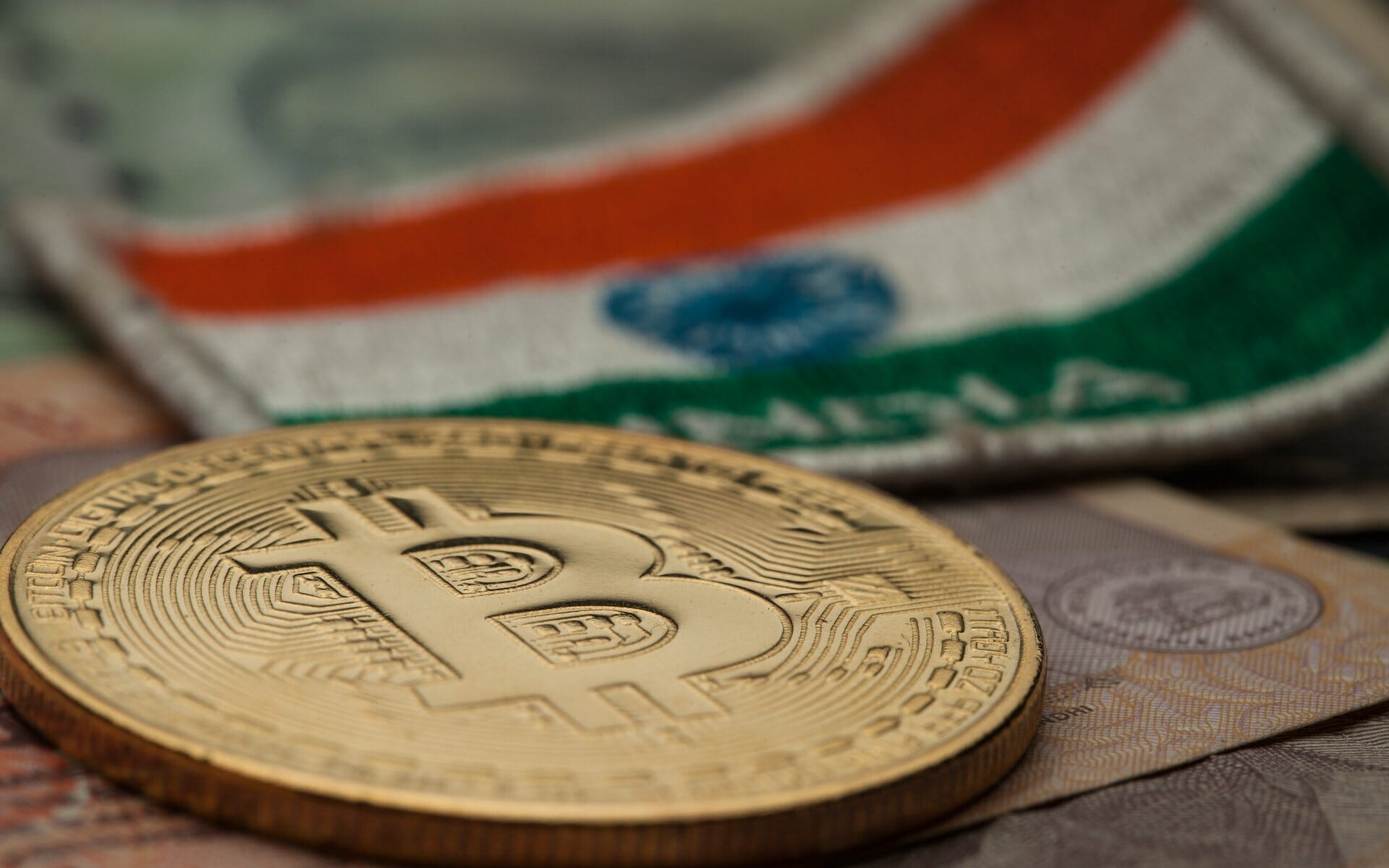
Friday FUD Busting: India’s ‘Bitcoin Ban’ Will Not Impact Exchanges
· April 6, 2018 · 10:30 am
India is once again a center of misinformation over cryptocurrency regulations as fresh reports erroneously claim its central bank has banned trading.
Devil In The Detail
Following a from the Reserve Bank of India (RBI) April 5, which addressed various economic issues, multiple media reports began claiming a of bitcoin and other cryptoassets was imminent.
“…With immediate effect, entities regulated by RBI shall not deal with or provide services to any individual or business entities dealing with or settling VCs,” the statement announced.
On social media, commentators and Indian users rallied to show their opposition to the move, which also requires any financial institutions currently servicing virtual currency businesses to “exit their relationship” within three months.
A hashtag has begun circulating on Twitter, while a insisting the central bank reverse its course has received almost 9000 signatures.
Dear , F**K YOU : Seems like they can!! 😫
Raise your voice against ‘s Worst decision ever by signing this petition below 👇🏻
— Crypto India News (@CryptoIndiaNews)
Sound Familiar?
However, the impact on India’s rapidly-growing exchange sector will likely remain limited, given the lack of official relationship many operators have with the banking system.
Exchanges such as Zebpay and Unocoin, perhaps the best-known in the domestic Indian market, have yet to issue official comments about the statement.
On Twitter, Zebpay CEO Ajeet Khurana nonetheless adopted a defiant yet palpably rattled tone.
“No way I am stopping,” he .
We will continue to do what is best for our customers, and what is best for our country. Am studying the present situation and will react shortly. and we will emerge stronger.
India’s road to bitcoin regulation has been a turbulent one. Earlier this year, finance minister Arun Jaitley’s saw a similar wave of fear grip markets, bitcoin falling as fears emerged of a ban which were similarly stoked by the local and international press.
What do you think about India’s central bank wanting to halt cryptocurrency ties? Let us know in the comments below!
Blockchain Experts Tell Congress How Crypto Tech Can Combat the Flow of Counterfeit Goods Advertisement Join our community of 10 000 traders on Hacked.com for just $39 per month. Leveraging blockchain technology can help improve […]
BTC-ECHO Bis dass der Code uns scheidet: Erster Smart Wedding Contract in Österreich In Österreich haben sich zwei getraut, einen blockchainbasierten Ehevertrag zu schließen. Source: BTC-ECHO Der Beitrag Bis dass der Code uns scheidet: […]
Holding cryptocurrency is all very well, but these days it hardly seems to be used to pay for anything. Merchant uptake is slower than the momentum needed to reach the mainstream. The merchants still take cash, but transferring between the two is an extra step that we could do without. Paycent may just be the crypto-fiat bridge we are looking for, with a whole host of other benefits too.
[Note: This is a sponsored article.]
What is Paycent?
Paycent is, in essence, a mobile payment system. It functions as a dual e-wallet which can be funded by both cryptocurrencies and fiat within the same app. It also allows conversion from crypto to fiat and vice-versa, in real time and from within the wallet, acting as an internal exchange.
Over a thousand online merchants and counting already accept Paycent as a method of payment. However, the option of having a debit card linked to your wallet opens up 36 million points of sale in over 200 countries. This includes withdrawing local currency from ATMs worldwide.
Paycent already has an established fiat network and is collaborating with mainstream financial institutions and governmental regulators, to both expand this network and push into the world of cryptocurrencies.
They already have regulatory licenses in UAE and the Philippines, along with approval in principal in Hong Kong and Singapore. Negotiations are also underway to host the Paycent Realtime Exchange in Dubai, with the oversight of the Central Bank of UAE.
In addition to this, Paycent is in tier 2 talks to acquire a physical banking presence in the Philippines. Paycent would function as the online channel for the bank, providing financial services to the unbanked.
They are also in advanced talks with Egypt and Jordan to develop and host a unified digital payment infrastructure for their banking and government services.
Why should I invest?
Investors in the ICO starting on November 2nd will receive PYN tokens. Holders of these tokens will receive rewards paid in ETH. These rewards will initially be paid quarterly and are as follows:
33% of the aggregate exchange rate profit for crypto to fiat and fiat to crypto, converted using the Paycent dual e-wallet.
33% of the total interest profit on microloans to Paycent lenders.
Users of the Paycent Debit Card will also receive an additional 0.1% of each spend in PYN tokens. Investors of 100 or 500 ETH or more are eligible for special debit cards which increase these loyalty rewards to 0.5% and 1% of each spend.
These ‘cash-back’ reward tokens will create a secondary distribution of PYN tokens, creating an open market for PYN, with price support and increase.
Token Sale is getting nearer and we want you to be informed! These are the recommended wallets:
— Paycent (@PaycentGlobal)
How can I invest?
Paycent already concluded their pre-ICO, reaching the hard cap of 22,500 ETH in 10 days. Around 857 contributors took part from over 41 countries.
The main ICO is being held in 8 separate phases over the course of four years. There is a minimum investment purchase of 15 PYN and investors can participate using Ethereum, bitcoin, or Litecoin.
The first phase of the ICO begins on November 2, 2017, at 9 am Singapore time (UTC+8) and will last for 7 days or until the Phase 1 hard cap of 30 million PYN has been reached.
Bonus incentives are being given to encourage participation:
First 24 hours: 27% bonus PYN
Days 2 – 4: 18% bonus PYN
Days 5 – 7: 12% bonus PYN
Subsequent ICO phases are scheduled as shown below, with existing token holders receiving generous bonuses:
Phase 2 (Last week of May 2018)
Hard cap: 35 million PYN
25% bonus to PYN token holders
Phase 3 (2nd week of November 2018) Hard cap: 35 million PYN
23% bonus to PYN token holders
Phase 4 (Last week of May 2019) Hard cap: 35 million PYN
21% bonus to PYN token holders
Phase 5 (2nd week of November 2019) Hard cap: 35 million PYN
19% bonus to PYN token holders
Phase 6 (Last week of May 2020) Hard cap: 30 million PYN
17% bonus to PYN token holders
Phase 7 (2nd week of November 2020) Hard cap: 30 million PYN
15% bonus to PYN token holders
Phase 8 (2nd week of November 2018) Hard cap: 22,045,000 PYN
13% bonus to PYN token holders
For more information about Paycent please visit .
Do you think a ‘bridge’ between cryptocurrencies and fiat currency is something that the crypto community needs? Let us know in the comments below.