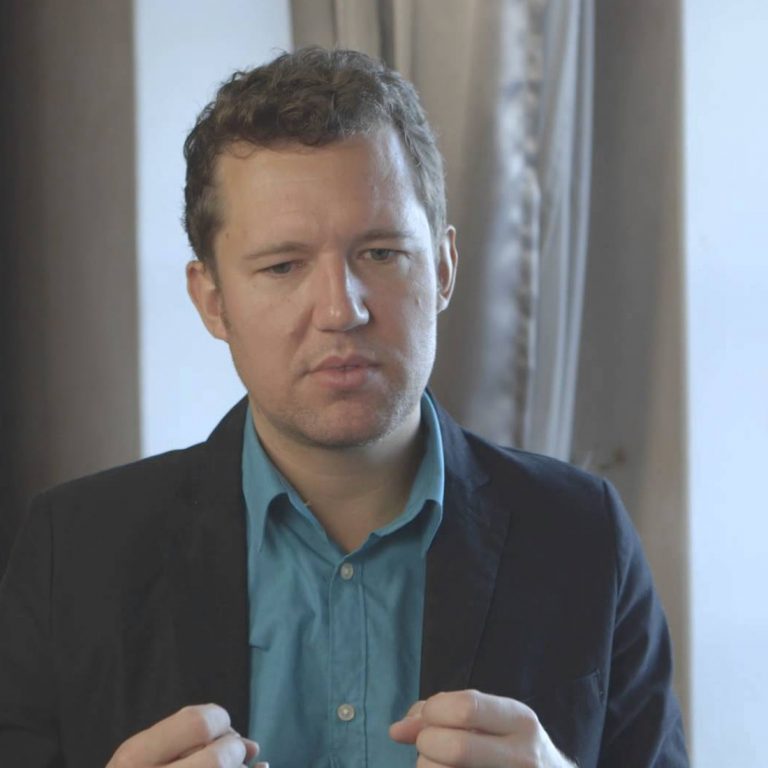
On April 5 the former bitcoin core developer Mike Hearn came back to do an Ask-Me-Anything (AMA) on the Reddit forum /r/btc. It’s been a while since Hearn has chatted with the bitcoin community, and one could say he left the development scene a few years ago due to the vitriolic strife over the scaling debate. Hearn explains ever since the birth of the bitcoin Cash network he’s been getting a lot of emails asking him to return and help develop the nascent BCH blockchain.
Also read:
Mike Hearn Discusses bitcoin Cash and His Project Corda With the Community
Mike Hearn is a well-known figure within the bitcoin community, as he was the first developer to author the Bitcoinj client a library that uses Java and connects with the bitcoin network. Further, Hearn has talked with Satoshi Nakamoto numerous times over . The developer was also a contributor to the bitcoin core development team and he left in January 2016 , and rising network fees. Since then Hearn has joined the banked-backed R3 Cev project, and he’s been building a distributed ledger project called ‘Corda.’
Hearn has a lot to say about Corda and says the project “scales a lot better than bitcoin, even though bitcoin could have scaled to the levels needed for large payment networks with enough work and time.” Hearn explains that this is possible because Corda doesn’t use the Proof-of-Work consensus mechanism. Corda doesn’t have a native cryptocurrency as Hearn says the protocol is an app platform much like ethereum so coins can be created on top of the .
‘Worth Considering How Frequently You Want to Hard Fork’
Hearn then discusses what he thinks about the past hard forks and even the latest slated to bump the block size up to 32 MB.
“Hard forking is an implementation mechanism, not a governance mechanism. Governance is a process, and often an institution, for arriving at a decision — A hard fork is just the software event that makes it real,” Hearn states during his scheduled AMA. “I note with some alarm that bitcoin cash is planning a timed hard fork in just one month, with no attempt to measure support or whether people are ready or even agree — The content is not going to be controversial in this community now, but a lot of organisations would find it hard to schedule and test a software upgrade on one month’s notice,” he adds.
There’s a risk that miners who do upgrade will be split onto a minority chain by accident even if everyone intends to upgrade, and have to roll back, making them even more conservative than they already are.
bitcoin Cash Strongly Resembles the bitcoin Community of 2014
Hearn then goes on to respond to another question and reveals that he thinks the bitcoin cash ecosystem strongly resembles the BTC community back in 2014. He tells the /r/btc AMA participants to “liberate themselves from just proceeding along the path Satoshi imagined and be willing to think radical, even heretical thoughts.”
“That experiment [bitcoin] was tried and it didn’t work. It’s tempting to think that what happened was a freak one-off occurrence, but I don’t think it was,” the former core developer states. “I think it was inevitable given the structure and psychological profile of the community at the time. So just trying to ‘get back on track’ as I see it, is nowhere near radical enough.”
The developer says the bitcoin cash community does need to address methods to deal with certain conflicts. Hearn states the conflicts as being:
Bitter, enduring conflicts between two opposing camps of roughly equal size who can never make up.
Very different attitudes towards perceived experts, intellectuals, towards academic qualifications etc.
A win-at-any-cost mentality by one of the camps.
Different views on the validity of the preferences of the majority / “will of the people” etc.
These conflicts cannot be avoided but they can be contained and channeled. If the bitcoin community doesn’t establish systems for containing this conflict it will arise again over some issue that appears superficially different to the block size debate, but underneath looks much the same.
Hearn further states he won’t be joining the current developers working on bitcoin cash network and plans to continue exploring his Corda project.
“I don’t plan on returning to bitcoin but if you’d like to know what sort of things I’d have been researching or doing, ask about these things. I do not own any BCH,” Hearn adds.
What do you think about Mike Hearn’s /r/btc forum AMA? Let us know what you think about Hearn’s responses in the comments below.
Images via Pixabay, and Youtube.
At .com all comments containing links are automatically held up for moderation in the Disqus system. That means an editor has to take a look at the comment to approve it. This is due to the many, repetitive, spam and scam links people post under our articles. We do not censor any comment content based on politics or personal opinions. So, please be patient. Your comment will be published.
The post appeared first on .
As per the latest reports from , a subsidiary of the Taiwan-based technology giant Foxconn will develop and manufactured the blockchain smartphone codenamed ‘Finney’ from Swiss startup Sirin Labs. Last year owing to a huge surge in the crypto craze across the globe, the company announced Finney which is an Android-based open-source ‘blockchain’ smartphone which hosts some of the very interesting features.
The Finney blockchain smartphone will have a cold-storage cryptocurrency wallet along with other facilities of peer-to-peer sharing and encrypted communications. The phone will also provide the facility of simple conversion between crypto tokens and Sirin Labs is also expected to develop an app store hosting all the decentralized applications (DAPPS).
The report also stated that ‘It will let owners shop on crypto friendly sites like Overstock.com and Expedia, converting cash into specialized tokens if needed. Users may also activate their phone’s Wi-Fi while commuting and get paid in tokens by fellow bus riders looking for access to a wireless network.’
Bloomberg reports that the blockchain smartphone will be shipped around October this year for a price of $1000 and initially will be sold on eight new stores that will be placed at crypto hotspots around the globe like Turkey and Vietnam. Sirin Labs CEO Moshe Hogeg said that if the demand picks up it is possible that the phone may be sold eventually through mobile carriers as well.
Currently, managing your digital currency investments is a bit tricky process especially for new and novice investors within the crypto space. To keep them secured and free from online phishing, one needs to adopt the cold-storage method of saving the digital assets on a piece of hardware not connected online. However, this comes with additional responsibilities of users of everytime remembering the usernames or passwords that can possibly be a dozen character long.
During an interview, Sirin Labs CEO Moshe Hogeg said that with the company aims to provide users with a hassle-free experience while managing their crypto assets. Moshe said that with the current experience it is difficult to expand it to mass markets. Moshe said: “There’s no chance my mom can figure out how to use bitcoin, and my mom is smart.”
He further added “I want to do something that’s better than the current user experience. In the end, when you look at the Chinese wall, it started with one guy taking one small brick and putting it into place. And then another one and then another one. We can do it step by step.”
Back in December 2017, Sirin Labs raised $158 million for this project through an Initial Coin Offering (ICO) which is in addition to $70 million raised previously. Sirin Labs is already said to have received 25,000 orders for the Finney blockchain smartphone and for 2018, the company is targetting sales of around 100,000 to several million handsets.
Reports are that Sirin Labs is looking forward to licensing its technology to other manufacturers in an attempt to bring down the smartphone’s cost to as low as $200.
The post appeared first on .