
The Financial Action Task Force (FATF) — an intergovernmental organization founded to develop policies against money laundering and terrorism financing — is even more squarely setting its sights on regulating, supervising, and monitoring providers of services for digital assets.
Specifically, has admittedly been working on an Interpretive Note to Recommendation 15, which how the FATF standards apply to activities or operations involving virtual assets. As has been the case for quite some time, the discussion is firmly centered on the idea that cryptocurrencies are used for money laundering and terrorist financing — despite the fact that many, like bitcoin (BTC), feature a distributed public ledger that allows skilled investigators to trace immutable transactions that cannot be changed, altered, or deleted.
The Interpretive Note states that countries should define virtual assets as “property,” “proceeds,” “funds”, “funds or other assets,” or other “corresponding value.” As such, “countries should identify, assess, and understand the money laundering and terrorist financing risks emerging from virtual asset activities.”
Virtual Asset Service Providers (VASPs), according to FATF, should be appropriately regulated and monitored. (Or, in another word, controlled.) “Countries should ensure that beneficiary VASPs obtain and hold required originator information and required and accurate beneficiary information on virtual asset transfers, and make it available on request to appropriate authorities,” states the Interpretive Note, while also stating that, “Countries should ensure that there is a range of effective, proportionate and dissuasive sanctions, whether criminal, civil or administrative, available to deal with VASPs that fail to comply with AML/CFT requirements.”
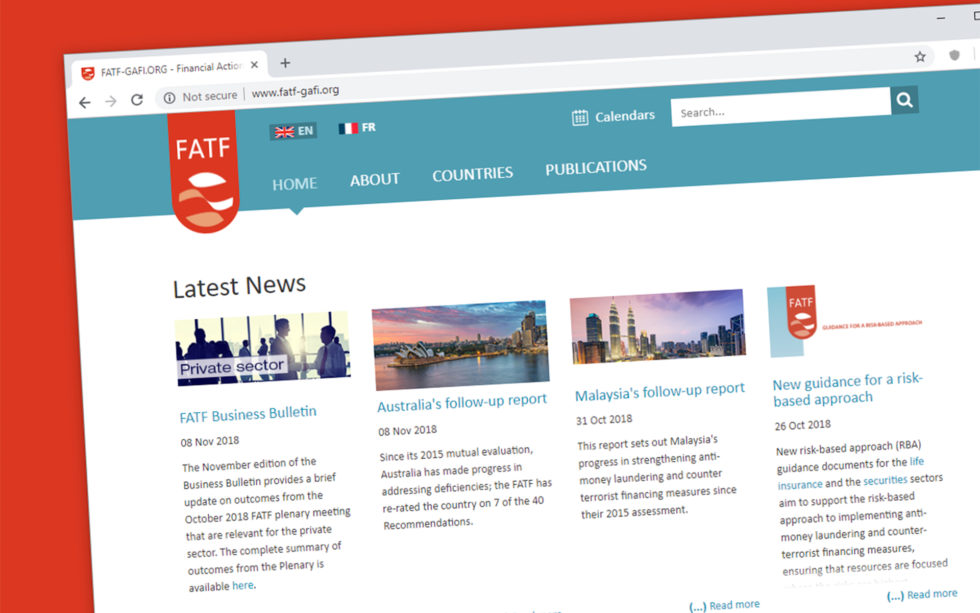
In short, a prominent financial regulator unsurprisingly wants cryptocurrencies — which pose a significant threat to legacy financial institutions, central banks, the status quo, and those who aren’t particularly fond of individual financial freedom — to be strictly regulated and monitored.
Who would have thought?
What do you think about The Financial Action Task Force’s directions regarding virtual assets? Let us know your thoughts in the comments below!
Images courtesy of Shutterstock.
The post appeared first on .

is author of this content, TheBitcoinNews.com is is not responsible for the content of external sites.
source:
TheBitcoinNews.com is here for you 24/7 to keep you informed on everything crypto. Like what we do? Tip us some Satoshi with the exciting new Lightning Network Tippin.me tool!
Published at Mon, 25 Mar 2019 04:00:01 +0000
