Regulation: It’s good for you, but it’s going to hurt.
That seemed to be the main takeaway for the cryptocurrency industry from Monday’s Business of Blockchain conference at the Massachusetts Institute of Technology (MIT).
On the one hand, the event was clouded by speculation that the U.S. Securities and Exchange Commission (SEC) may go as far as to classify two of the top three coins by market cap, ethereum and Ripple’s XRP, . Such a determination could subject a wide swath of industry members to legal penalties – far beyond the promoters of recent initial coin offerings (ICOs) who were already on alert the last few months.
Those fears were reinforced late in the day when Gary Gensler, an old lion of financial services regulation, confirmed for the crowd that in his view, bitcoin’s two largest rivals may fit the description of securities in U.S. law.
“Ripple Labs sure seems like a common enterprise, or the Ethereum Foundation in 2014,” said Gensler, a former chairman of the Commodity Futures Trading Commission. “Ripple is doing a lot to advance the value of XRP.”
(The so-called says something is a security under U.S. law if it is an investment in a “common enterprise” offering an expectation of profits from the efforts of others.)
Yet, on the other hand, the general sentiment at the event was optimistic about regulators’ growing involvement in the space.
Neha Narula, director of the Digital Currency Initiative at MIT Media Lab, for example, told CoinDesk insufficient regulation can actually stifle innovation by deterring honest players because rampant scammers undermine market integrity.
And aligning with Gensler, Narula said, there need to be more honest conversations about the fact that many emerging cryptocurrencies are actually securities.
However, there may not be a bright line separating the two.
As Narula said:
“We’re realizing money versus equity isn’t a binary choice. It’s a spectrum.”
Coming pain
And that realization could have a serious impact on the cryptocurrency industry.
Patrick Murck, counsel at Cooley LLP and fellow at Harvard’s Berkman Klein Center for Internet & Society, told CoinDesk the token economy could be on the verge of a dramatic shift if the SEC agrees with Gensler.
If ether and XRP are deemed securities, cryptocurrency exchanges and general industry promoters or foundations, or anyone who sold or evangelized projects like ethereum to the general public, could be subject to legal penalties.
“It would be like shooting fish in a barrel,” Murck said, adding:
“There’s nothing magical about the blockchain that absolves you from investor protection regulations if investors have to trust you to deliver something.”
Driving that point home, Gensler in his talk cited several reasons that the way ethereum and XRP were issued and traded seemed to meet the definition of securities.
For example, the 2014 ethereum crowdsale would have created an expectation of profit for the people who purchased tokens before the network went live.
“The Ethereum Foundation offering had a 50 percent appreciation right in the first 42 days written into the offering,” Gensler said on stage. (The industry think tank in Washington, D.C. promptly issued a statement that “ether is not a security,” rebutting Gensler’s argument.)
Meanwhile, for issuers of new tokens, it’s almost impossible to walk the line, even with more feedback from regulators and lawyers.
For example, so-called airdrops, once viewed as a way to avoid breaking securities laws by simply sending free tokens to people who already have some type of cryptocurrency wallet, are instead creating a damned-if-you-do, damned-if-you-don’t situation.
If issuers fail to collect information about recipients of airdrops, they may inadvertently violate international sanctions (what if that wallet belongs to someone in Iran?). On the other hand, if they do collect such information, the airdrop may start to look like an investment in regulators’ eyes, according to Murck.
“The SEC has interpreted the first prong of the Howey Test broadly,” Murck told CoinDesk. “The collection of information may be enough to fit the first prong” – pegging an airdrop as “an investment of money.”
Long-term gain?
Even so, Murck joined others at the conference in welcoming regulators’ participation in the space.
“They’re becoming a part of our blockchain community and that’s a valuable thing,” Murck said.
Part of the value is clearing up uncertainty.
The shortage of such clarity was illustrated during a talk by Kathleen Breitman, a co-founder of the Tezos project.
When asked whether securities regulations apply to her project’s tokens, Tezzies, she responded:
“I don’t know. I don’t mean to play coy, I’m not just an attorney…I would recommend token holders comply with relevant laws.”
But Gensler said legal clarity is slowly emerging in this red-hot market.
“If you do an issuance now, in April 2018, do it under U.S. securities laws,” said Gensler, who is now a senior lecturer at the MIT Sloan School of Management, “It’s better to bring it into a public policy framework, even if there’s a little bit of a chill.”
And perhaps some cooling off would be healthy. MIT’s Narula said she is deeply concerned about the lack of due diligence completed for many, if not most, cryptocurrency projects. Just because the code is open source doesn’t mean that knowledgeable people have evaluated it.
“A lot of investors don’t know that. They go by signaling,” Narula said. “A lot of projects have had some pretty fundamental flaws that were exposed only after a project launched.”
If nothing else, the excited chatter in the halls of MIT suggested that regulatory encroachment has yet to put a damper on the energy being channeled into blockchain tech.
Amber Baldet, the former JPMorgan Chase blockchain expert, said what makes her optimistic about the space, writ large, isn’t skyrocketing coin prices or even regulatory clarity on the horizon. It’s the explosive growth of this community in the wake of the 2017 boom.
“In order to have an internet of value, people are going to have to interact with each other,” Baldet said, speaking to the need for an ecosystem that includes everyone from enterprises like her former employer to accredited investors to retail investors.
She concluded:
“You meet thousands of people tackling these challenges in unique ways.”
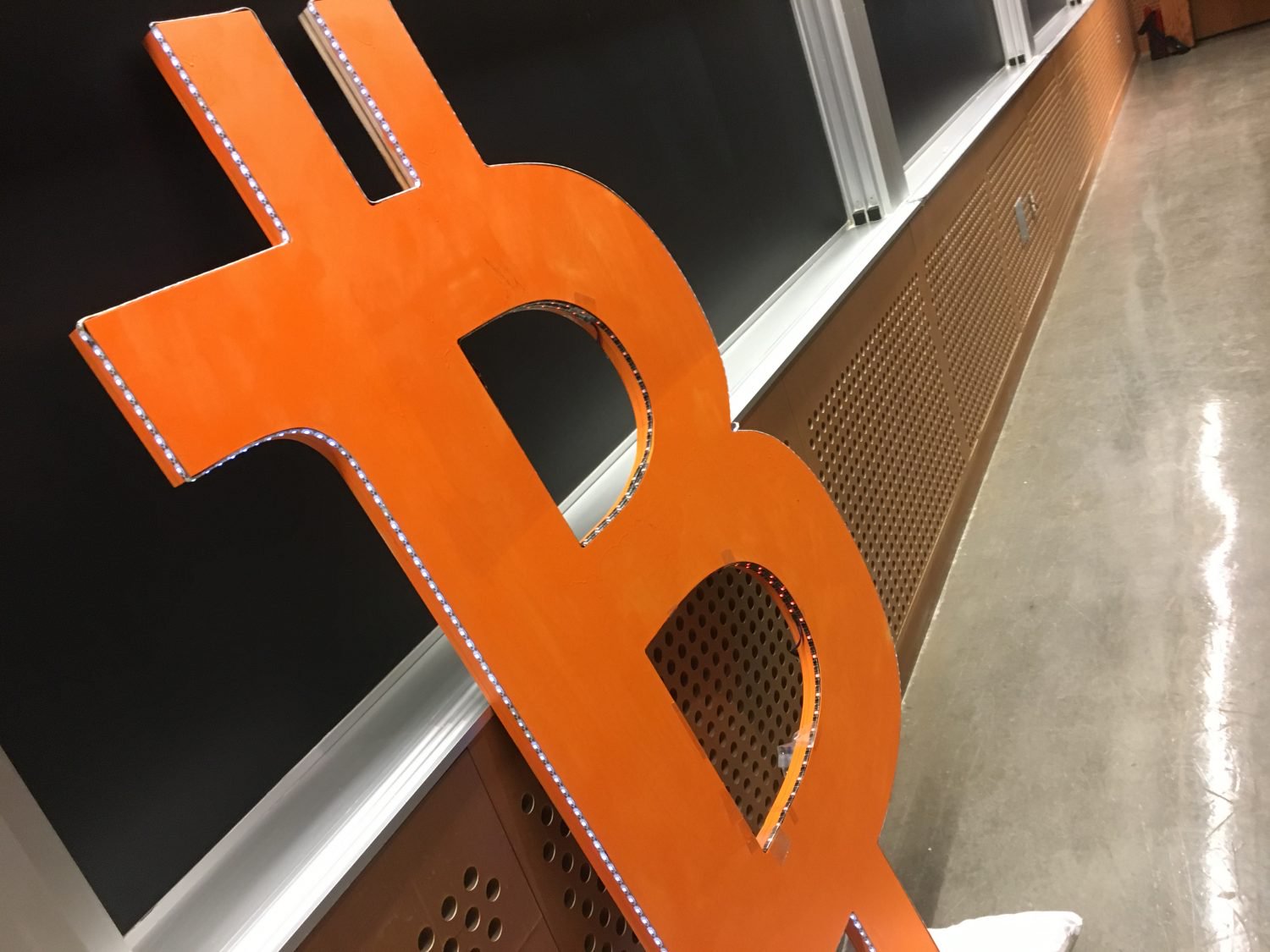
Image via Pete Rizzo for CoinDesk.
The leader in blockchain news, CoinDesk is a media outlet that strives for the highest journalistic standards and abides by a . CoinDesk is an independent operating subsidiary of Digital Currency Group, which invests in cryptocurrencies and blockchain startups.
Published at Tue, 24 Apr 2018 02:30:47 +0000
Features[wpr5_ebay kw=”bitcoin” num=”1″ ebcat=”” cid=”5338043562″ lang=”en-US” country=”0″ sort=”bestmatch”]