August 23, 2026

Capitalizations Index – B ∞/21M

FBI Arrests Individuals Suspected of Involvement in Running Dark Web Marketplace

Fbi arrests individuals suspected of involvement in running dark web marketplace

FBI Arrests Individuals Suspected of Involvement in Running Dark Web Marketplace

Fbi arrests individuals suspected of involvement in running dark web marketplace

According to a report by TechCrunch published May 7, 2019, the Federal Bureau of Investigation (FBI) has arrested several individuals suspected of running the deep web search engine called Deep Dot Web.

Suspects Nabbed

Although not all users might be aware of the web’s dark side, it’s safe to say that the portrayal of the dark web in pop culture as the underbelly of the Internet has piqued the interest of many. However, the reality of this aspect of the digital experience is often much grimmer than what commentators let on.

This reality was reaffirmed when the FBI arrested two individuals in Israel suspected of involvement in running Deep Dot Web, a website infamous for granting users access to dark web sites and marketplaces for the purchase of drugs, weapons, stolen credit card information, and other illicit material. The two individuals were arrested in Tel Aviv and Ashdod.

Per sources close to the matter, similar arrests were also made in France, Germany, the Netherlands, and Brazil. The crackdown on dark web criminals is the result of a carefully planned two-year long operation involving the FBI and the European police agency Europol.

The Times of Israel reports that the administrators of Deep Dot Web likely made millions of dollars through a commission by offering referral links to dark web marketplaces.

It’s worth highlighting that dark web addresses can only be accessed at .onion domains through Tor Browser. Users are able to avoid being tracked on the Internet through Tor as it bounces traffic through random, unrelated server addresses across the world.

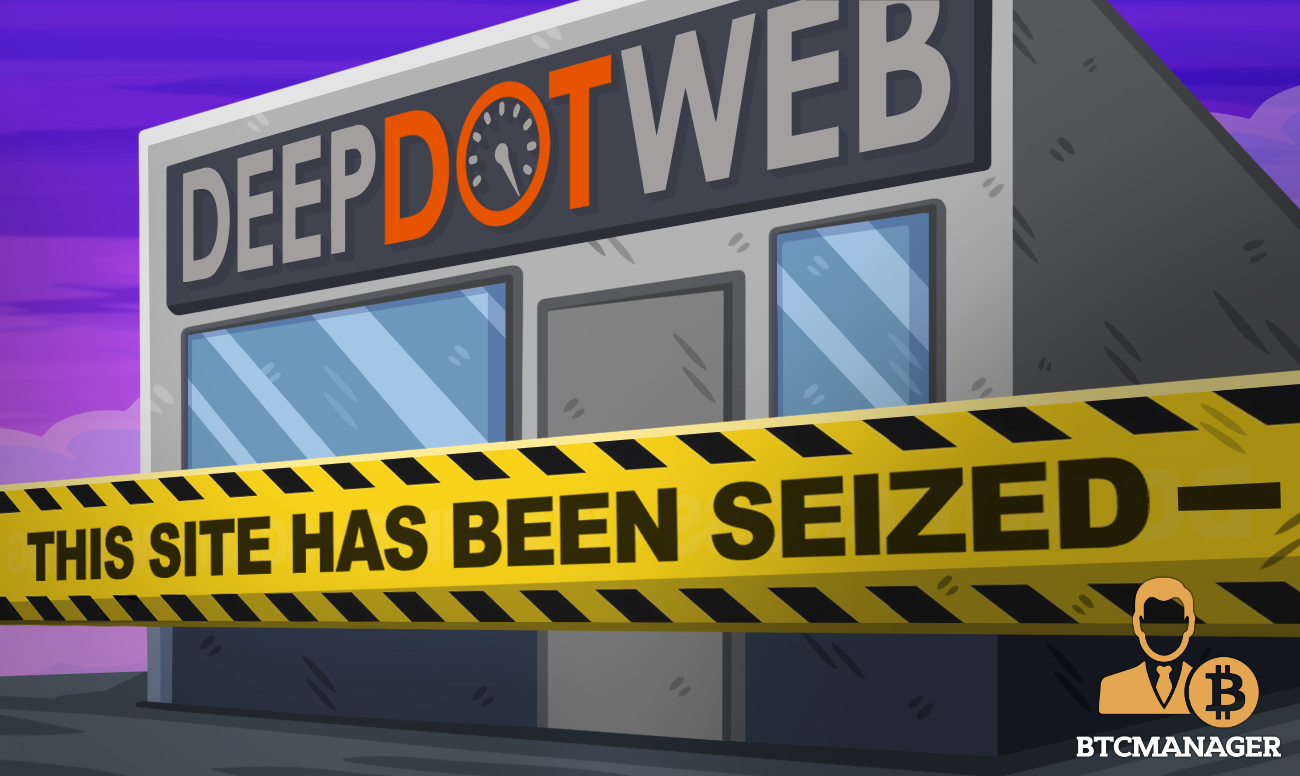
Deep Dot Web’s .onion website now displays a “seized” notice by the FBI citing money laundering laws.

Tightening the Noose

Law enforcement agencies around the world have made it known that people associated with the dark web will no longer have it easy.

BTCManager reported on April 25, 2019, how two men from Texas pled guilty to the Manhattan Supreme Court to selling illegal steroids and drugs on the dark web.

On a more recent note, the German Federal Criminal Police on May 5, 2019, arrested the administrators of the largest dark web market, the Wall Street Market.

Like BTCMANAGER? Send us a tip!
Our bitcoin Address: 3AbQrAyRsdM5NX5BQh8qWYePEpGjCYLCy4

Published at Wed, 08 May 2019 17:00:00 +0000

Previous Article

Tech for Better or Worse?

Next Article

Bitcoin (BTC) Stopped Caring About Bad News, Up 11 Percent

You might be interested in …

Private Capital Market Ecosystems Meet the Blockchain

Private Capital Market Ecosystems Meet the Blockchain

In a move signaling blockchain technology’s continued advancement in the financial world, Hong Kong–based PrivateMarket.io and NY-based Symbiont announced an agreement to build an alternative investment marketplace for closed-end funds utilizing Symbiont’s SmartSecuritiesTM software. The parties anticipate that the marketplace will go live in late 2017.

PrivateMarket’s strategic intent is to ensure that a new generation of wealth managers are able to access, analyze and seamlessly execute primary and secondary market transactions online. Through technology, they deliver concrete solutions that foster a more transparent and efficient private capital market ecosystem.

In a statement, Loïc Engelhard, founder and CEO of PrivateMarket.io, said he welcomed the partnership, noting that the security and privacy elements being delivered by Symbiont are of paramount importance for his company’s success. In particular, he touted the ease of integration and fit of Symbiont with their own internal processes at PrivateMarket.  

Symbiont is largely known for a smart-contracts platform that tethers to institutional applications of distributed ledger technology. Its growing number of disclosed users include 19 financial institutions for Smart Loans™, arranged by Credit Suisse and executed via Synaps; its syndicated-loans joint venture with Ipreo; the State of Delaware for Smart Records™; a major European insurance company for Smart Swaps™ in the catastrophe insurance market; and Orebits, a provider of asset digitization services. The company’s technology has also been used in markets for syndicated loans and digitized gold claims.

Symbiont was started in early 2015 by Mark Smith, Adam Krellenstein, Evan Wagner and Robby Dermody — all of whom have extensive track records in the bitcoin/blockchain space as well as in fintech. Prior to Symbiont, the trio of Krellenstein, Wagner and Dermody founded Counterparty, the “bitcoin 2.0” open-source project targeting digital representation of non-bitcoin assets on the bitcoin blockchain.

In August of 2016, Caitlin Long, a Wall Street veteran of over 22 years, joined Symbiont as chairman of the board and president, assuming responsibility for Symbiont’s commercialization, business strategy and client relationship efforts.

In an interview with bitcoin Magazine, Long discussed how Symbiont’s new partnership with PrivateMarket is designed to provide an enhanced and efficient approach to private capital markets, with private equity and real assets as a main focus.

“The implementation of our blockchain and Smart Contracts solution will increase efficiency, transparency and the speed of the transactions in the antiquated over-the-counter market. It will also improve greatly the security of the private equity market by simplifying complex and highly manual bilateral contracts.”

She also noted that unlike the current state in private equity, where unlisted (investment) vehicles exist, Symbiont’s solution will greatly improve the liquidity of asset classes through the implementation of its SmartSecurities solution.

“We see blockchain technology having a significant positive impact on the investment world, and it starts with the fact that the foundational document for any investment — the registration of a company — will likely soon be possible to do on a blockchain in Delaware.”

Long says that when securities are issued natively on a blockchain, not only can they be administered via smart contracts, but issuers and investors will be able to communicate directly. In addition, she says, payment of dividends can be handled directly, proxy voting will be clear and accurate, share repurchases and tender/exchange offers for bonds will be easy to execute, and the roster of security owners will always be accurate and up to date.  

Long says that amid these advancements, there are also significant opportunities for improvement of business processes in the fund administration business — whether it be mutual funds or private asset funds.  

“At the end of the day, all of these benefits will accrue to end investors, who we’ve always said should be the biggest beneficiaries of blockchain technology in the financial sector.”

The post Private Capital Market Ecosystems Meet the Blockchain appeared first on Bitcoin Magazine.