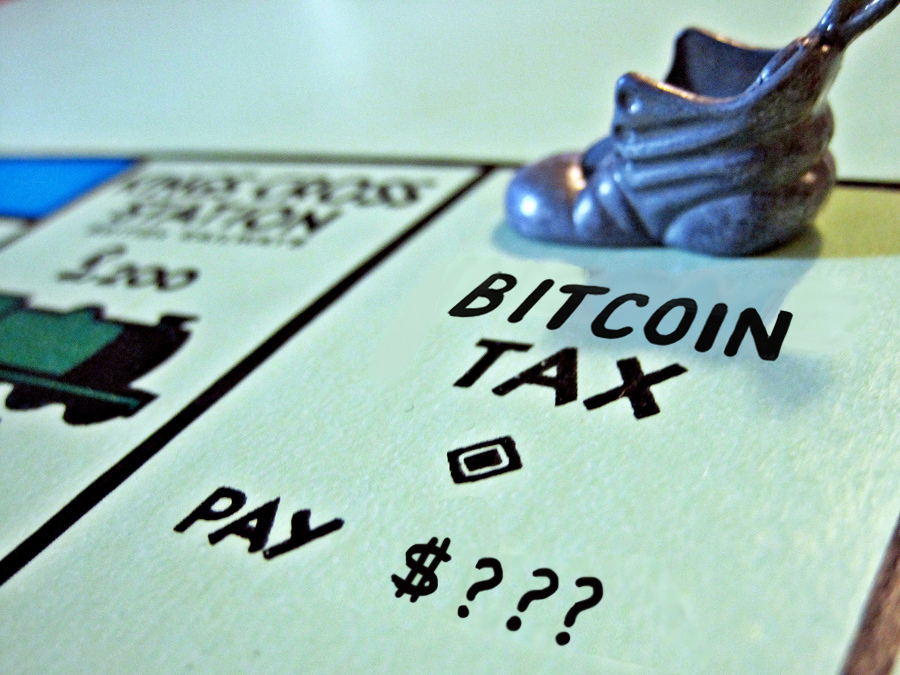
Bitcoinist spoke with Gidi Bar Zakay, CEO and founder of Bittax at the recently held Israel BTC Summit in Tel-Aviv about cryptocurrency tax obligations for users and how the regulatory landscape is taking shape around the globe.
Bitcoinist: Why did you decide to launch Bittax? Are BTC taxes too cumbersome to calculate for the average person?

Gidi Bar Zakay: I’ll admit that, like everyone else, I was also prejudiced against BTC. But when I was approached by the tax authority while serving in a public position at the Institute of Certified Public Accountants and was asked to comment on a circular that they intended to issue regarding bitcoin, I realized it has potential. That this is what the world needs right now.
Not everyone can calculate crypto taxes from their own home. The regular and familiar calculation method – FIFO (First in First Out) – isn’t so simple to calculate either, but calculating tax in a way that will simultaneously represent the actual activity in coins, prevent double taxation caused by the exchange of altcoins, allow the user to present the whole image, prevent data omission and save tax payments on activity that does not reflect an actual transaction, is a complex task which cannot be performed with Excel or a simple calculator at home.
Is your service aimed at Israeli citizens only or is it global?
The service is currently active in Israel but will soon be exported to the USA and then to Europe.
Our company is currently only listed in Israel, but it is expected to operate internationally.
How does it work – how much is it? Is it simply a self-service calculator or do you have experts that can help clients directly?
This is s: the user copies their addresses into the system and receives a full overview of their activity.
The users indicate which transactions belong to them, which were forwarded to a third party and which are taking place at the exchange. If the users do not remember certain transactions, the system will make recommendations and attempt to help them remember.
If the users have reached a full overview, the system will warn them of the missing data. The system is unique because of its calculation method. The system does not use the regular and common methods but performs a specific identification of the coins sold and calculates the tax liability accordingly.
This method, patent pending, of which is in the process of being registered, reduces the tax liability by 70-25%, according to the type and scope of activity.
Of course, if the user requires assistance, we are available to guide and assist as much as possible.

What kind of approach does the Israeli government have on cryptocurrency taxes?
The Israeli tax authority treats cryptocurrency as assets and taxes the profits through the capital gains tax. This decision does not come as a surprise – many governments around the world made it, and it is somewhat understandable. Most people don’t use cryptocurrencies at coffee shops and grocery stores, but as instruments for investment and trade.
Once any person would be able to use BTC for daily purchases, I believe that most governments will acknowledge it is a tax-free coin.
How many people around the world do you estimate owe cryptocurrency taxes today? In other words, how big is your potential market?
When examining the activity data from the different exchanges, we are looking at hundreds of millions worldwide.
How many of them currently pay taxes?
Very few. This process will take time, for both the users and the authorities.
Once the coin owners will understand that regulation will result in international adoption of the coins, and the governments will understand how to collect these taxes and how to proactively approach the users, this process will unfold naturally. I expect to see a large increase in the number of reports filed for 2018 in two or three months and an even greater increase in the reports for 2019.
A in April 2018 revealed most people saying ‘you’ll never catch me’ when it comes to paying taxes on their crypto gains. Is this a problem for the tax agencies? Is it difficult for the gov’t to determine whether an individual owes taxes in this case?
We’ve heard these statements from the global crypto community, and we can understand them. As a group, we believe in the ideology of a decentralized system and find it difficult to accept that someone else does not view crypto as a coin and demands taxes for it. But today, we can see that the authorities around the world receive the information.
The authorities approach some of the exchanges and demand to receive the data. Many countries grant them the power to do so. Some of the exchanges share the information following the authorities’ request, and once the data is in their hands, it is not difficult to reach the users.
Do you think the bear market of 2018 was partially due to the billions owed in taxes from the previous year resulting in ‘massive selling’ as Tom Lee ?
I think that the market’s decline is the positive outcome of people who tried to use crypto in order to make easy money without actual activity backing it, and then left when they realized that the celebration is over. I think that the market is in excellent condition. Those who stayed are the people who truly believe in the future of cryptocurrency and are genuinely interested in developing it.
Considering that 2018 was a downward year for cryptocurrency prices across the board, would filing taxes on crypto losses be particularly recommended this year?
If someone had a profitable activity at the beginning of 2018, through coins or other capital channels, it would be helpful for them to report their losses at the end of 2018. However, it will not be possible to offset losses incurred in 2018 against the huge profits gained in 2017.
What is the best jurisdiction to consider for people who’d like to pay little to no crypto taxes?
The authority to which crypto-related taxes are paid is determined by the user’s tax residency. The tax residency is determined by, among other things, the number of days spent in the country during the relevant year.
Some countries are friendlier towards cryptocurrency, and I’ve heard of some that even treat crypto as a coin. But will a person leave everything and move to another country simply for tax considerations? Then they must have an abundance of crypto… I would love to meet that person. It’s possible that the entire world has been looking for their identity for the past few years.
What are your predictions for the upcoming year? Do you expect more and more people to start paying cryptocurrency taxes?
I believe that in 2019 we will be looking at a continued effort to closely supervise the crypto market by the authorities, accompanied by an increase in tax payments by the users. What matters now is making sure that the privacy of the tax-paying users will not be affected.
Therefore, we are working on a solution which will maintain the privacy of the users throughout their relationship with the tax authorities, and will only expose the necessary information, addresses and personal data not included.
This solution will be beneficial for both the tax authorities and coin owners around the world because it’ll be worthwhile for the users to report their earnings willingly and not wait for the authorities to locate them.
Have you ever filed cryptocurrency taxes? What was your experience like? Share below!
Images courtesy of Shutterstock, Israel BTC Summit, BTCist archives
Published at Mon, 14 Jan 2019 08:00:38 +0000

![Bitcoin [btc] worth $70,000 donated to a twitch gamer playing runescape](https://ohiobitcoin.com/storage/2019/01/DwzowikWwAcwfal.jpg "Bitcoin [btc] worth $70,000 donated to a twitch gamer playing runescape")