
The cryptocurrency market is continuing to experience downtrends, which pushed the market capitalisation below $300 billion during early morning trading on Wednesday. Yet, despite this, one analyst is confident of the market.
According to Mati Greenspan, senior market analyst at eToro, the price volatility of cryptocurrencies is a good thing for advocates of the market, according to a report from .
“At this stage price doesn’t really matter,” he said. “The more sideways movement will increase the likelihood of adoption. We are seeing a pickup in day traders, more people playing the range, which helps the adoption of cryptocurrencies.”
This is despite the fact that market prices have seen a drop in value over the last few weeks. Market factors such as increasing pressure to regulate the market in addition to major companies announcing advertising bans related to the cryptocurrency market have seen coin values fall.
On Tuesday, social media giant on digital currency adverts became effective, which saw market prices slump as a result. Twitter’s ban follows on from the likes of Facebook and .
Despite the downturn in market values, there are many who believe in the future of the cryptocurrency market.
Thomas Lee, head of research at Fundstrat Global Advisors, was reported as saying earlier this month that he believes bitcoin has the potential to reach . At the time of publishing, the number one digital currency is trading at lower than $8,000, at $7,947, representing a near 11.50 percent drop in seven days, according to CoinMarketCap.
Previously, Fundstrat has said that when bitcoin is experiencing an index lower than 27 it sees the best 12-month performance. On the 9th March, bitcoin was at 18.8, the lowest it has been since the 6th September, 2011. It remains to be seen whether or not market prices improve and whether they can achieve new all-time highs from what they have already achieved.
For now, though, many will be watching the market to see what direction it will decide to take. Many, however, will be hoping for an upward trajectory that hasn’t been seen since the end of last year.
The post appeared first on .
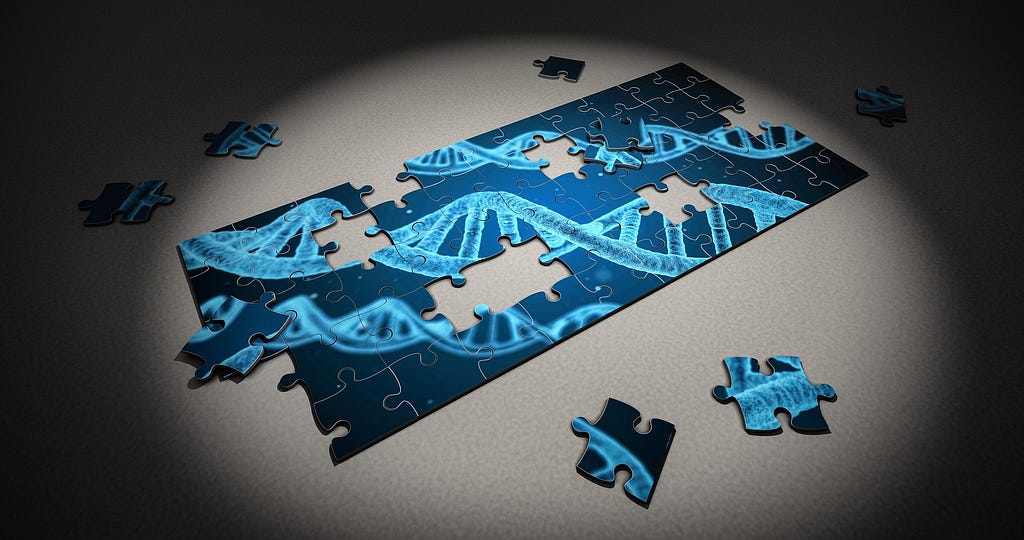
Every person has two copies of their genome, each of which consists of 3 billion DNA letters. We’re more the same than different, with less than 0.1% variance among people — that means the person standing next to you has almost 3 million(!) differences in their DNA.
There is a major drive among academia and biopharma alike to capitalize on the growing cache of available genomic data because it encodes the blueprint for assembling a person, and in the case of diseases like cancer, researchers can study the function of DNA changes between normal organ tissue and tumor tissue. Subtle changes in the genome (mutations) sometimes confer functional advantages to the cancer. This information can be used to identify specific vulnerabilities of tumor cells, with the intent to deliver targeted treatments for each patient based upon their unique genetic background — this approach is known as personalized (or precision) medicine.
The personalized medicine approach has transformed the field of oncology, with the first wave of precision cancer drugs reaching the market in the early 2000’s. For example, HER2-positive breast cancer is an aggressive tumor subtype that affects about a quarter of all patients. HER2-positive cells have a selective advantage over normal cells via the overproduction of HER2, a cell signaling protein that promotes cell growth, differentiation and survival. Herceptin (generic name trastuzumab) is a medication, which selectively inactivates HER2 to prevent tumors from thriving and spreading. The use of Herceptin has led to an almost 40% increase in the 10-year survival rates of women who receive Herceptin + chemotherapy versus those who receive traditional chemotherapy alone (Perez et al., 2014). The benefits of this case alone are obvious. However, there are many subtypes of breast cancer, each presenting with different biomarkers and outward appearances. In addition, patients who undergo trastuzumab therapy often acquire resistance to the drug, rendering the therapy ineffective — sometimes within months of the initial dose. Acquired drug resistance is a problem that affects virtually all cancer therapies.
 Figure. Left: HER2 is an important regulator for normal cell growth and division; Middle: Increased HER2 levels, such as in the case of HER2-positive breast cancer leads to excessive cell growth and division; Right: Herceptin (trastuzumab) binds to and inactivates HER2, preventing cellular responses to signals that promote growth and division.
To drive further breakthrough cancer treatments and to address the shortcomings of current practices, researchers require access to enormous genetic data sets to identify subtle biomarkers of cancer to enable further stratification of cancer subtypes. There are over 1 million people who have had their genomes sequenced, with an additional 15 million who have undergone some manner of genetic test. With the Centers for Medicare & Medicaid Services (CMS) recently pledging to cover DNA sequencing for patients with advanced cancer (Engadget, 2018), this resource will grow exponentially to reach a billion genomes within the decade. Unfortunately, most genome sequences that are generated for clinical and research purposes are sequestered away in private institutional servers, secured behind firewalls. This level of security is a noble effort because genetic information not only provides evidence of a patient’s propensity for certain diseases; it also hints towards the propensity for disease amongst family members — privacy is important!
Enter blockchain technology: it enables the seamless distribution of genetic information, while also ensuring excellent data security in the form of an encrypted ledger that keeps track of transactions involving the sharing of DNA data through blockchain-enabled services.
Coral Health has recognized a significant disruption opportunity in global healthcare systems. Today, all players in the system store patient data in disparate formats, with no standardization of record keeping. Coral Health uses blockchain technology to create an iterative, interoperable, accessible, secure and scalable healthcare ecosystem. These advantages will have a significant impact on all areas of patient management and will also contribute towards precision medicine research and pharmaceutical development through the effective dissemination of medical data.
Coral Health’s ecosystem will enable large pharma and academic research institutions to leverage enabling technologies, such as AI to predict actionable, genetic mutations and assist in the drug discovery process by stratifying focused sets of compounds for screening during the early stages of drug discovery. This approach will increase efficiencies that enable the design of better drugs against well-characterized oncogenic factors, such as HER2 and other emerging targets in disease.
ReferencesPerez, E., Romond, E., Suman, V., Jeong, J., Sledge, G., Geyer, C., Martino, S., Rastogi, P., Gralow, J., Swain, S., Winer, E., Colon-Otero, G., Davidson, N., Mamounas, E., Zujewski, J. and Wolmark, N. (2014). Trastuzumab Plus Adjuvant Chemotherapy for Human Epidermal Growth Factor Receptor 2–Positive Breast Cancer: Planned Joint Analysis of Overall Survival From NSABP B-31 and NCCTG N9831. Journal of Clinical Oncology, 32(33), pp.3744–3752.Engadget. (2018). Medicare now covers gene sequencing for patients with advanced cancer. [Online] Available at:
For more information on how Coral Health aims to improve patient healthcare management and precision medicine, please check out the following links:
Coral Health Info
Website:
Whitepaper:
Medium:
Joining the Coral Health Community
Join our channel to chat with our team
Follow us on to get the latest announcements
Check out our to see what we’re up to

Last week the Refereum team attended the 2018 Game Developers Conference conference (GDC). GDC is the world’s largest professional game industry event. It was five intense days of learning, inspiration, and networking running from March 19–23, 2018 in San Francisco.
The Refereum team met with top video game developers, publishers, streamers, and gamers.
 Dylan Jones
CEO and Co-Founder, Refereum
Our CEO Dylan spent the week in over 80 meetings sharing the future of gaming and blockchain and reconnecting with old gaming friends.
“I have gone to GDC at least nine times. It’s like a massive reunion where you only see the people you liked in high school because GDC brings together all the stellar people within the gaming industry — and well, that’s who I hung out with in high school! It’s a great way to catch up with everyone and hear about their awesome new projects.“I’m hyped about the number of blockchain game-solutions popping up in this year’s GDC. Last year, I hardly saw any crypto or blockchain-based games, and all of a sudden, it exploded with booths and speakers discussing the space. This is a healthy sign of where we’re headed — toward more blockchain-related games. “
Dylan pointed out some of the other big trends in gaming at this year’s GDC are using analytics to understand and improve game play, intrinsic system driven interaction diving even deeper into games as communication and community platforms; and network mesh AI to improve the gaming experience. Like always, games are at the head of the technical innovation curve, and this was transparent at this years GDC.”
 Sloane Earl
Head of Partnerships, Refereum
Sloane is a relationship-focused, nerd-fueled business development leader with a background in traditional and digital concept art and ten years of experience in the gaming industry. She recently joined the Refereum team as Head of Partnerships. She also focuses on Women in Blockchain initiatives as co-founder of Team Block Society, and co-founder of The Wild Gypsy Tour, women’s motorcycle event at The Buffalo Chip. Along with Dylan, she worked the floor at GDC.
“There was a huge spike in Blockchain at this year’s GDC along with more streaming-focused activities. Considering that this is the exact intersection of Refereum we are even more convinced that our roadmap and gaming is aligned.”“Gaming is excited about the potential use of blockchain technology. For example, we are already seeing more use cases of how blockchain can be integrated into gaming development. Most of all, it was really cool to see indie developers experimenting on the blockchain. This year has validated where we sit and how we can help partners and gamers.”
As always, GDC was an exciting and inspirational experience. For the Refereum team, this year’s GDC was both a validation of our purpose a reaffirmation of our value.
 Dylan, Ceo of Refereum, hangs out at the Kraken.
A few of the amazing blockchain companies represented at GDC:
– smart crypto for gaming, now partnering with
–Decentralized autonomous game development and crowd-publishing
– a major crypto wallet
– a crypto-gamer marketplace creating assets out of game items
And of course:
💜 –building the transparent, equitable referral ecosystem on the blockchain Join, Buy & Earn Games now at
was originally published in on Medium, where people are continuing the conversation by highlighting and responding to this story.

