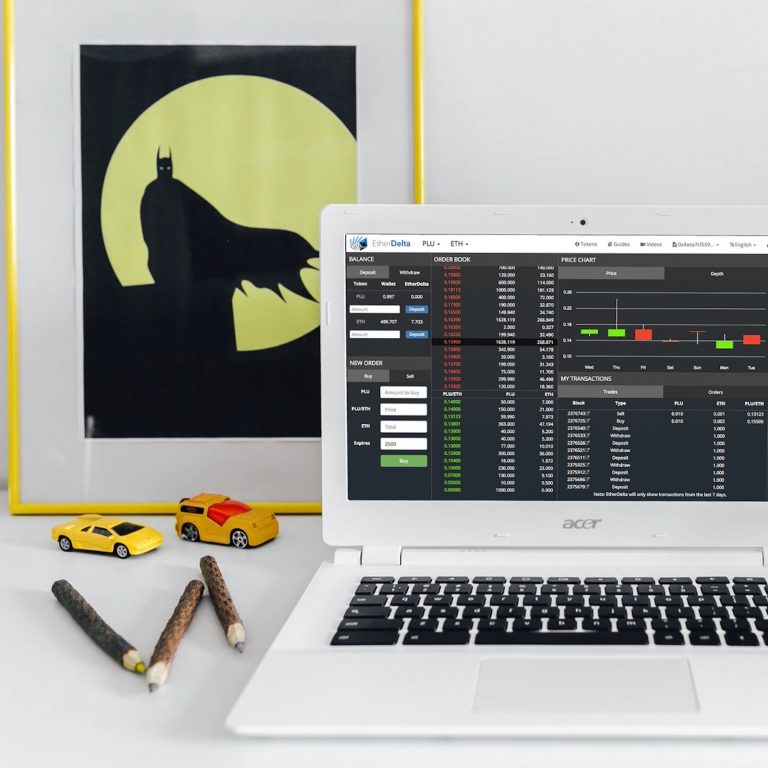
The U.S. Securities and Exchange Commission has published details of a cease and desist order it has taken against Zachary Coburn, the operator of Etherdelta. The decentralized ER20 token exchange was the leading Ethereum DEX during its peak, executing more than 3.6 million orders. According to the SEC, many of those orders were for unregistered security tokens.
Also read:
Zachary Coburn Settles With SEC
 Zachary Coburn
Zachary Coburn is almost $400,000 out of pocket after settling with the SEC for having operated as an unlicensed exchange where security tokens were traded. In total, Coburn has been ordered to pay $300,000 in disgorgement with an additional $88,000 in penalties on top. While the news, published in an today, has come as a surprise, it has been evident for some time that DEXs operating within the U.S. are going to have to change their business model. IDEX, which has replaced Etherdelta and its Forkdelta spin-off as the most popular platform of its kind, announced that it would introduce KYC. It’s also barred residents of New York and a handful of other states from accessing the site.
In a 12-page ruling, the SEC lays bare the facts of the case, citing its report into the collapse of the DAO in which “the Commission advised that a platform that offers trading of digital assets that are securities and operates as an ‘exchange,’ as defined by the federal securities laws, must register with the Commission as a national securities exchange or be exempt from registration.” The document also explains how Coburn operated Etherdelta from July 2016 until November 2017, when he sold it to “foreign buyers.” The report chastises:
Coburn founded Etherdelta, wrote and deployed the Etherdelta smart contract to the Ethereum blockchain, and exercised complete and sole control over Etherdelta’s operations, including over the operations constituting the violations described above. Coburn should have known that his actions would contribute to Etherdelta’s violations.
A Hefty Fine But No Further Action Taken
 Despite the severity of the fine Coburn was forced to pay, the founder could have fared worse. The SEC appears to have gone relatively easy on him due to his cooperation and willingness to pay any penalties levied. “The Commission considered remedial acts promptly undertaken by Respondent and cooperation afforded the Commission staff,” acknowledges the . “Coburn’s efforts facilitated the staff’s investigation involving an emerging technology.”
While Etherdelta was a small exchange in the cryptocurrency landscape even at its peak, the ramifications of the SEC’s actions are sure to resonate far and wide. Exchanges, both centralized and decentralized, will be carefully examining their KYC and token listing policies in light of today’s report to ensure they aren’t next in the line of fire.
What are your thoughts on the SEC’s ruling? Let us know in the comments section below.
Images courtesy of Shutterstock.
Need to calculate your bitcoin holdings? Check our section.
The post appeared first on .
XRP is still slightly moving down on Thursday Nov 8, trading at $0.5169, says Dmitriy Gurkovskiy, Chief Analyst at .
Technically, the crypto continues its midterm ascending trend. The last upward impulse reached the current channel resistance, which paused the trend and started a pullback. Right now, the trend formed the latest rising move to 50.00% Fibo. The major target, meanwhile, may be at the overall channel support, $0.4750. Conversely, if the resistance at $0.5235 gets broken out, another rising move towards $0.5680 may occur.
Fundamentally, Ripple looks mixed. , says its spokesman, and the rumors telling otherwise are untrue. Meanwhile, the November protocol update has nothing to do with RippleNet. Swift update, in its turn, is for providing all transactions with a tracking link, which will enable the banks to track them in real time.
The platform in question is Swift GPI, and while it has been promoted, rumors appeared that xRapid may get integrated into this system, too. BBesides, Ripple took part in Swift Sibos conference before, which may have somewhat supported the rumors.
It may be said that xRapid integration could do a lot of good for Swift thanks to a progressive technology with a nice track record. However, it looks like global market players are not ready for spreading such technologies.
The launch somewhat supports XRP, as it acts as the base crypto there. The platform is launched simultaneously in 61 countries, making Ripple quite accessible for investors.