Competitive Video Gaming – known as Esports – is becoming increasingly popular year after year. In the latest report, market researcher Newzoo predicts esports global revenues will reach $905.6m in 2018, up 38.2% on last year, and $1.65bn in 2021.
In its early years esports sponsorship was largely endemic brands associated with gaming or computer peripherals, but more recently large mainstream brands such as Mercedes, Gillette, Red Bull and many more are getting involved.
The esports audience is very valuable to mainstream advertisers. They are mostly in their 20s and 30s, passionate, very engaged, and with a higher than average disposable income. As audiences for traditional sports are declining, more fans are turning to esports.
According to an LEK Consulting Survey, already 40% of millennials prefer esports to traditional sports. Mainstream brands are starting to follow.
However, there are a number of issues facing the esports marketing world.
Complexity of the Market – esports can be complicated for brands new to the market. There are several game titles, genres, leagues, teams and tournaments and it can be difficult to understand the best channels to reach the desired target audience.
Scale – Esports revolves mostly around major tournaments, unlike traditional sports where smaller local competitions and league games happen frequently. As the scale of these increases, it is difficult for brands and advertisers with more limited budgets to get involved.
Likewise, it is becoming more difficult for smaller tournaments and teams, and streamers with smaller audiences to gain access to the large advertising budgets available to their more successful counterparts.
Agencies and Intermediaries – These complicate the marketing landscape, fragmenting the industry and further reducing access to participants with lower budgets. Efficiency and return on investment is reduced by the number of “middlemen” involved in the industry.
Lack of Data – As a relatively new industry which is changing all the time mean it is difficult to get accurate and consistent data to measure the success of marketing campaigns.
is being developed from the ground up to provide a solution to these issues by facilitating effective, direct interaction between brands, participants and the audience.
One of the key aims of EIPlatform is to replace agencies with a single point of entry to the market for more personalized and efficient direct marketing. Security of transactions is a key element in the development of the platform, and one that is sadly missing from the current esports market.
The platform will simplify the current fragmented market and allow access for smaller teams to the large advertising budgets involved at the top level of the industry. At the same time, it will allow all sizes of new advertisers and brands to access the audience much more easily.
EIPlatform’s advanced data management and analysis, made possible by blockchain and smart contracts, will allow brands and advertisers to understand and target their desired audience segment more effectively. They will be able to measure the performance of their investments and identify new opportunities within the esports marketplace.
The EIPlatform currently has no competition in esports. With the team’s technical ability and unique understanding of the problems faced by those in the esports industry, they are confident that the concepts underlying the project are solid.
The team is headed by Sergey Nevodnichiy, the founder and CEO of international most successful esport team, Team Empire. He says,
“The scope of the EIPlatform is ambitious, but there is no doubt that the EIP team have the right combination of abilities to succeed in this venture. EIPlatform has the potential to be a game-changer for the esports marketing industry.”
Introducing the EMI Token
EIPlatform will be built on a blockchain system and all payments within the system will be via smart contracts using EMI. Smart contracts will provide the security and transparency for all transactions within the system that is crucial to such a project. EIPlatform is built on Ethereum architecture, chosen for its stability and security.
EMI tokens are priced at 0.1USD and in total, 880,000,000 will be released.
The esports industry is digital, making it the ideal place to use smart contracts and blockchain technology. All transactions between entities within the EIPlatform ecosphere will be made using EMI. Consequently, demand is expected to be high and continue to rise as the project approaches completion towards the end of 2018, and launches in Q1, 2019. The full roadmap is available on the EIPlatform website.
EIPlatform is proud to announce the launch of the Pre-Sale Phase of the EMI token on May 14. This will run in 2 phases:
Phase 1 is from May 14-23 and will feature 25% bonus to encourage early investors.
Phase 2 of the presale phase will run from 24-30 May and will include 20% bonus.
The post appeared first on .
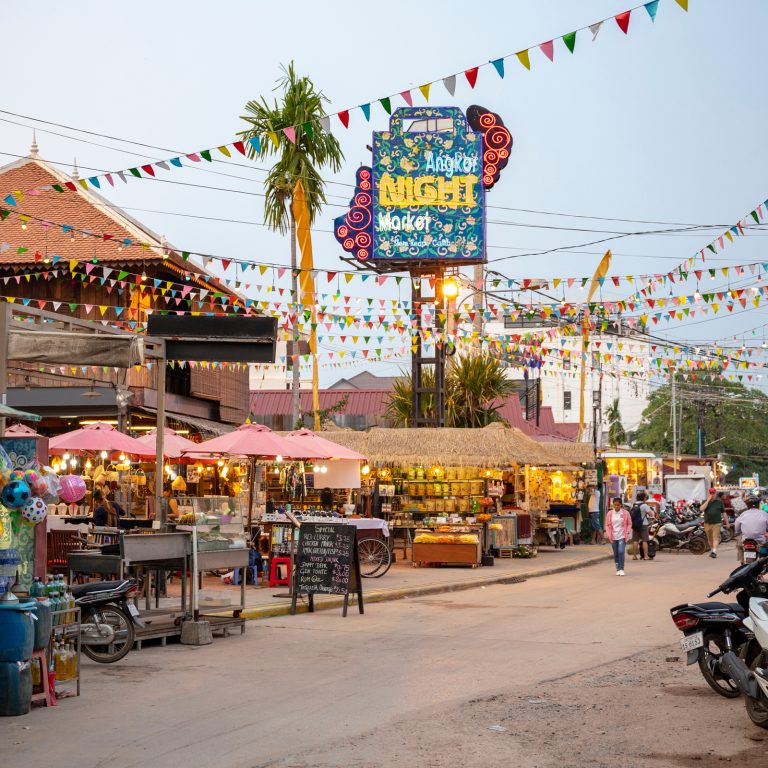
According to a recent report, cryptocurrency miners from China have been flocking to regions in Southeast Asia like Vietnam, Myanmar, and Cambodia. However, a relocated Chinese miner based in Cambodia says miners trying to find safe havens in other Southeast Asian countries are having difficulties, and losing money every month due to residents complaining and unreliable power.
Also read:
Chinese Miners Who Relocate Are Finding Other Regions Located in Southeast Asia More Difficult
Mining in is still allowed but there have been rumors of government crackdowns, and because of this speculation many mining operations based in the country have begun to relocate. Some operations who still seek out cheaper Chinese electricity tariffs moved to the border towns in Yunnan, but lots of have relocated to other areas in Southeast Asia like South Korea, Vietnam, Cambodia, and Myanmar. Although government officials and residents living in these regions have been giving miners a hard time according to a relocated miner named Zhang Han.
 Zhang relocated to Cambodia from China and found that local rent is quite cheap, a 500 square-meter large shack only charges 500,000 riel ($100) per month, and you can hire two local young labors at the cost of only $100. But Cambodian mining operations have posed other problems for Chinese miners.
Zhang says that he had miner friends that already “occupied” the suburbs of Cambodia and Myanmar. He did the math and found areas in Southeast Asia still offer much cheaper electricity than other countries worldwide. However, the miner explains he is not too happy with the move and states “I really regret it.” At first, Zhang found that Cambodia was expensive in some areas of operations, but less expensive in other areas when compared to other regions.
“Compared with other miners who choose Vietnam and Myanmar, the electricity in Cambodia is slightly more expensive, but it costs less in other expenses,” .
It costs almost the same in Cambodia as industrial electricity price in China, 1.3 yuan ($20 cents) per kilowatt-hour (kWh), but you can take advantage of electricity theft from streetlamp facility with the help of some insiders.
 Accessory costs and maintenance is much more expensive than China. Some things can be 3X the price says Zhang.
Accessories Costs and Operations Maintenance is More Expensive Abroad for Relocated Chinese Miners
The accessories costs and operations maintenance is what gave his mining operation headaches, Zhang explains. “Maintenance and accessories are very big problems, and it can also be said that the cost of supplies is very high,” Zhang details. “But hardware maintenance is a challenge, it would cost you a great sum – at least 3 times higher than the cost back in China, especially in hot days when entering March. Buying parts here is really a big headache, we have no choice but to purchase them from China, which would take days or even weeks to have it available in operation here.”
At times we turn to local miners for help, while they would seize the opportunity to ask for unfairly high price for a tiny fitting.
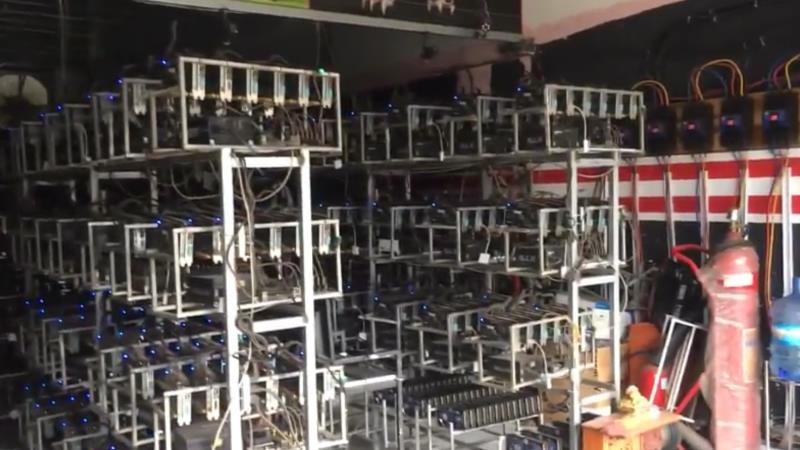 Many areas in Southeast Asia experience lots of power outages and Zhang’s operation deals with electrical outages frequently. However, Zhang says you can take advantage of electricity theft from streetlamp facility with the help of some “insiders.”
Chinese Miners Also Face Unfriendly Local Competitors and Residents Who Might Report Electrical Theft
Zhang further realized that Cambodia suffered from significant power outages where there is no electricity for a whole day or even longer. The miner says in order to mitigate the problem, if an operation happens to have a connection with a power company “insider,” they can steal power from a nearby streetlight. However, local residents may report this method to the authorities, and Zhang says residents are not too friendly towards Chinese miners right now. Additionally, local miners and financial institutions backed by Western countries are also not pleased with Chinese miners relocating to these countries.
“Apart from the local residents and miners, institutions funded by western countries are also unfriendly to us — They are all trying to squeeze us out of here — And I’m considering that,” Zhang concludes.
What do you think about relocated Chinese miners having issues in other areas of Southeast Asia? Let us know your thoughts on this subject in the comments below.
Images via Shutterstock, and SOHO.com
The post appeared first on .